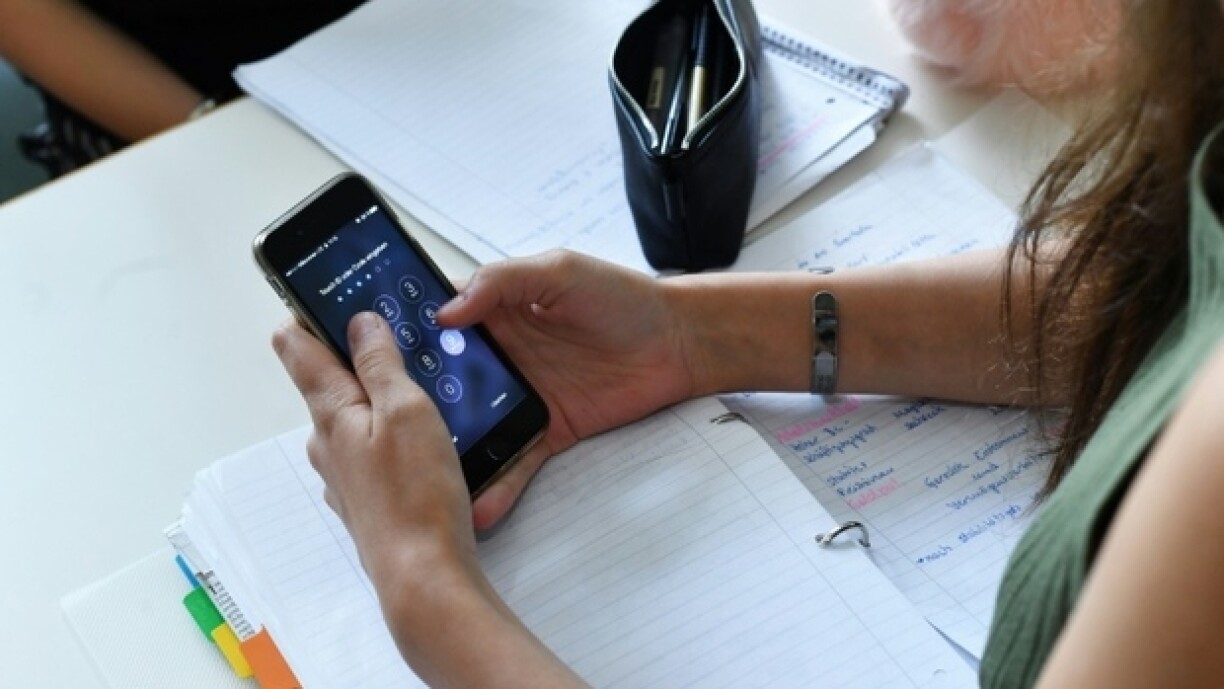
A petition on the subject garnered 4,775 signatures, surpassing the 4,500 threshold, sparking a discussion that revealed understanding across party lines, though members raised concerns about the feasibility of a complete ban.
Fred Keup of the ADR shared his observations from his teaching experience, noting the disruptive role smartphones play in high schools. "I saw what smartphones lead to when I was teaching in high school. For example, if a teacher changeover occurs at 9 o’clock and the class is unsupervised for just five minutes, everyone immediately pulls out their phone, and social interaction stops," Keup explained.
David Wagner from the Left Party expressed scepticism, questioning the practicality of banning smartphones entirely across school grounds. Wagner pointed out that students are surrounded by technology outside school, which would make an absolute ban challenging to enforce.
The government already plans to introduce a national smartphone ban in schools as of Easter 2025.
Two grand-ducal regulations will be amended to severely restrict the use of smartphones in Luxembourgish schools, particularly among the youngest pupils.
In primary school for children up to the age of 11, smartphones will be banned on school premises. In all primary schools, "smartphones will be completely banned starting Easter 2025," according to the Ministry of Education's website.
Petitioner Christina Matita, however, argued that if younger students are prohibited from bringing personal toys to school, secondary students should also face similar restrictions on distracting items like smartphones.
"We understood that [personal items] are distracting and a source of conflict among children. This rule was accepted and respected up to primary school. So why, in secondary school, do we allow the most distracting of all gadgets in children’s pockets?" said Matita.
The petitioners also emphasised her desire for a nationwide regulation, rather than varying policies across different schools.
However, Education Minister Claude Meisch noted that Luxembourg’s high schools differ significantly and may need tailored approaches rather than a blanket ban.
Meisch suggested that schools should develop individual policies to manage smartphone use, potentially allowing certain “phone-free” zones.
"I can imagine some schools deciding that, for the first three years, students don’t use phones at all, similar to primary school," Meisch remarked. "Some may restrict phone use in the canteen, during breaks, or designate specific areas where phones are permitted."
Several deputies questioned the petitioners on their stance regarding tablet use in schools. The petitioners clarified they support new technologies, provided they are used sensibly and that equal access for all students is guaranteed.
In secondary schools, teenagers will have to switch off their smartphones and leave them in a safe place during lessons. This measure has already been introduced on a smaller scale at the European school in Kirchberg.
Read more: Is a smartphone ban in schools on the horizon for Luxembourg?





