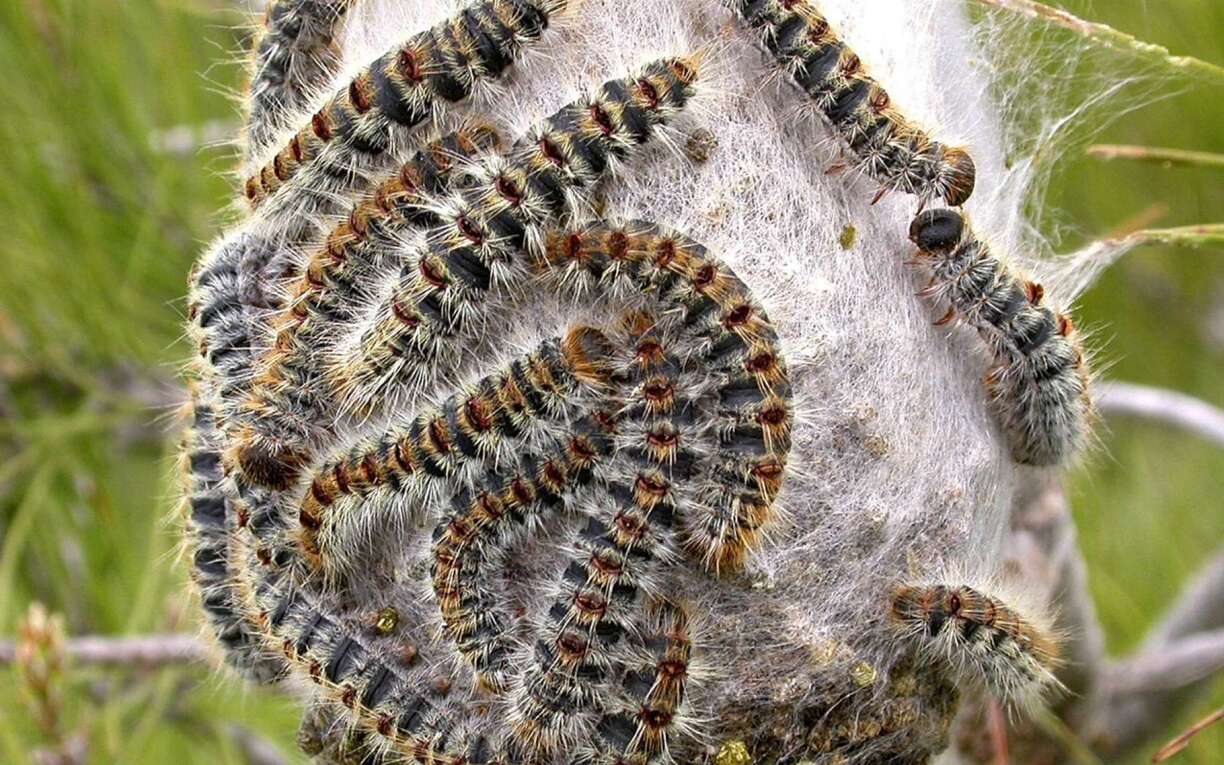
The City of Luxembourg has taken down around 180 oak processionary caterpillar nests from trees over the past two months. The figure is dramatically ahead of last year's tally, when there were just under 25, according to Jimmy Gales of the municipality's park's department.
The oak processionary caterpillar thrives in the heat. High spring temperatures gave it plenty of room to spread this year.
54 nests have already been cleared from oak trees in Cessange in recent weeks, with around 20 still to be dealt with.
The danger, however, is now starting to fade. The oak processionary caterpillar is only harmful during its third larval stage between May and June, when it develops its toxic stinging hairs.
It is now approaching the point where it will begin to pupate before turning into a moth between the end of July and the start of August. Until then, however, Gales advises caution and urges people to keep their distance from any nests they see, to avoid taking risks.
The hairs on the caterpillar can trigger severe allergic reactions in people and animals, since they contain a stinging-nettle-like toxin. Carried on the wind, they can also find their way into the respiratory tract or the eyes.
Nests should on no account be removed by members of the public. The municipality should be alerted straight away and will take care of the removal.
Anyone who comes into contact with the hairs should wash the area off at once or take a shower.


As temperatures continue to climb, more oak trees are expected to become infested. The City of Luxembourg is also in talks with other municipalities on how to tackle the problem.
Several municipalities are putting up more nesting boxes for tits, since these are among the few bird species known to feed on the caterpillar. Oak varieties that are less prone to infestation are also being looked at.





