At the end of last year, around 96,000 people in Europe were in need of an organ transplant. On average, six more are added to that list every hour.
The demand for organs is therefore enormous, and the number of available donations falls well short of what is needed.
Saturday's World Organ Donation Day aims, among other things, to draw attention to that gap.
In Luxembourg, around 100 people are waiting for an organ transplant each year, and time is of the essence.
In the case of kidneys, dialysis can help. Artificial hearts, too, can serve as a temporary bridge when an organ ceases to work. When it comes to the liver, however, the situation becomes truly critical, according to Dr Claude Braun, president of Luxembourg Transplant.
A classic example is poisoning by the death cap mushroom (Amanita phalloides), which can lead to liver failure within days.
Since no machine can replace a liver, doctors can only perform a kind of blood purification for a maximum of three to four days to bridge the gap.
People who urgently needed a liver, Braun said, would die without one.
Last year, just under 45,000 organs were donated across Europe. More than half of these came from deceased donors.
To maximise the chances of finding a suitable organ, eight countries, including Luxembourg, have joined forces within the Eurotransplant Foundation.
Braun explained that the better the match, the higher the likelihood of the organ surviving.
Once the organ has been transplanted, the success rate, and the patient’s chance of leading a relatively normal life, is very high.
In Luxembourg, the law stipulates that individuals are automatically considered organ donors unless they have explicitly stated otherwise.
Even so, the attending doctors still have to consult with the families, Braun explained.
The law states, Braun said, that in the event of a tragedy, for instance when a person is approaching brain death, the medical team in charge had to consider whether to proceed with organ retrieval.
If there was no explicit documentation on file, they had to ask what that person’s wishes regarding the matter had been while they were alive.
Even when such a document exists, family and friends are still asked whether donating the organs aligns with the wishes of the deceased.
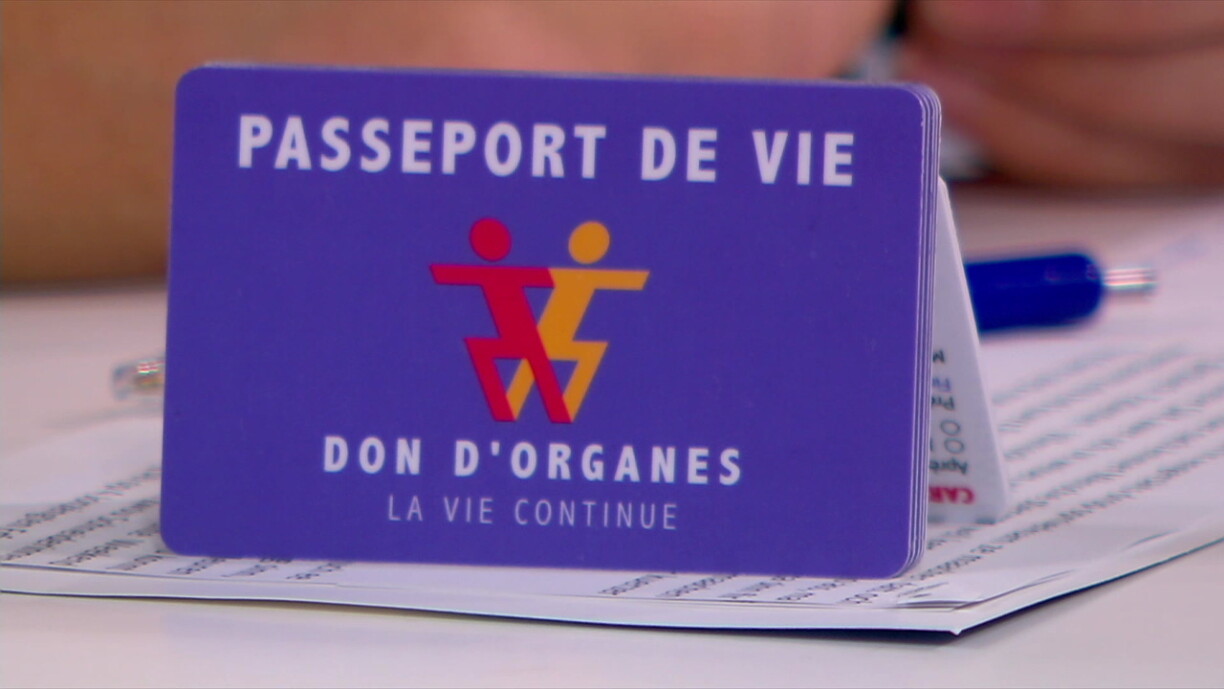
For that reason, it is extremely important to discuss personal wishes with respective family members. These wishes can be officially recorded via an organ donor card, within the shared electronic health record (DSP), or through a simple handwritten declaration.
Braun notes that, in general, families often do not discuss the topic enough. It seems to be "somewhat more difficult to motivate people to talk about it" in Luxembourg.
He also highlighted that the point was not to say that everyone had to donate, but rather that everyone should declare their own wishes and discuss them with their family.
Young people, in particular, offer a glimmer of hope to the president of Luxembourg Transplant. They tend to show greater interest in the subject and are generally more open to discussing it.
On average, more than half of all donated organs come from deceased individuals. To date, however, organs in Luxembourg have only been retrieved from individuals who have been declared brain-dead.
Given the nature of accidents today, Braun said, this had become relatively rare. People wear helmets, cars had airbags, and so on, he explained.
There were also better medical resources available to save people from such outcomes, Braun noted. Even so, patients who sustain severe brain trauma, their injuries do not progress to brain death.
In those cases, patients retain some minimal residual functions, with the person perhaps being able to breath a little on their own, or looking around and opening their eyes slightly, Brain explained.
These individuals, it has to be said, remained severely disabled, he added. They are in other words in a vegetative state, requiring artificial feeding via a tube and, in some cases, respiratory support through a tracheostomy, Braun continued.
Currently, however, organs are not being retrieved in Luxembourg from individuals who are not brain-dead, even though this option is provided for under the law.
According to Luxembourg Transplant, the current legal text is not sufficiently precise. Braun notes that discussions on the matter are under way with the Ministry of Health.
He hopes that this will lead to an increase in the number of organ retrievals within the country.





