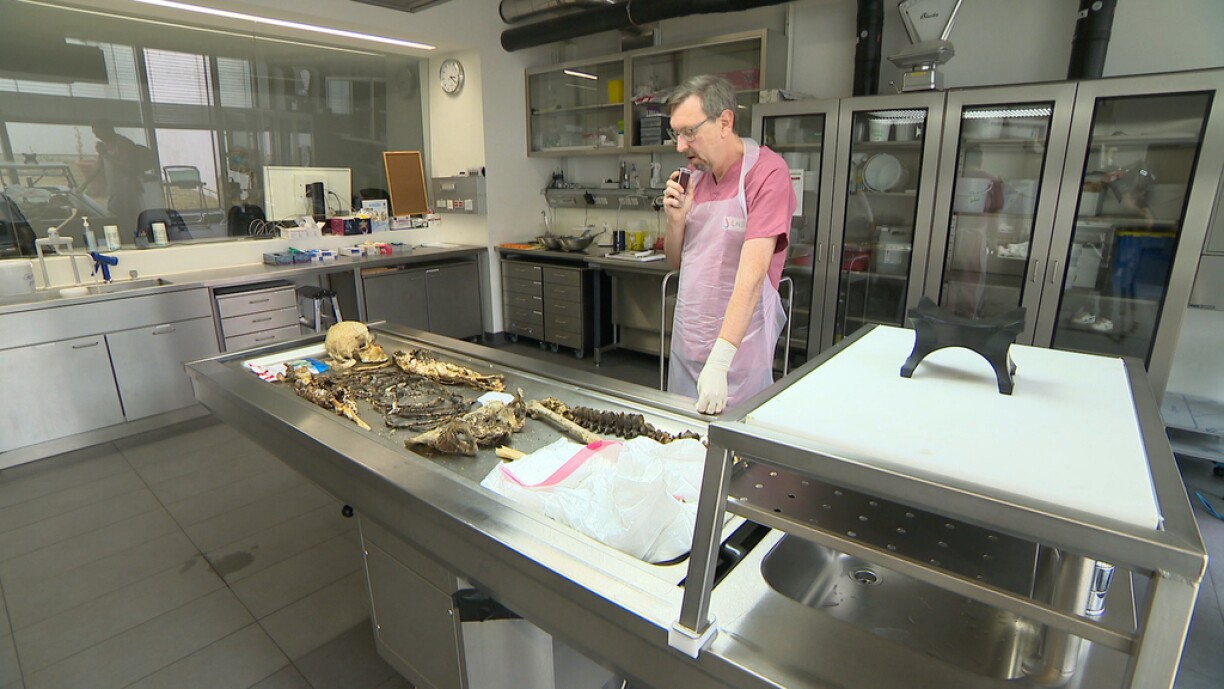
This is where Dr Thorsten Schwark and his colleagues come in.
"The forensic autopsy consists of determining the cause of death, the manner of death, the time of death and, in certain circumstances, the identity of a deceased person, " Dr Schwark explains. An autopsy is often the only way to discover this kind of information. "If you only conduct an external examination of a deceased person, you often cannot draw any conclusions about the possible cause of death, because internal diseases are not recognisable from the outside, and the same applies to poisoning," according to Dr Schwark.
Every year, around 100 autopsies are performed by forensic doctors. Luxembourg, like Belgium and Germany, thus has an autopsy rate of roughly 2%.


The magnitude of the unofficial figure of undetected unnatural deaths can only be estimated. One estimate is provided by an older German study, which gives cause for concern, as Dr Schwark explains: "At the time, it was assumed that in Germany, 10,000 deaths were incorrectly classified, i.e., a natural death was certified instead of an unnatural death, of which almost 1,200 were homicides. It is of course difficult to extrapolate these figures to Luxembourg, but what this study essentially showed was that worrying figures of undetected homicides are to be expected," Dr Schwark says.
The death certificates used in Luxembourg are problematic due to the following box: "death not suspicious and cause(s) of death cannot be established."
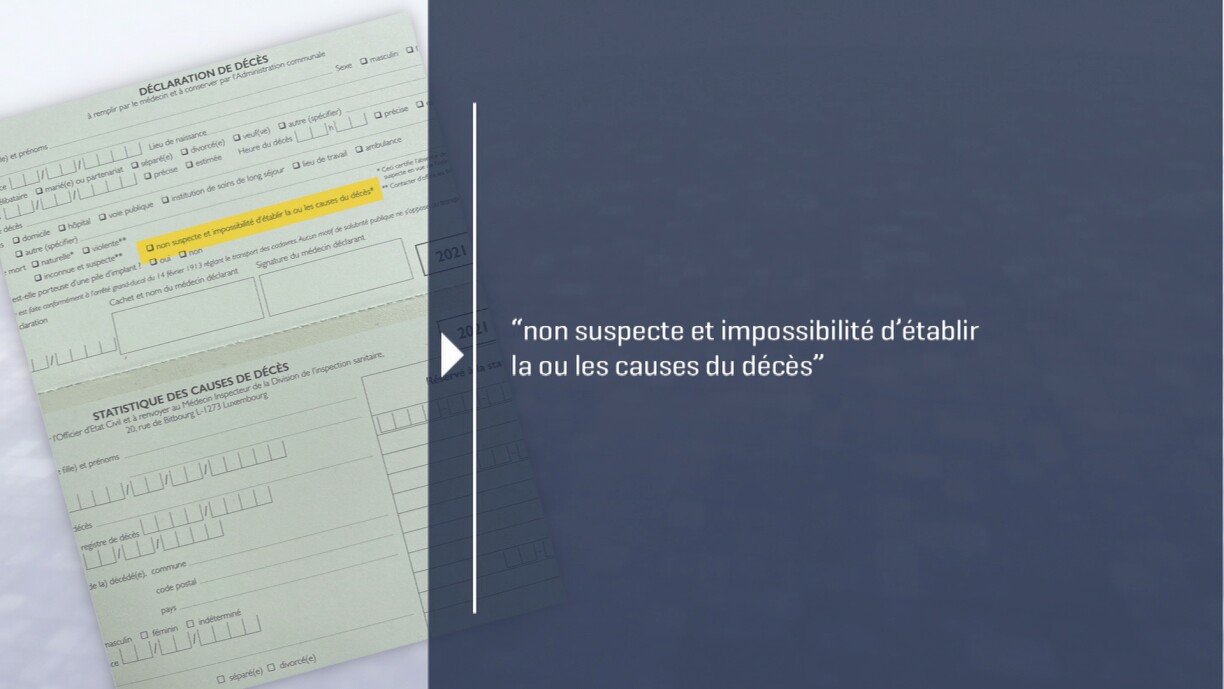
But how can you be certain that the death is not suspicious if the cause of death is unknown?
If the doctor who determines the death ticks this box, the police and forensic experts will not even intervene. The corpse can be cremated and all traces of it will have disappeared. For this reason, Dr Schwark advocates for a second examination of the body before cremation. In this way, an unnatural death could still be detected.
What is also important in this context is to ensure that doctors are regularly involved in post-mortem examinations, which is not necessarily the case for many general practitioners in Luxembourg. For this reason, forensic doctors offer targeted training to the emergency services and GPs, who are often the first on the scene of a death and have to fill in the death certificate.
Deceased people who cannot be identified immediately are kept in forensic medicine until all available data, including DNA and fingerprints, is gathered. It is also possible to determine the region where the deceased person lived using isotope analysis. DNA can also reveal information about a person's complexion, eyes, and hair colour, and genes can even provide information about a person's geographic origin.
All of this is regulated differently in different countries within the European Union and data protection laws often hold science back. If, despite all efforts, a body cannot be identified, the public prosecutor's office will eventually release it and it can be buried.
The full report by RTL Télé (in Luxembourgish and German):





