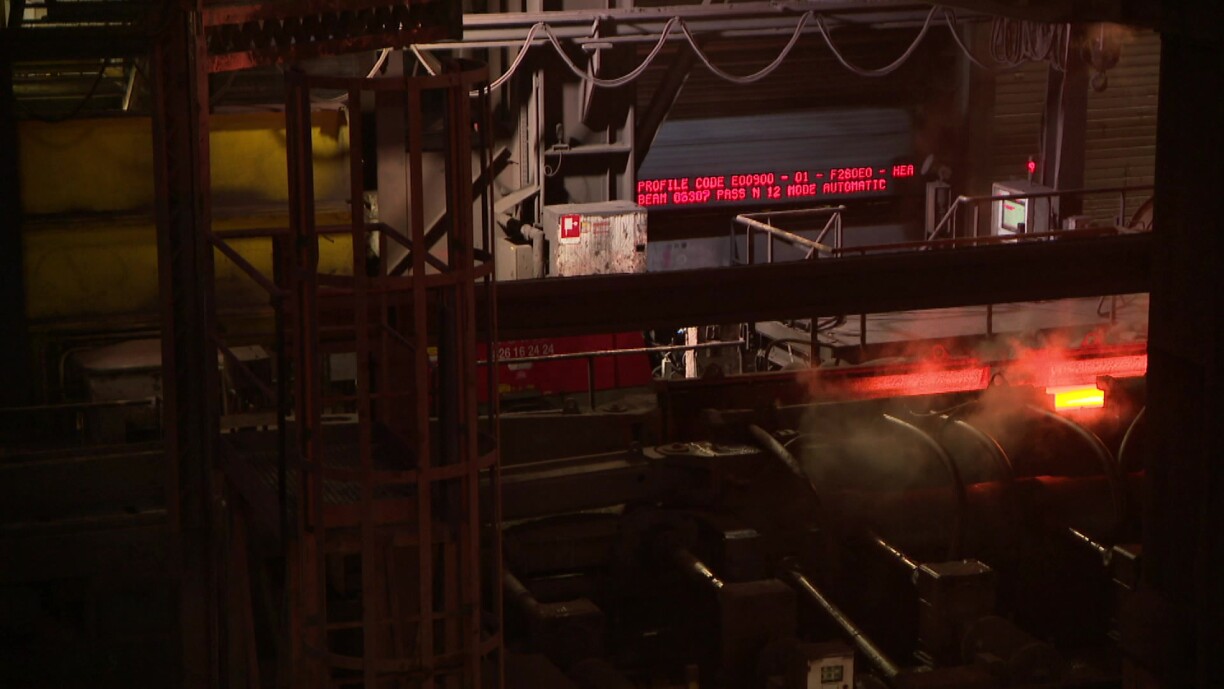
Although energy prices have stabilised, the situation is still considered volatile, explained Roland Bastian, head of ArcelorMittal's Luxembourg operations: "It currently looks as though 2023 will be even weaker than 2022, but, there are many unknowns in the equation."
Last year, the company produced 1.9 million tonnes of steel. Production capacity is usually 2.2 million tonnes per year, noted officials and drew attention to competition from foreign companies.
Bastian noted: "Compared to the rest of the world, Europe has the highest energy prices. In Europe we also have to carry the price of CO2. This is actually a good thing, after all, we have to curb down CO2 emissions. But, as Europe is the only one to do so, the steel industry is losing its competitiveness on the international market."
Bastian also discussed ways to counteract this trend: "We try to offer highly efficient products that cannot be manufactured anywhere else. ... In general we feel that when it comes to regular products, we are simply not attractive and make losses. And when prices are this elevated, it is difficult to compensate the difference of production costs."
The steel giant therefore demands that more efficient subsidies for decarbonisation efforts be introduced.
By 2026, ArcelorMittal plans on moving to its new headquarters in Kirchberg. Construction work on the HQ began in January this year.





