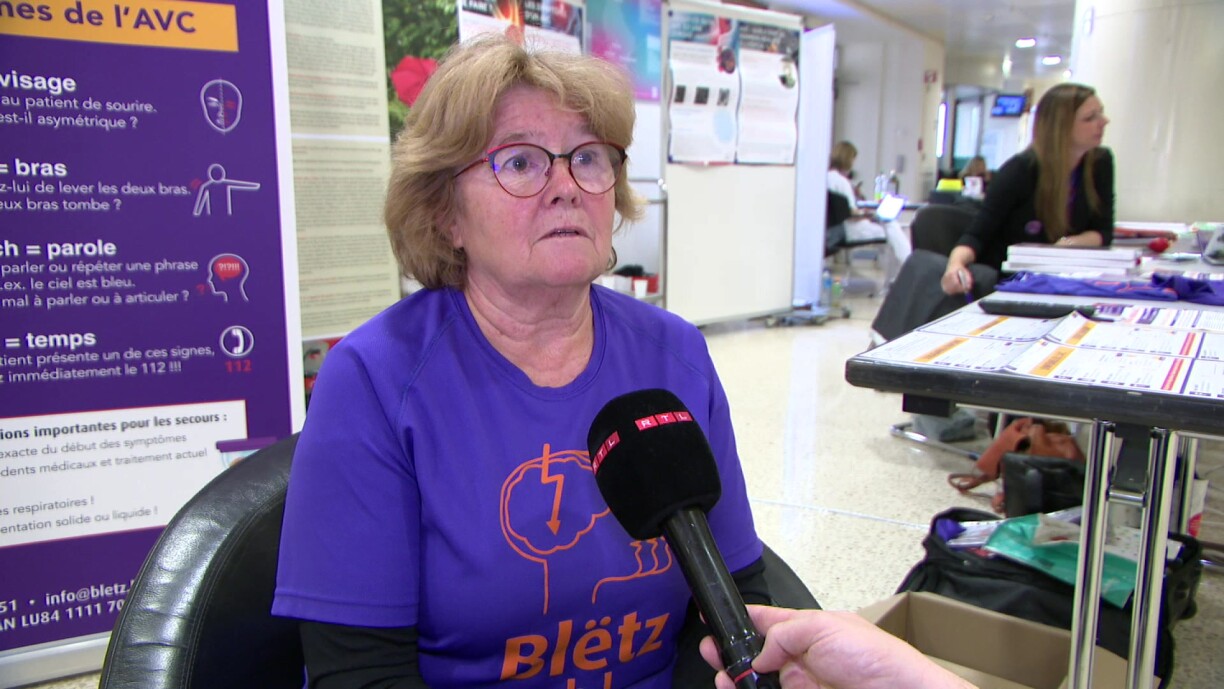
Around 15% of people hospitalised due to a stroke are under the age of 55. Dr Monique Reiff, a neurologist at the CHL, explained there are two different types of strokes and encouraged people to learn to recognise the respective signs, as quick intervention can make all the difference.
The key symptoms to look out for are the following:
The patient's face may have dropped on one side, where their mouth or eye droops, and they may not be able to smile. They may not be able to lift their arms or suffer weakness or numbness in one arm. Their speech may not be clear. If these symptoms are observed, it is highly encouraged to contact the emergency services on 112 as quickly as possible, as every second counts.
These symptoms can be remembered with the word FAST - Face, Arms, Speech, Time.
For many stroke victims, returning to a normal life after suffering a stroke is difficult. One patient told RTL that her mental state had deteriorated following her stroke, in part due to the physical limitations she suffered as a result.
Around a third of stroke patients are diagnosed with depression afterwards. This can be treated with medication or psychotherapy. Depression can also occur within a patient's close family circle as a result of the condition.
In order to prevent subsequent strokes, doctors advise keeping a close eye on the patient's blood pressure, cholesterol and blood sugar levels.
In Luxembourg, the charity Blëtz seeks to offer support for stroke victims, as well as raising awareness about the condition.





