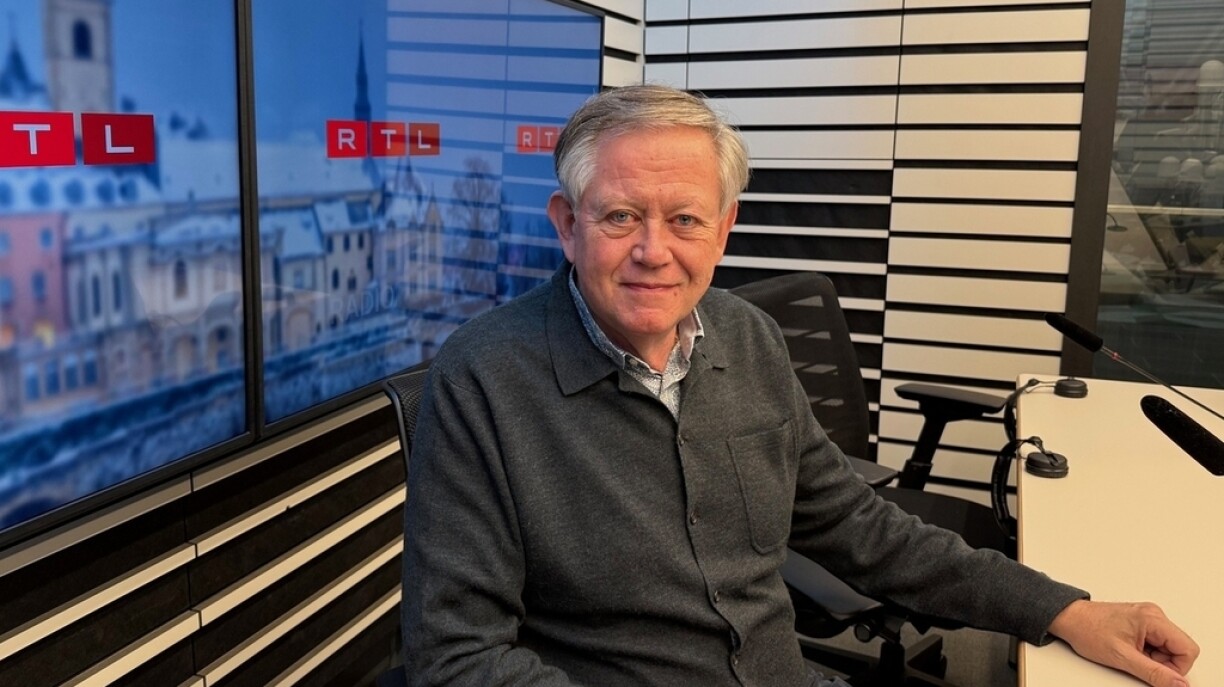
On Thursday morning, our colleagues from RTL Radio hosted a discussion with Council of State member Alex Bodry of the Luxembourg Socialist Workers' Party (LSAP), focusing on the role and functioning of Luxembourg's institutions.
Addressing the recent scandal involving MP Tom Weidig of the Alternative Democratic Reform Party (ADR), Bodry acknowledged that the Chamber of Deputies faces limitations in intervening when misconduct occurs outside parliamentary proceedings. However, he emphasised that the Chamber could have invoked general principles outlined in its code of conduct, such as the expectation that MPs serve as role models and avoid damaging the institution's reputation. Bodry expressed his belief that the Chamber had the authority to act in this case but ultimately chose not to.
Bodry also highlighted that parliamentary immunity does not necessarily extend to statements made by MPs on social media, as such remarks fall outside the scope of their official mandate.
Bodry criticised the Chamber of Deputies for being overly reliant on the Council of State in legislative matters and for its perceived weakness relative to the government. He argued that MPs from the majority should not merely act as an extension of the government but instead assert the Chamber's role as an independent institution. Similarly, he urged the opposition to move beyond simply criticising the government and to recognise its own institutional importance. Bodry stressed that MPs should avoid reducing their roles to pure party politics and instead focus on their broader responsibilities.
Bodry explained that the Council of State plays a pivotal role in determining the pace and specifics of reforms in Luxembourg. With its suspensive veto power, particularly regarding the elimination of the second vote in the Chamber of Deputies, the Council wields significant influence. Bodry noted that since 1987, the Council of State has consistently prevailed in such matters.
Addressing the non-nomination of Max Leners to the Council of State, Bodry expressed disapproval, calling it an unprecedented move. He emphasised that this was the first time in the Council's history that a candidate from the nominating party, who also met the required profile, had been rejected.
Bodry described conflicts of interest as a challenging issue in Luxembourg, largely due to a lack of awareness about what even constitutes such a conflict. He stressed that even the appearance of a conflict of interest should prompt individuals to recuse themselves from related discussions or decisions. However, he acknowledged that this awareness is often absent across many institutions, describing the concept as "unexplored territory" in Luxembourg.
In a recently published book, Bodry outlines several reform ideas he considers crucial in light of global developments. He warned that new political majorities in various countries are increasingly questioning the rule of law and the primacy of legal frameworks. "They think they can do whatever they want, no need to respect the laws, no need to respect the constitution," Bodry remarked.
He expressed particular concern over recent statements by US President Donald Trump, emphasising the need for Luxembourg to proactively discuss how to safeguard its constitution and ensure the independence of the judiciary. While he never anticipated such discussions would be necessary in Luxembourg, Bodry acknowledged the urgency of addressing these issues.
Another significant challenge highlighted by Bodry is the integration of non-Luxembourg residents into the political process. He cautioned that without progress in this area, the Grand Duchy could soon face a situation where the electorate represents less than half of the population.





