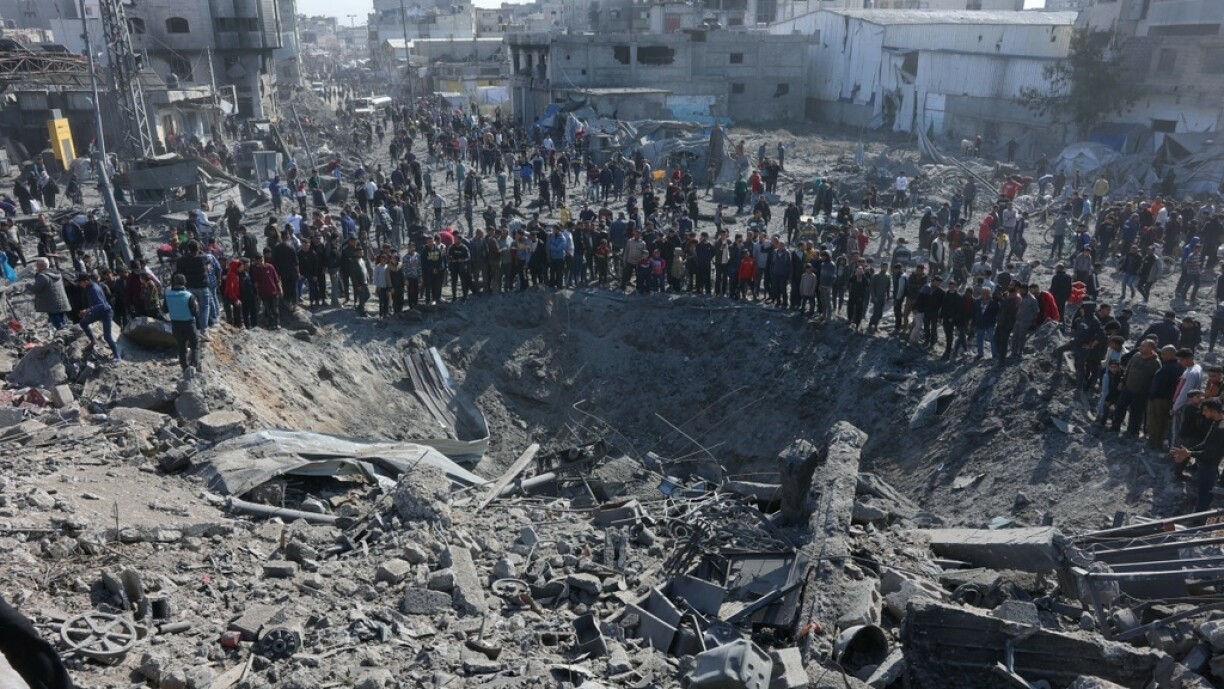
Aid organisations on site in the Gaza Strip are urgently calling for help and for political pressure to be exerted in order to end the blockade.
Thomas Kaufmann, head of Médecins Sans Frontières (MSF) in Luxembourg, expressed his horror in conversation with RTL, as MSF is one of the leading aid organisations on site. MSF states that the situation in the field has reached a level of catastrophe unseen in the organisation's 50 years of existence, even though they are not short of experience in disastrous conflict zones such as Sudan or Haiti.
Last week, two Palestinian individuals from the Gaza Strip were evacuated towards Luxembourg to receive medical treatment, something that has not occurred since 2020. This initiative has been welcomed with much relief by MSF, hoping that other countries follow suit.
Given the disastrous circumstances, Kaufmann explained that there is an enormous need for medical aid in Gaza, with many pathologies and medical problems requiring evacuation. MSF estimates that around 10,000 people would need to be evacuated to receive treatment, as medical facilities on site cannot handle current needs. Out of these 10,000 people, 4,500 are children, according to Kaufmann.
Repeated strikes against hospitals are the norm, as illustrated by an attack launched on Sunday against the Ahli Arab Hospital in Gaza run by the Anglican Church in Jerusalem. The hospital is no longer functional, with Palestinian reports indicating that this establishment represented the most important medical supply system located in the north of the Gaza Strip.
MSF medical coordinator Chiara Lodi, present on Chan Yunis since February, explained in conversation with RTL that medical facilities and their staff should be protected, even in times of war, but this rule is being completely ignored in the Gaza conflict. This leads to fear among the staff and the local population, who then avoid going to the hospital, according to Lodi.
The short-lived ceasefire that lasted 6 weeks at the beginning of the year gave the population some time to collect themselves. People went back home and some children were able to temporarily attend school, until the breach occurred on 18 March, with 400 people dying that same day.
Lodi remembers that night well, as she recounted that her team was stirred awake by security personnel, followed by the sound of missiles. She stressed the fear that everyone felt at that moment and the thoughts that went through their minds, hoping that their house was not targeted by missiles, with intense worry about the performance of their job under those circumstances.
No humanitarian aid has been delivered to the Gaza Strip since 2 March. Surgeries have to be performed without the necessary narcotics. There is no more bread due to a lack of flour. Food reserves are almost depleted.
Negotiations to end the blockade are ongoing, but have been unsuccessful so far, and aid organisations can only call out for urgent help.





