Luxembourg, like many other parts of Europe, was recently hit by a heatwave of a scale not usually seen in the region. Against that backdrop, a current affairs session was held in the Chamber on Wednesday on how the country can better prepare for future heatwaves. The debate itself turned rather heated.
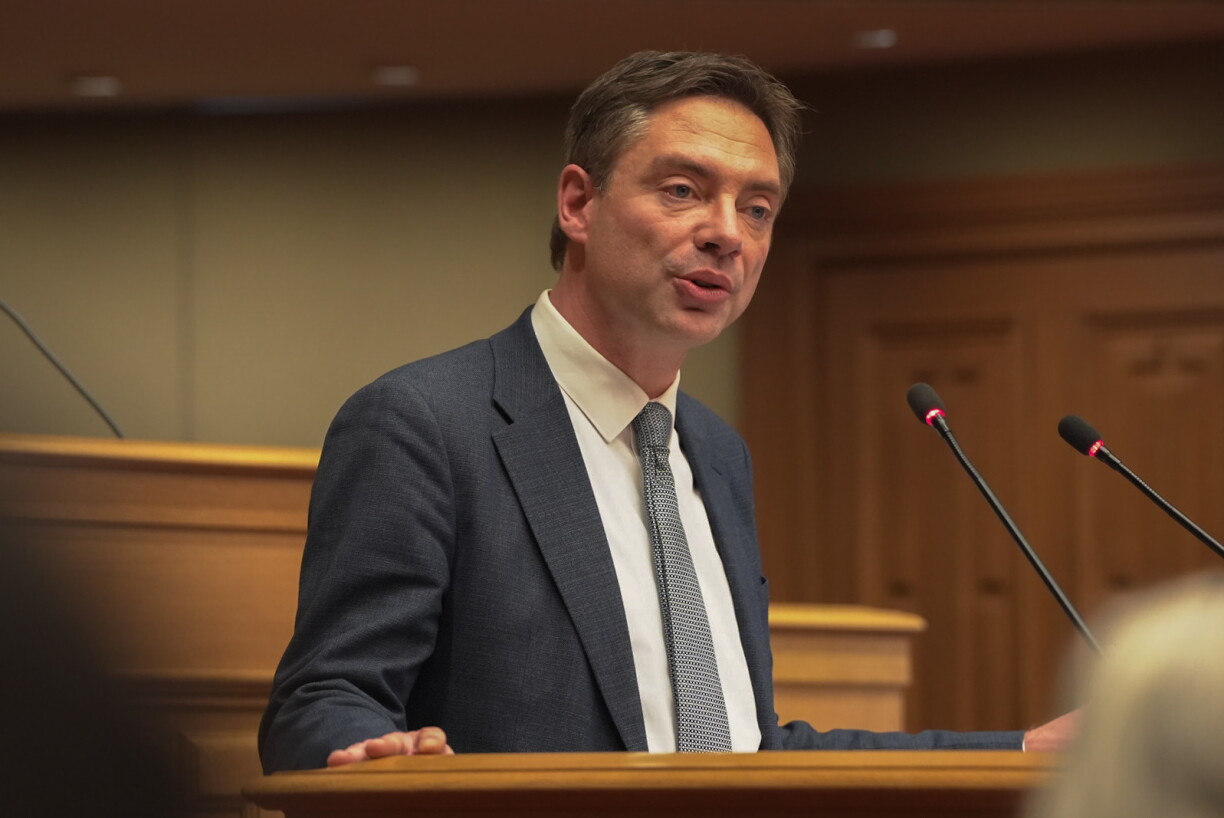
Much of that was down to Fred Keup's remarks. While representatives of the other parties agreed that heatwaves could pose a serious problem in future, the Alternative Democratic Reform Party (ADR) parliamentary group chairman said he found it odd that people were getting so worked up simply because summers were warmer, when in earlier times people would have welcomed the news.
People, he added, do not need the state to tell them how to behave when the weather turns warmer. At the same time, he himself argued that some places were now warmer than they used to be, and that there was a very specific reason for that.
Keup pointed to figures and stated: "If you look at 1990, the country had 5% built-up land, whereas 35 years on that figure stood at 12%. That's why one of the main drivers is population growth. And for those who still wanted more population growth...", he added, without finishing the thought.
The exchange left the impression that it was a question hour aimed at Keup rather than a current affairs debate. Djuna Bernard of déi Gréng (the Greens), who had requested the session, first made clear that, contrary to what Keup had earlier suggested, she did see air conditioning as part of the solution. More broadly, she said, she had no time for the tone the ADR politician had adopted.
She said she was somewhat scared. Keup, she argued, was ridiculing a debate she had called for that was really about the most vulnerable people in society, people who had suffered enormously in recent weeks, who had had to spend their days inside state-run buildings and for whom, on every front, things had certainly not been rosy.
Earlier in her speech, Bernard had also called for every public facility to draw up a heat protection plan, drafted in language that people can readily understand.
Marc Baum of déi Lénk (the Left Party) pointed to one group that had suffered particularly badly under the high temperatures. Manual workers, he said, are people who very often have to work outdoors under such conditions, laying asphalt or building houses in places with no shade, and who barely have any way of retreating from the heat.
Marc Goergen of the Pirates regretted that past opportunities to prepare more thoroughly had been missed. In 2020, he said, he had put forward a motion in the Chamber to turn the winter homelessness campaign into a summer one, but the majority at the time had rejected it, which is why the country is still debating today where vulnerable people can go when it becomes so hot.
The same, he added, applies at municipal level. The local cultural centre, he pointed out, is always empty, so why not simply open it up when the heat becomes so extreme?
The heatwave has shown that the climate reality is shifting faster than the country's infrastructure, said Ricardo Marques of the Christian Social People’s Party (CSV). Even if many people did not like hearing it, he added, it was time to get used to the idea that this past summer might well end up being cooler than the ones ahead.
Mandy Minella of the Democratic Party (DP) focused on the elderly. Older people, she said, are especially vulnerable, so it would have been useful for the Ministry of Family Affairs to react more swiftly, for instance by putting an offer in place for people who live alone and have no one in their immediate circle to check up on them.
Luxembourg Socialist Workers' Party (LSAP) parliamentary group president Taina Bofferding questioned whether the government had really treated the heatwave with the seriousness it deserved. A national crisis unit had not been convened, she noted, with coordination instead taking place at the level of the civil service.
Health Minister Martine Deprez pointed out that the country's supplies had not been in danger at any point during the heatwave. It had been a stress test, she said, but not a catastrophe.





