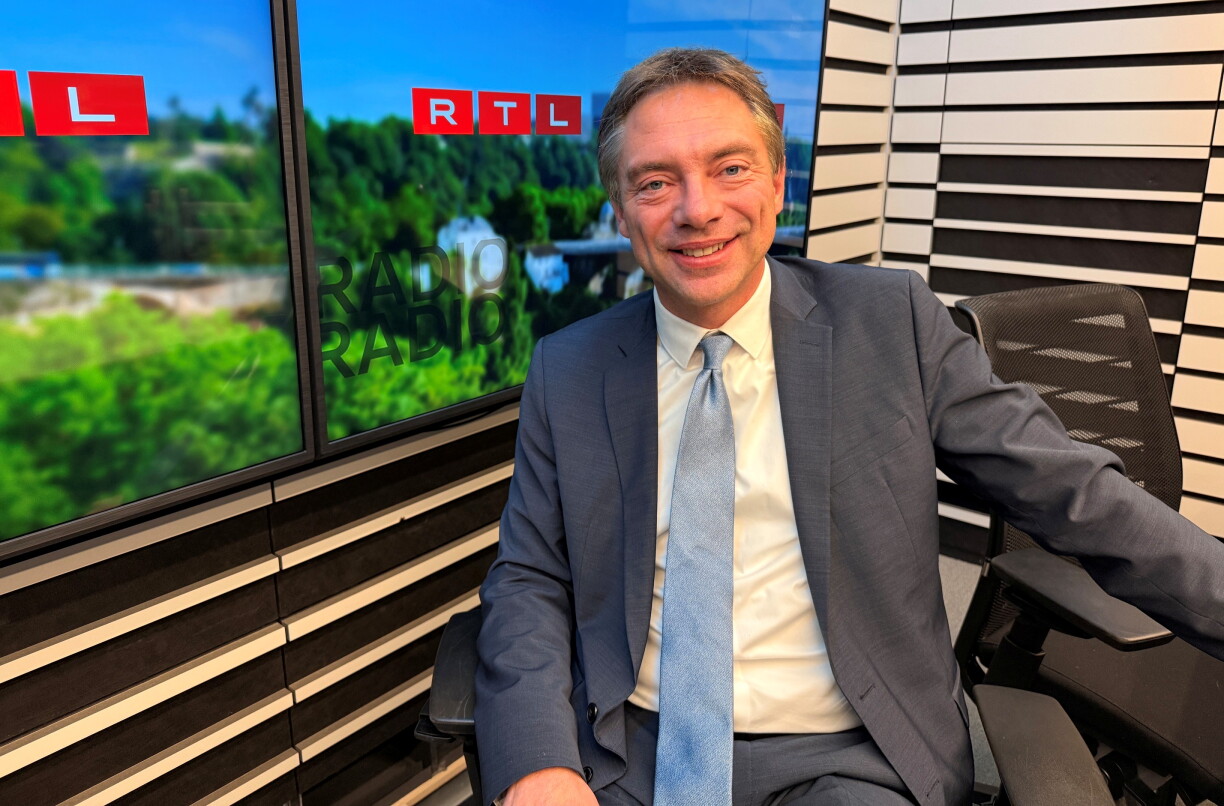
The Alternative Democratic Reform Party (ADR) is polling at 12.8% and would secure eight seats in the Chamber, according to the latest RTL survey.
Fred Keup, the party’s parliamentary group leader, attributes this positive trend to the ADR’s willingness to address topics that other parties shy away from, saying that ADR has "the courage to speak about many things that concern people and that other parties may not".
He also pointed to the group’s dynamic and energetic work in parliament, noting that, despite being the most experienced member with six years in office, the group is still relatively new.
While Keup welcomed the strong polling, in the end, it’s elections that count, not the polls. However, he sees a consistent upward trajectory for his party from one election to the next.
Keup rejects the idea that the ADR’s gains are directly linked to the rise of Germany’s far-right AfD, arguing instead that there is a broader trend across various European countries where established parties are failing to find effective answers to major challenges.
This opens the door for opposition parties, whether on the right or the left, to gain strength. Keup cited the Left in Germany as another example, not just the AfD.
The interview also addressed recent statements by ADR MP Tom Weidig, who claimed that crime is on the rise and specifically pointed to foreigners without regular employment, those in the country illegally, or individuals in the asylum process without a realistic chance of approval as being responsible.
When challenged about the lack of detailed statistical evidence to support these claims, Keup explained that such assessments are based on feedback the party receives from people working in the security sector. These professionals say the situation in Luxembourg is similar to that in other countries.
He criticised the fact that detailed crime statistics have not been available in Luxembourg since 2017, when they were abolished under the previous "Gambia" government, and noted that the current coalition of the Christian Social People’s Party (CSV) and Democratic Party (DP) has not reinstated them.
Even in the absence of official statistics, the evidence from the field suggests the situation mirrors trends abroad.
Keup rejected suggestions that Tom Weidig’s statements cast suspicion on all asylum seekers. The comments refer only to a minority who, in his view, stand out for negative reasons and should not be allowed to remain in the country. Keup welcomed the fact that Weidig had addressed the issue directly.
Asked about potential solutions, Keup argued for the reintroduction of detailed crime statistics, faster court proceedings, and more support for police on the ground.
He expressed support for the planned “comparution immédiate” system that would allow for quicker court appearances, as well as recent efforts to empower police to ban troublemakers from specific areas, even if these measures are not always fully effective. Keup also called for more consistent returns of individuals who repeatedly cause problems and have no legal right to stay, highlighting that the detention centre is consistently full.
When it was pointed out that the government has already increased police numbers and introduced additional security measures, Keup’s main criticism was that politicians still avoid clearly acknowledging some of the country’s real issues.
He suggested there is often a lack of courage to address certain topics directly or to take decisive action. As an example, he cited drug dealing in the Luxembourg-Gare area, claiming that some individuals come to Luxembourg specifically to engage in illegal activities and that such behaviour must be stopped.
Responding to the observation that deportations are often difficult because countries of origin sometimes refuse to accept their nationals and international obligations must be observed, Keup pointed to a recent initiative by Denmark’s prime minister as evidence that some European leaders are willing to act.
While this initiative was not specifically about deportations, he interpreted it as a strong signal of intent. Keup criticised Luxembourg’s Prime Minister Luc Frieden for not supporting this initiative, arguing that it demonstrates a lack of engagement compared to other European leaders.
He concluded by stressing that effective cooperation at the EU level is essential for organising returns, but politicians in Luxembourg must first be willing to clearly identify and name the underlying problems.


