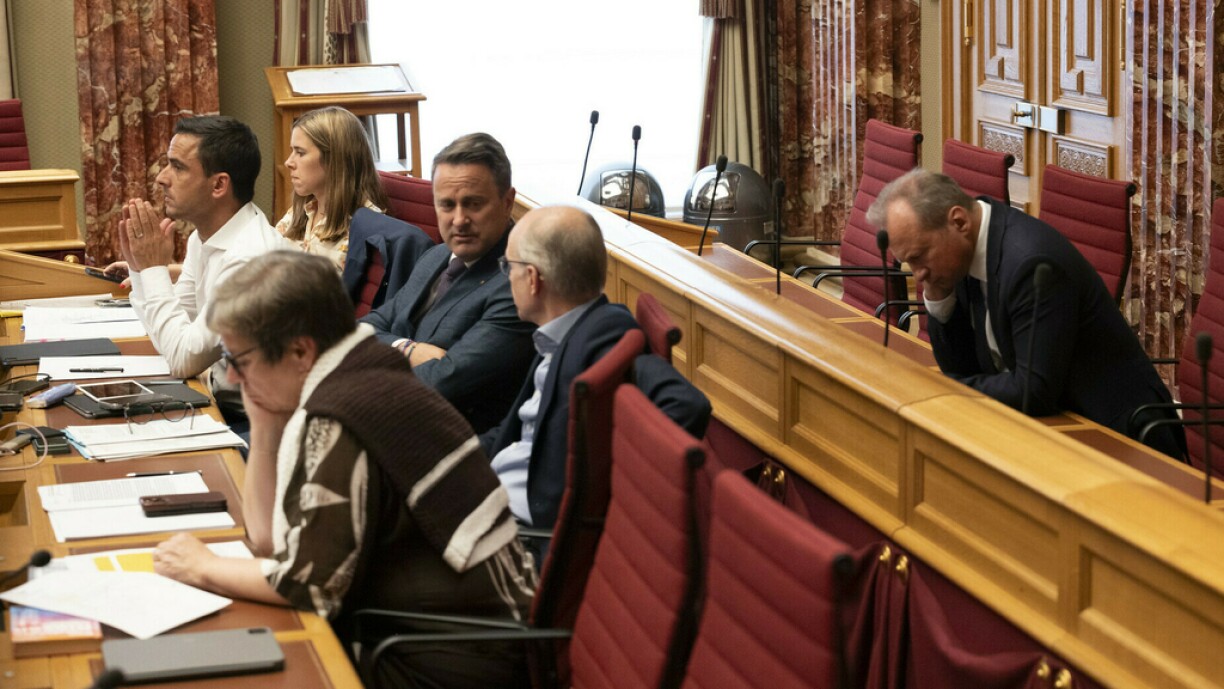
On Tuesday afternoon, the Chamber of Deputies held a policy debate on the findings of the Special Parliamentary Committee on the Caritas Affair.
The scandal first came to light nearly a year ago, revealing that €61 million had been embezzled from the organisation. In response, the government halted all funding transfers to Caritas, and most of its operations were later taken over by the newly established non-profit Help on the Ground (HUT).
The parliamentary committee was tasked with reviewing the political handling of the crisis, particularly whether Caritas could have been salvaged.
While all MPs agreed that the embezzlement severely damaged the sector, opinions were divided on the government's response. Shortly after the scandal broke, Prime Minister Luc Frieden announced that state funding to Caritas would be suspended pending further investigation.
MP Charel Weiler of the Christian Social People's Party (CSV), who chaired the special committee, defended the decision: "Given the chaotic circumstances, swift action was both understandable and justified." He emphasised that preserving jobs and ensuring continuity for employees had been the priority – "this was the most critical objective, and it was achieved".
However, the opposition criticised the government's approach. MP Djuna Bernard of the Green Party (Déi Gréng) argued that authorities had been too passive, failing to bring key stakeholders together. "The shortcomings stemmed from a lack of proactive communication, political will, and an underestimation of Caritas' role as an organisation rooted in Catholic social values," Bernard stated.
The discussion grew heated toward the end of the session when the CSV and the Democratic Party (DP) introduced a motion to forward only select recommendations from the special committee's report to the government. An alternative proposal by Taina Bofferding, head of the Luxembourg Socialist Workers' Party (LSAP) parliamentary group, which sought to submit all recommendations, was rejected on the grounds that not all were of equal importance.
A visibly frustrated Bofferding accused the majority parties of undermining what had otherwise been a constructive debate. "Honestly, the public watching this must think we've lost our minds – this is simply ridiculous", she said.
Another recurring criticism during the debate centred on the banks involved in the scandal, with MPs arguing they had failed to exercise due diligence. Some also contended that the government had not scrutinised the banks' role closely enough. LSAP MP Franz Fayot noted that the decision to cut Caritas' funding had been based on two legal opinions, which, in his view, had been interpreted too rigidly – effectively eliminating any chance of saving the organisation.
The judicial investigation into the Caritas scandal remains ongoing. According to Radio 100,7, the first verdicts could be announced shortly.





