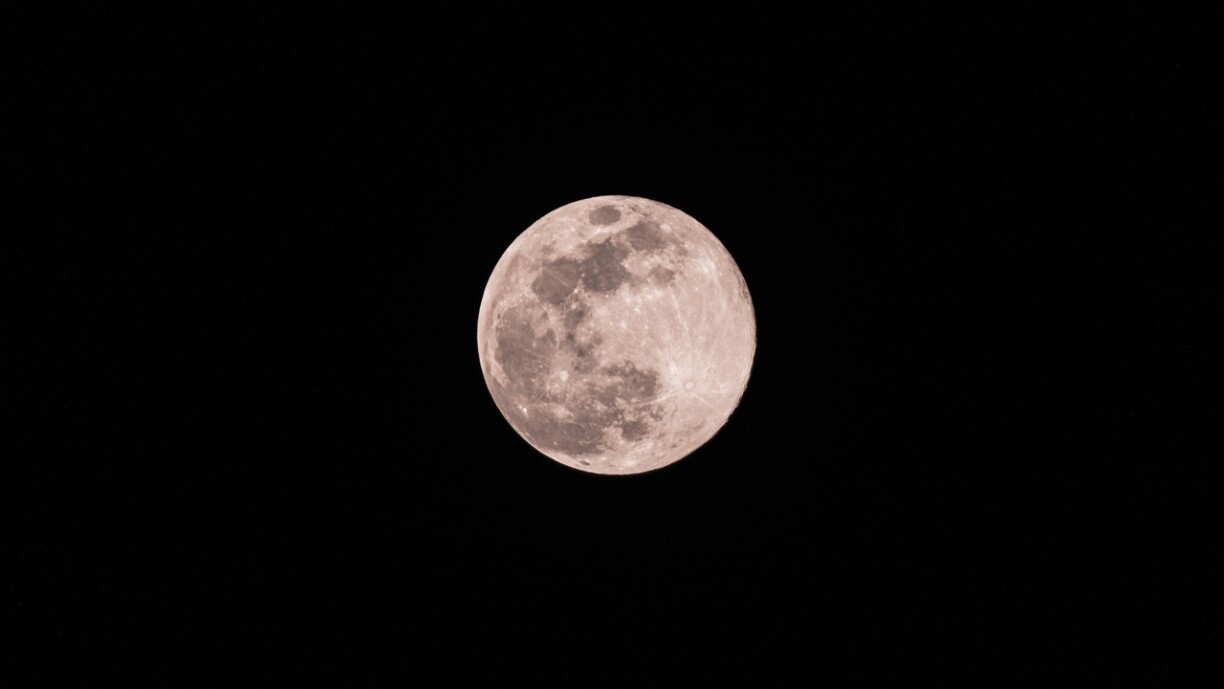
The Wolf Moon will illuminate the night sky late Monday evening, appearing in the constellation Gemini at 11.12pm with a brightness of -12.5 magnitude on the astronomical scale, which is considered extremely bright.
The name "Wolf Moon" originates from the howls of wolves often heard during the cold winter nights of January and February, a term likely inspired by Native American folklore that linked wolves to lunar mythology.
Meanwhile, Comet ATLAS is making its closest approach to the Sun on 13 January, and it could become one of the brightest comets of the year. Despite its anticipated brightness of up to -3.8 magnitude – comparable to Venus – spotting the comet from Luxembourg will be challenging due to its position near the Sun and the risk of it evaporating. The comet may be more visible from the Southern Hemisphere.
Fortunately, weather conditions in Luxembourg are ideal for stargazing, with clear skies expected under the influence of high pressure. Temperatures will hover around freezing point, so stargazers should wear the proper attire plan to observe the night sky.
The Wolf Moon will be easily visible to the naked eye, while a telescope can reveal intricate details of its surface. For Comet ATLAS, binoculars or a telescope are essential, though its low position in the sky may make observation difficult.
Are you planning to capture the Wolf Moon or Comet ATLAS tonight? Send your photos to foto@rtl.lu and we'll compile all reader photos into a big image gallery!





