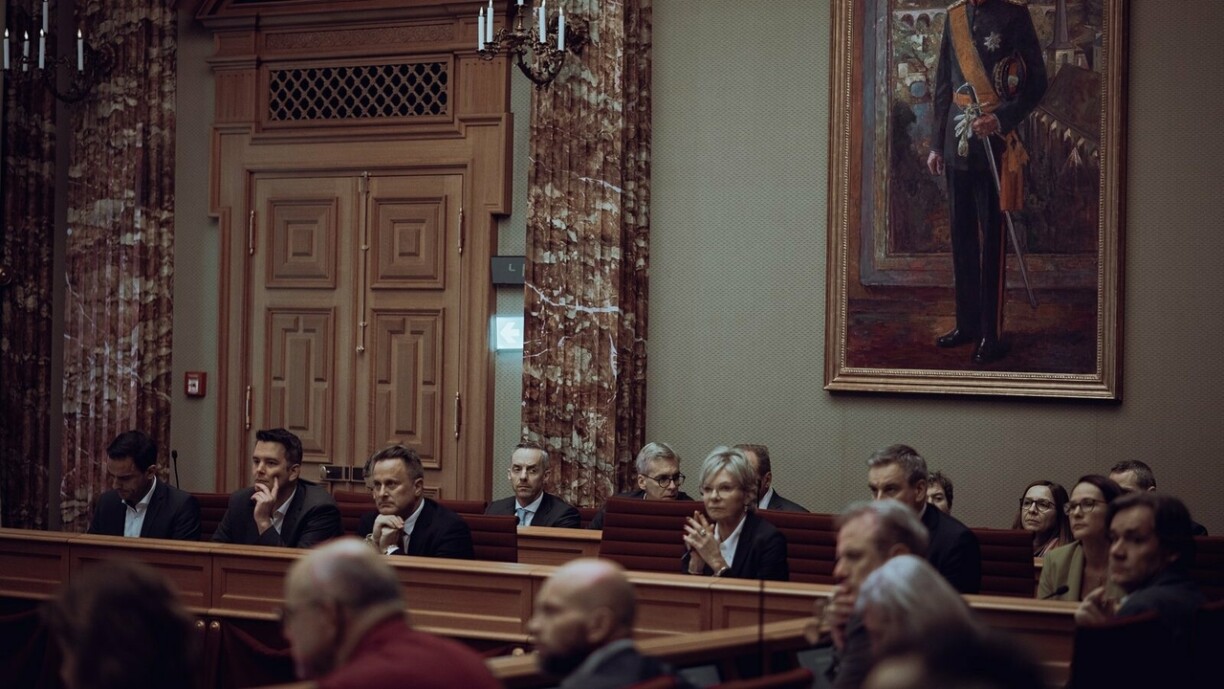
As anticipated, government parties commended the address, while the opposition voiced criticism. Debates started at 9am, with only four parliamentary groups speaking before the lunch recess.
Marc Spautz, president of the Christian Social People's Party (CSV) parliamentary group, was the first to address the assembly. Spautz expressed dissatisfaction with media coverage and initial opposition reactions, arguing they overly fixated on how the government plans to finance its measures rather than delving into the address's substantive content.
Fred Keup, representing the Alternative Democratic Reform Party (adr), highlighted several omitted topics in Frieden's speech. Keup noted the absence of discussions on crime, migration, and integration, emphasising the overlooked importance of identity and family policy. He underscored that the government's performance would be evaluated based on crime reduction and healthcare improvements over the legislative term. Keup also raised concerns regarding the preservation of the Luxembourgish language.
Throughout Spautz's remarks, opposition members kept questioning how the government plans to implement its measures. In response, the CSV parliamentary group president assured that the announced measures would materialise, inviting the opposition to assess progress in the coming years.
Following the morning session, the floor was given to the remaining opposition parties in the afternoon.
MP Sam Tanson of the Green Party (déi gréng) asserted that the Prime Minister's address primarily catered to high-income earners. In addition to underscoring the inadequate focus on citizen participation, Tanson voiced apprehensions regarding the rule of law. She criticised the government's approach, particularly in the contentious context of the begging ban, as top-down.
Tanson further criticised the government's communication strategies, emphasising the need for improvement in this regard.
The Green Party anticipates the introduction of the new information bill, reiterated in the state of the nation address. Expressing disappointment, Tanson highlighted the absence of concrete commitments regarding biodiversity preservation and environmental protection. Instead, she noted, the Prime Minister's rhetoric suggested a nonchalant attitude towards these critical issues. Tanson criticised the government's rhetorical prioritisation of other initiatives over climate protection.





