As opposition to the project gained momentum, a shift occurred within the governing Luxembourg Socialist Workers' Party (LSAP).
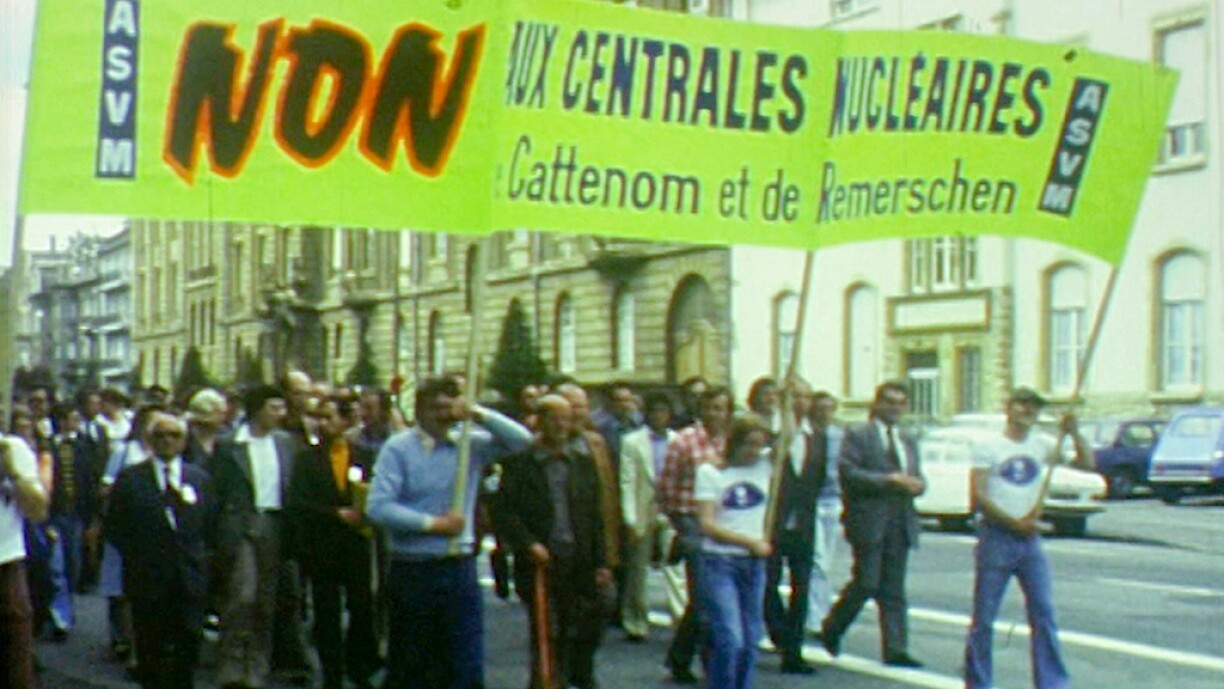
The initial wave of protests originated across the border in Germany, where residents of Perl voiced their concerns over plans to construct a nuclear power plant along the Moselle River. Soon after, on the Luxembourg side, the citizens' initiative "Museldall" emerged, with Élisabeth Kox-Risch assuming presidency.
What began as localised protests gained significant traction when a group of Luxembourgish scientists aligned themselves with the dissenting voices. Physicist Claude Wehenkel spearheaded an appeal to Luxembourgish scientists residing abroad, eventually leading to the formation of the National Action Committee for a Moratorium (CNAM). Luxembourg's first environmental organisations also joined this action committee.
The CNAM orchestrated informational sessions, press briefings, and signature drives to foster public awareness. Their efforts extended to the distribution of stickers and flyers, amplifying their message throughout the population.
Norbert Stomp, former CNAM President, recalls the grassroots nature of the movement, with members financing activities through the sale of homemade goods and personal contributions.
Backed by the scientific community, the CNAM raised pertinent questions about viable alternatives to nuclear energy and scrutinised the necessity of the proposed power plant. Claude Wehenkel highlights the Ministry of Energy's purported overestimation of Luxembourg's energy demands as a tactic to justify the project.
During the tenure of the LSAP and the Democratic Party (DP), the government found itself grappling with the unexpected escalation of opposition to the Remerschen project. While the DP maintained unanimous support for the plans, tensions arose within its coalition partner, the LSAP.
As deliberations regarding the project's merits and risks persisted, revelations emerged regarding severe miscalculations regarding its projected profitability. This revelation dealt a significant blow to the project's credibility in the public eye.
Amidst internal discord, the LSAP convened an extraordinary energy congress in December 1977. While the party leadership and ministers largely favoured the project, the party's rank-and-file membership remained divided.
Ben Fayot, an LSAP member present at the congress, recalls a dichotomy within the party, with prominent figures like Jacques Poos, then-Minister of Finance and "rising star" of the party, aligning with the pro-nuclear faction, while opponents were led by lesser-known individuals.
Historian Sacha Pulli sheds light on the congress proceedings, noting that members voted on four motions. The first was "against," the second "in favour," the third "in favour of the moratorium," and the fourth "in favour but only if certain conditions are fulfilled."
According to Pulli, the latter was basically a pro-nuclear vote since the conditions were already certain to be fulfilled. The opponents of the project considered that it was more realistic to vote for the moratorium instead of flat out against the project, a choice which Pulli characterises as "a strategic decision."
Following extensive deliberations spanning over six hours and featuring 31 speakers, the final tally revealed 153 votes in favour of the nuclear centre project and 156 in favour of the moratorium. This outcome prompted a halt to the project, ultimately leading to its abandonment in the subsequent years.
Full report by RTL Télé (in Luxembourgish)





