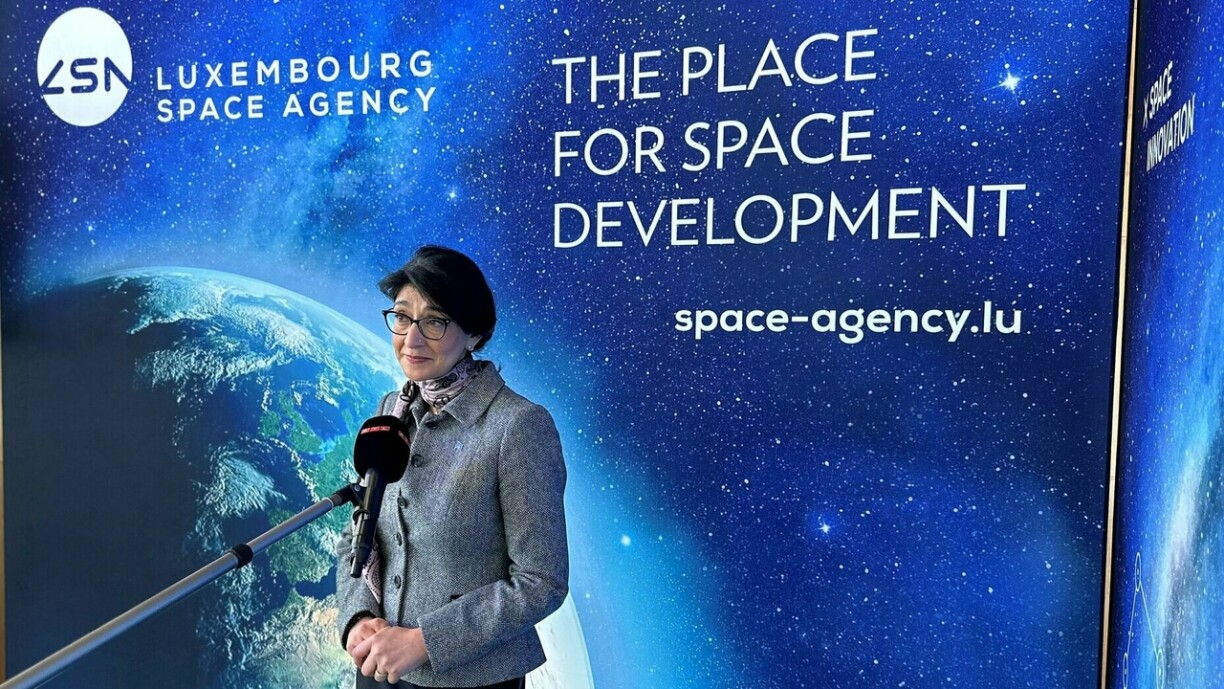
Driven by a desire to diversify its economy, Luxembourg has attracted approximately 80 companies and start-ups to its space industry landscape. Each year, the Space Resources Week serves as a pivotal event, drawing participants from around the globe, including representatives from esteemed organisations like NASA.
With an eye toward making an indelible mark in space, Luxembourg is poised to achieve a significant milestone by the end of 2024. The deployment of the first Luxembourg rover on the moon, designed to collect samples and transmit data to agencies such as ESA and NASA, represents a milestone for the nation. The robot was almost entirely made in Luxembourg.
Dr Kathryn Hadler, Director of the European Space Resources Innovation Centre, highlights the immense potential the Grand Duchy holds in this domain, citing its robust ecosystem, abundant expertise, and proactive support systems for start-ups.
Employing approximately 1,500 individuals, the space industry in Luxembourg garners significant attention during Space Resources Week in Kirchberg, serving as a pivotal forum for collaboration and exchange.
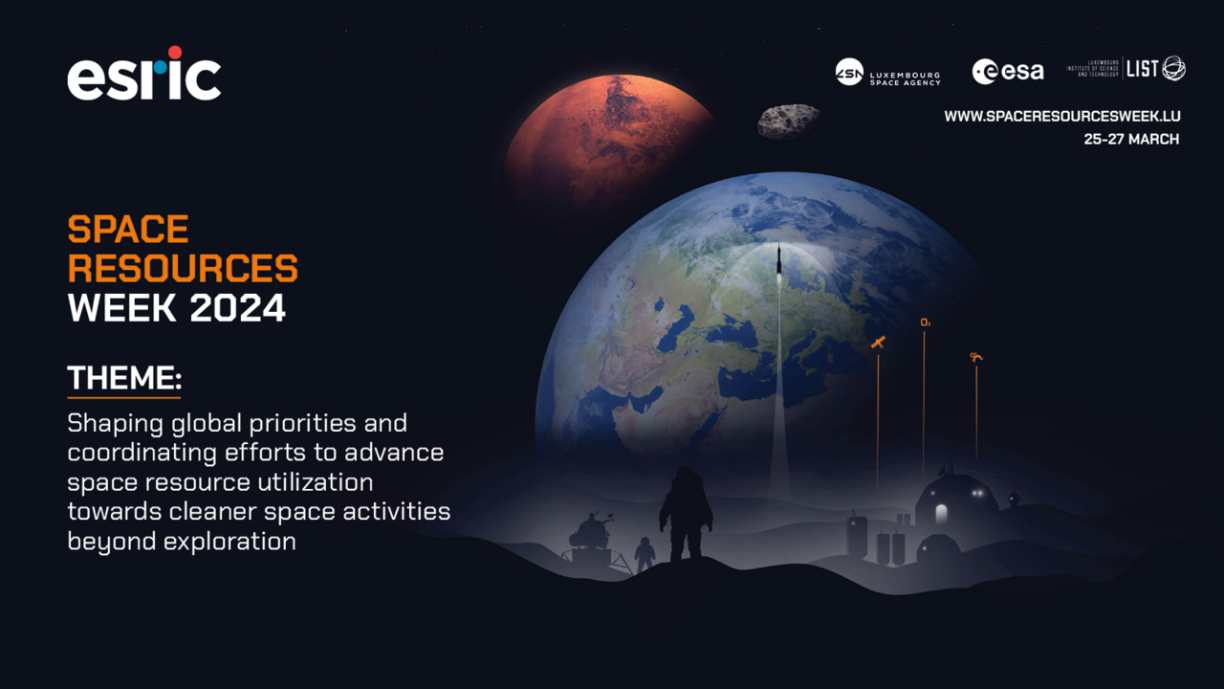
The ESA's "Explore2040" programme sets ambitious objectives, including preparations for humanity's first journey to Mars. ESA astronaut Matthias Maurer underscores the critical role of lunar resources in these endeavours.
Maurer emphasises the significance of water resources discovered in the moon's polar regions, which were previously inaccessible to Apollo astronauts. Leveraging these resources could revolutionise space exploration, enabling the extraction of water and oxygen essential for sustaining future missions. Moreover, lunar resources could facilitate the production of rocket fuel, potentially transforming the moon into a pivotal refuelling station for missions venturing deeper into space.
As advancements in space technology progress, the prospect of functionally orbiting and refuelling satellites presents a promising solution to prolonging their operational lifespan while simultaneously addressing the escalating issue of space junk. In recent decades, the proliferation of space junk has emerged as a pressing concern, as highlighted by Dr Aarti Holla-Maini, Director of the United Nations Office for Outer Space Affairs (UNOOSA). Describing the abundance of debris in orbit as "insane," Holla-Maini underscores the urgency of the situation, noting its detrimental impact on space technology worth millions of dollars. Satellites, critical for navigation, research, and climate crisis mitigation, are particularly vulnerable to damage from space junk.
Improved control over space debris production is therefore paramount to sustain ongoing scientific endeavours and ensure the continued functionality of vital satellite systems, according to Dr Holla-Maini.
Harnessing lunar resources, particularly from the Moon's South Pole, could become a reality in the coming decades – and Luxembourg could be a part of it one day.
Full report by RTL Télé (in Luxembourgish)
LINK: Full programme of "Luxembourg Space Resources Week" [EN]





