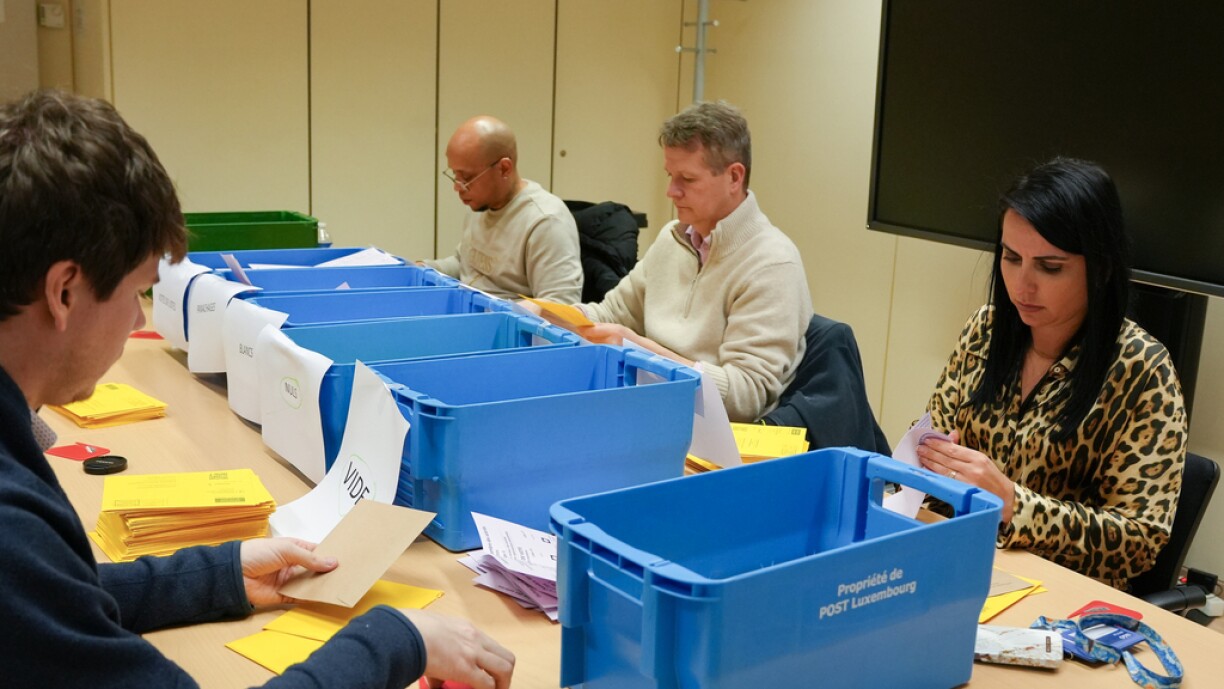
With an electorate of over 600,000 potential voters, it is likely to take another couple of weeks until the results are completely counted. But so far, a clear trend has emerged which may not thrill the country's biggest trade unions.
With around three-quarters of the 4,000 strong company delegation results counted, the so-called "free lists", or unaffiliated union members, have thus far obtained around 56% of the vote, compared to the OGBL's 26% and the LCGB's 14%.
In the run-up to the social elections, the trade unions acknowledged that they were fully aware of this phenomenon, with OGBL president Nora Back warning of the rise in popularity during a campaign talk six weeks ago.
"Then there is no support from the union and no means for people to negotiate, no way of obtaining a collective agreement. There's no information and no training. I have to say it is often the case with these so-called 'free lists', that many of them consist of the employer picking several staff members at random and calling them the staff delegation. This isn't what we call good staff representation."
The Federation of Artisans has declared the free lists the big winners of the social elections.
In trade businesses with over 100 staff, the free lists account for 77% of elected staff delegations. The OGBL and LCGB, with 14% and 8% respectively, are merely fringe members on that level.
This result is also a reason for politicians to prioritise amending the legal framework in order to allow the organisation of work and working hours to be decided between employers and the staff delegation.
Social elections 2024: OGBL, LCGB and ALEBA are happy with the results





