UNICEF's Chief of Communications and Advocacy, Damian Rance, has described how living in a war zone has seen normal childhood suspended for the children of Ukraine.
Speaking on the Sam Steen Show from Kiev, Damian is on the ground working with children from the front-line zones whose lives have been ravaged by the effects of the war.
Arriving in Ukraine at the start of October 2022, more than six months after the war broke out, Damian witnessed the beginning of the heavy aerial attacks. Large cruise missiles were being dropped on the centre of towns and cities, causing unimaginable devastation.
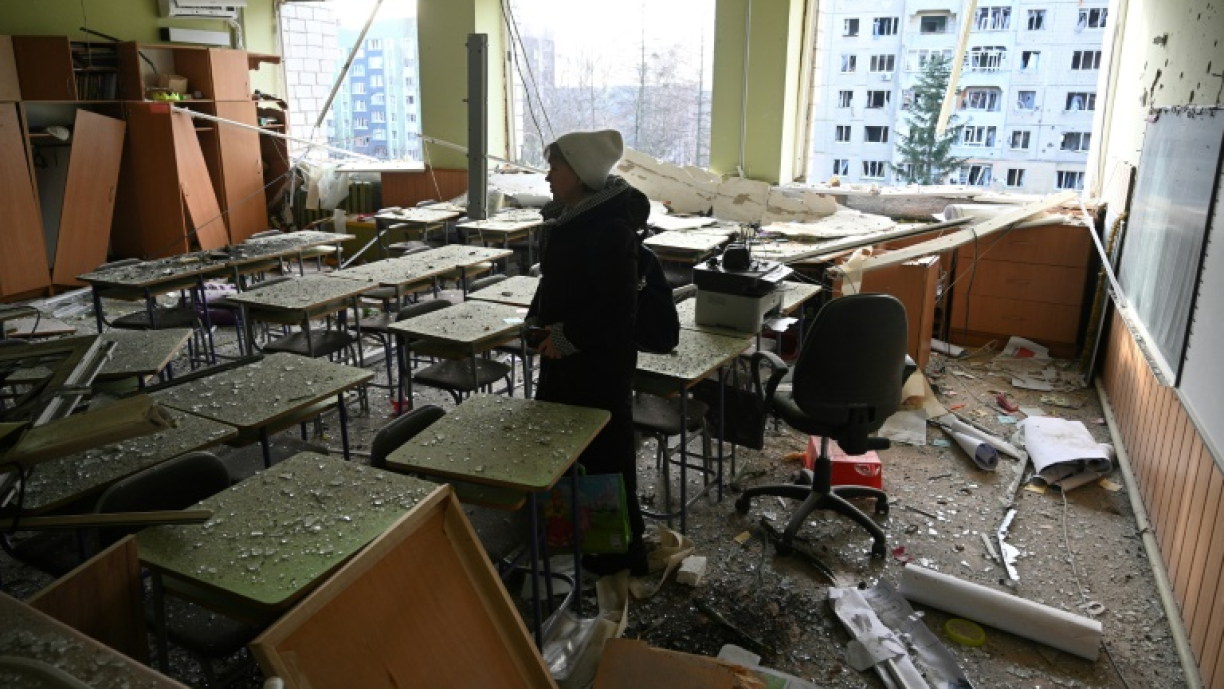
"That was really the beginning of the winter attack campaign of 2022 so what we saw at that time was a significant number of electricity substations, power generations stations, critical infrastructure, heating and the like being targeted and that was a new thing at the time. Since then, we have seen a continuation of aerial attacks, which have targeted schools and hospitals.”
Damian points out that according to government figures, over 3,800 schools have been either damaged or destroyed since the start of the war.
This has resulted in a growing number of children suffering from a deterioration in learning proficiency, he explains.
"Only 50% of children in Ukraine can currently attend school in person on a continuous basis. The other half of the country’s schoolchildren either have to attend school solely online or attend school in a “mixed modality”, which is part online, part in person, where schools are in a position to open."
In terms of "learning attainment" the children are at least one year behind in terms of mathematics ability and two and a half years behind in reading and writing compared to where they are expected to be, according to recently released OECD studies on Ukraine.
Over 5,000 hours or around five months of air raid alerts in the east of Ukraine since the beginning of the war has meant that children’s education and studies are being interrupted every time the alert is signalled as they must quickly seek out refuge in a basement or a bomb shelter, Damian explains.
"A scary, traumatic and stressful" reality for many children living in the front-line zones.
The daunting reality of this is that the effects will be felt deeply and have a domino effect on future generations.
The war is having a "massive impact" on the mental health of the children of Ukraine and the stark reality is that one in five children require specialist care for mental health problems.
“Unless those issues are managed at an earlier stage, these are the kind of issues that can progress in adulthood and become lifelong. That is also something that will impact the ability of Ukraine to recover in the future.”
"It's the cohort of children who are students now who will be expected to play a significant role in the recovery of Ukraine once the war ends creating a "deficit" in terms of needing to recover when its needed most."
All along the front line, where there are constant attacks and air raid alerts, the children have not been able to attend school and that has brought isolation because of two years of not being able to play with their peers and not being able to speak to other adults outside the home.
Damian describes how one child he met a child who was eight and a half had never been to school in person before.
"Two years of war is taking its toll on children's mental health and this follows on from two years of online learning on the back of COVID," he points out.
UNICEF last year reached over 2.5 million children and their caregivers with mental health and psycho-social support. This involves making sure that psychologists are available, ensuring people know where they can go to get psychological help for children if they need someone to speak to.
Canine therapy is another way UNICEF is working to try to mitigate the isolating effects of the war on children, Damian adds.
By running free, child-friendly classes several times a week, children can come together and play with the dogs as well as each other, while also providing an outlet for parents, who are suffering immensely as they try to maintain households under the duress caused by the war.
"It’s about letting them experience a normal childhood again," Damian says, "because what we are seeing has been far from normal."
Addressing mental health difficulties in children must be seen as a package where their caregivers are also included in the process, he emphasises.
UNICEF has also helped over one million children to continue their schooling, including the provision of laptops and devices and are working to rehabilitate school buildings so they can accommodate more students in person. Also, training is made available to teachers to help them recognise when a child might need psychological support and to ensure they are referred for specialist care if needed.
As children don't have the ability to process what's going on around them and the stresses in their environment this is also manifesting in more obvious ways.
"There is an awful lot of stress and trauma to be processed and what we are seeing is an uptick in bed wetting, nervous disorders and speech impediments," Damian reveals.
"The more protracted the war becomes, the more serious and the greater the scale of the issues in the long term."
Lifesaving, humanitarian assistance and care is also being provided on top of this support, Damien adds.
In order to fund the integrated programmes aimed at rebuilding the education system as well as the health and mental health systems, UNICEF needs resources and funds urgently.
"Generous donations have made this work possible and Ukraine's children depend on this. I strongly urge people to donate to UNICEF if they have the ability," Damian concludes.
For more information on the work of UNICEF in Ukraine and to support their efforts visit their website.





