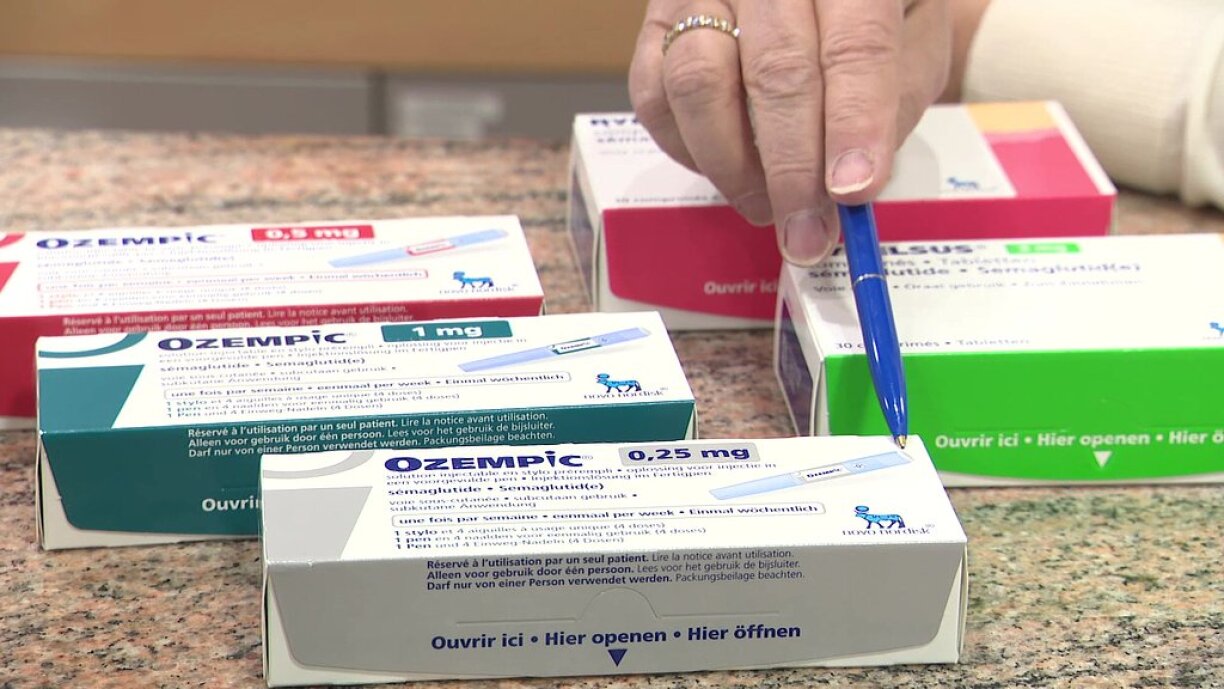
The medication primarily takes the form of injections which regulate a patient's blood sugar levels - but they also reduce appetite.
Although the products are dispensed via prescription, there has been a significant uptake in the number of people taking the medication to boost their weight loss, rather than for medical reasons. As a result, demand has skyrocketed and manufacturers have struggled to keep up.
Drugs such as Ozempic - made by Danish supplier Novo Nordisk and approved as a diabetes treatment in 2017 - have garnered significant media attention over the past year, with celebrities such as Elon Musk admitting they use the medication to help them shed weight.
In addition to the millions of diabetic and obese patients seeking out the drugs, countless others without severe health issues are asking doctors for "off-label" prescriptions.
The rising popularity of these drugs has led to delivery bottlenecks, causing concerns for patients suffering from chronic diabetes.
In Luxembourg, for example, patients using the drug Trulicity have reported difficulties in obtaining their regular medication.
Pharmacists in the Grand Duchy say their stock is constantly on back order and deliveries are sporadic at best. It is thought the issue will persist into 2024.
Due to the limited stock, patients have been offered alternatives, such as tablets, while national advice states that patients who tolerate the injections well should continue with this course of medication, meaning their prescriptions are to be prioritised above others.
The National Health Fund (CNS) has indicated it will only compensate the medication - which costs around €100 per prescription - in full if it is explicitly stated that the drug has been prescribed to treat diabetes.
Video report in Luxembourgish:
Wegovy, Mounjaro, Ozempic... These new drugs drawing such intense attention have raised the hopes of millions around the world suffering from diabetes or obesity. But what are they, how are they used and who makes them?
These drugs imitate a hormone known as GLP-1 (it stands for glugacon-like peptide-1), which is secreted by the intestines. It stimulates insulin production and creates a feeling of fullness, suppressing the appetite.
This class of drugs is used to manage Type 2 diabetes -- the most common type -- and to help with weight loss.
They are administered by weekly injection, but big drug makers like Novo Nordisk, Eli Lilly and Pfizer are working to develop a pill form to be taken daily.
Side effects include nausea, vomiting and gastrointestinal troubles.
Danish pharmaceutical giant Novo Nordisk, the world leader in diabetes treatments, uses the drug semaglutide in its Wegovy treatment for obesity, and in Ozempic for Type 2 diabetes.
Wegovy received US approval in 2021. It is sold in Denmark, Norway, Britain and now Switzerland. Novo Nordisk hopes to receive French certification next year.
Ozempic got US authorization in 2017. Supply shortages there recently resulted from furious demand by people hoping to lose weight, often after seeing glowing reports from celebrities or influencers on social media.
In the United States alone, Wegovy and Ozempic are expected to generate sales, respectively, of $8.1 billion and $2.1 billion by 2031, according to a GlobalData report in March.
Eli Lilly's drug tirzepatide has been marketed as Mounjaro for Type 2 diabetes sufferers since US health authorities greenlighted it last year. It has also been prescribed on an "off-label" basis, that is, for purposes not specifically approved -- in this case, for weight loss.
Tirzepatide, to be sold as Zepbound, did receive US approval for treatment of obesity on November 8.
Zepbound is prescribed both for the obese and for overweight patients with underlying conditions like Type 2 diabetes, elevated cholesterol or high blood pressure.
Eli Lilly set its price at $1,060 a month.





