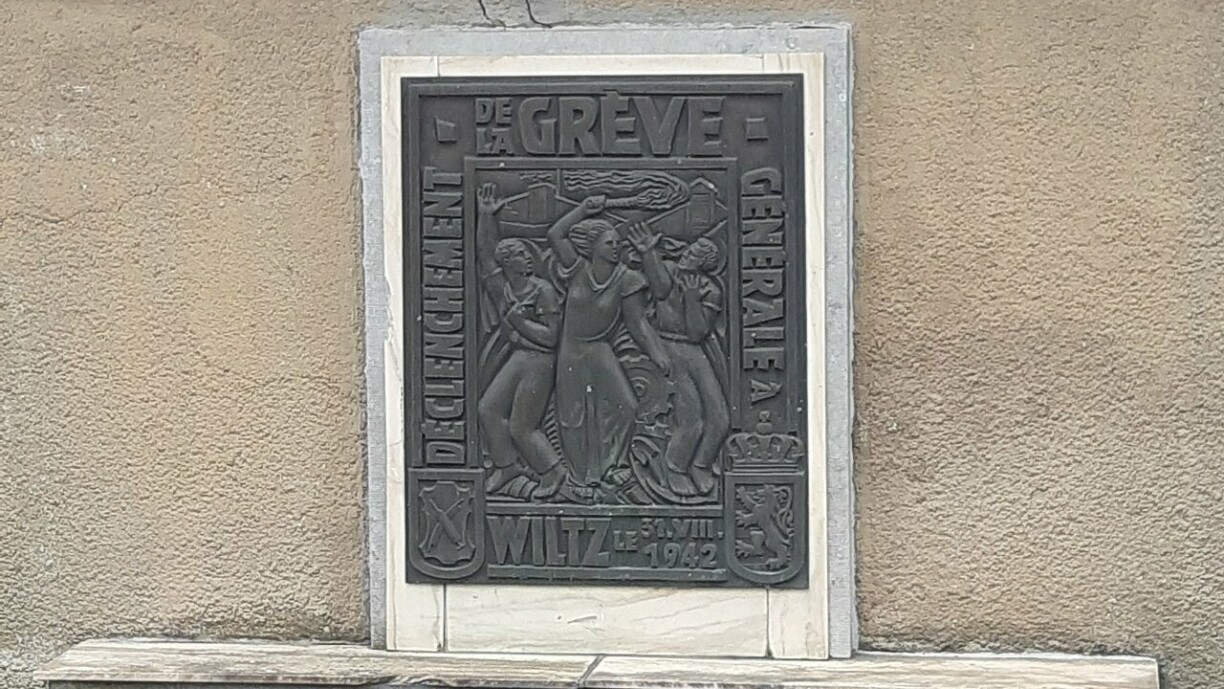
In August 1942, Gauleiter Gustav Simon, the regional leader of the Nazi Party overseeing Luxembourg, announced the enforced conscription of locals into the German Wehrmacht. 10,000 young Luxembourgish men and 3,600 women were thus left with no choice but to enter the military service of the enemy.
Not everyone did so voluntarily, however, and a number of people decided to enter a general strike 80 years ago. On 31 August 1942, Luxembourgers thus took a stand and convened in Wiltz to resist the conscription.
2022 also marks 80 years since the Wannsee Conference, the meeting where senior Nazi officials decided on the systematic genocide of Jewish people, including those living in occupied Luxembourg at the time. Over the course of the war, seven deportation convoys bound for concentration camps left the Grand Duchy.
A statement released by the government on Sunday highlights the special significance of this year's commemoration in light of the war in Ukraine: freedom, democracy, and peace as foundations of our society that are worth defending.
PDF: Government statement (LUX/FR)
Many of Luxembourg's towns will host commemoration ceremonies on Sunday, including the municipality of Luxembourg City.
At 10am, Grand Duke Henri will be at the National Solidarity Monument, also known as the Cannon Hill, to place flowers. He will then go to the Memorial to the Victims of the Shoah and the Monument of Remembrance, more commonly known as the Gëlle Fra.
At 11.30am, speeches will be given at the Deportation Memorial near the Hollerich train station. A concluding ceremony will be held at the 'Hinzerter Kräiz' ('Hinzerter Cross') in Limpertsberg.





