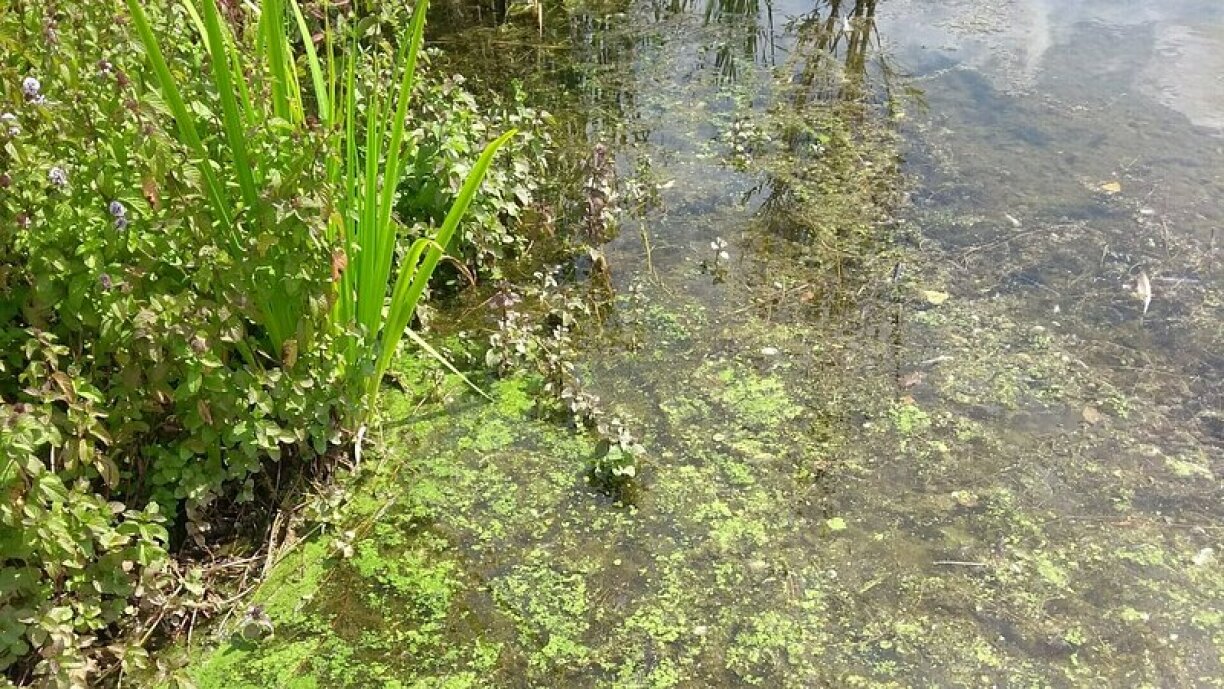
Cyanobacteria, also known as "blue-green algae", have been discovered in various places along the Moselle, especially where the water circulation is slow.
These are bacteria that are normally present in these waters but which, under certain conditions, develop excessively and can look like green flakes, greenish bundles or brown dots in a pond, lake or stream. The algae has a greenish-blue hue and can sometimes look a bit like pea soup.
Under these conditions, these bacteria can produce toxins that can cause health problems for humans and animals. These problems depend on the amount of toxins absorbed and can be manifold: skin irritations, headaches, nausea, gastroenteritis, cramps, paralysis, liver damage.
The exact cause of this overgrowth is not known, but it is often the result of an inadequate supply of nutrients for these bacteria, in the presence of high water temperatures.
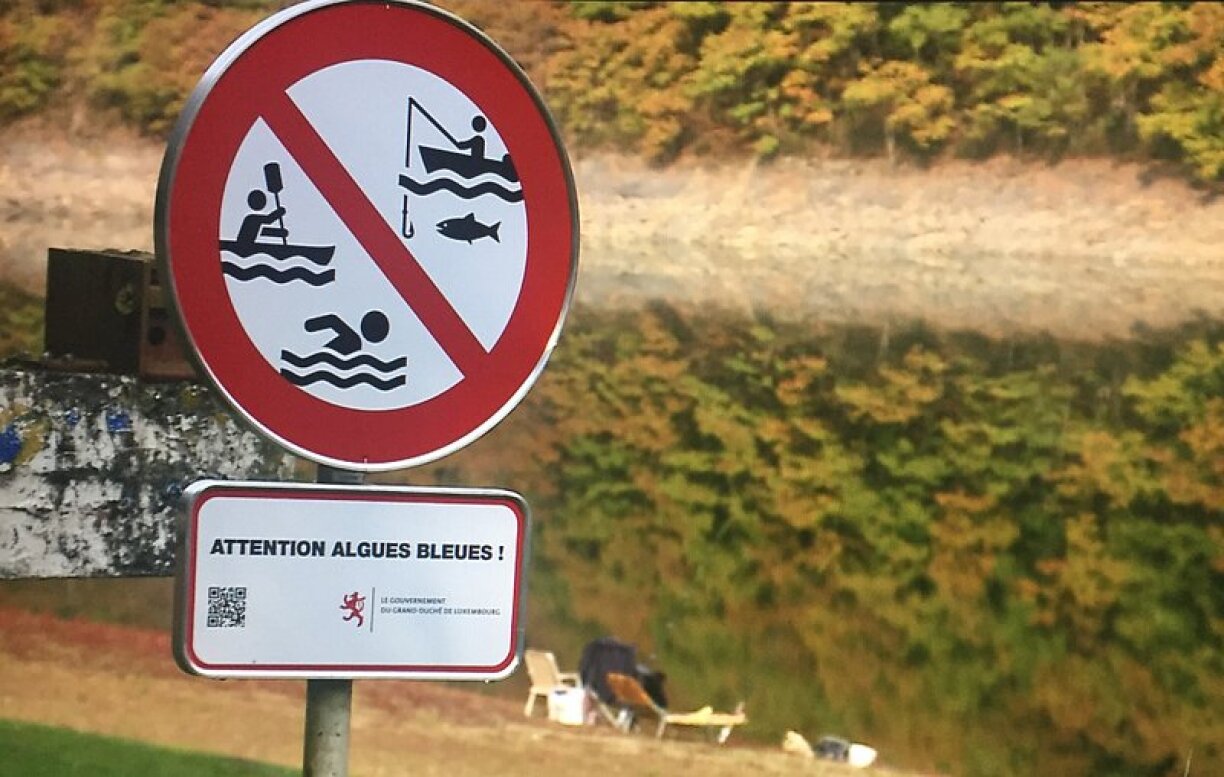
It is therefore recommended to avoid contact with water (swimming, water sports) in areas where these coloured bundles are found and to avoid swallowing this water. This recommendation applies to both humans and animals.





