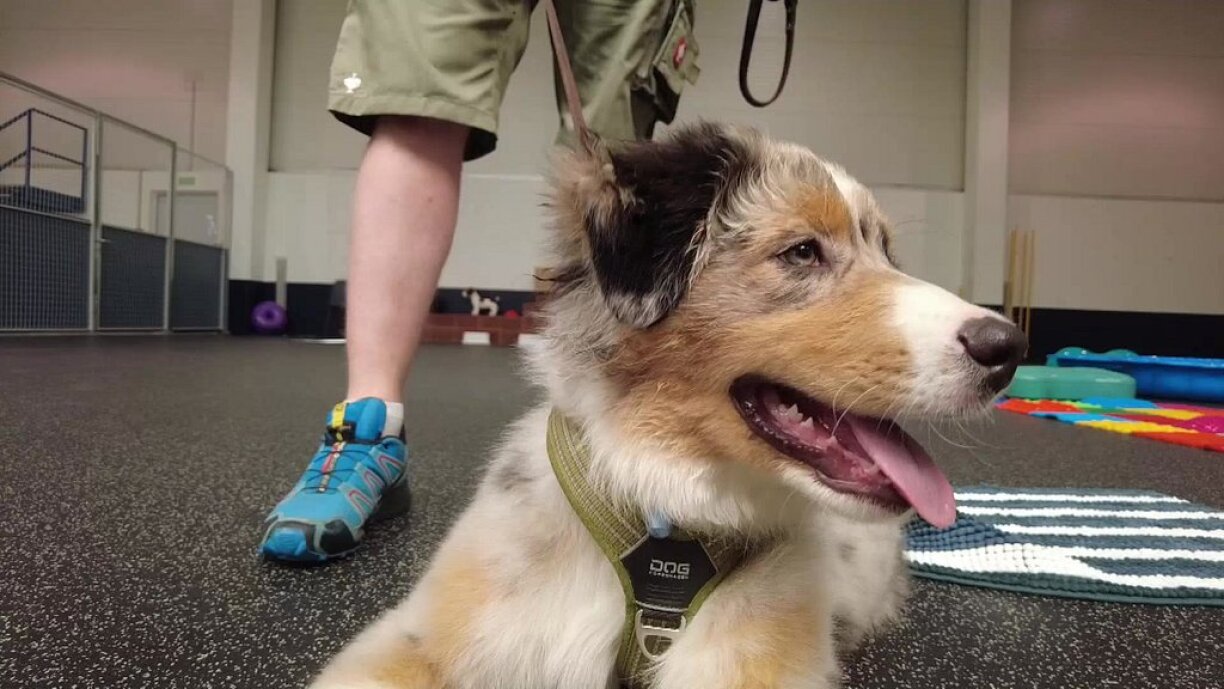
In the last six months, the municipality of Luxembourg City has registered almost as many new dogs as it usually does during a whole year.
However, the decision to adopt a dog should be thought of in the long term and not just as a hobby during the pandemic.
Waiting times at legitimate breeders are currently incredibly long. Monique Bach, who has been breeding dogs for 30 years, stated that she gets phone calls "every day", with people asking for dogs "without being aware of the responsibility it represents". Many feel "lonely" and automatically assume that a pet would be an ideal solution to that problem. However, more often than not, the prospective owners seem oblivious of the fact that they will still have to take care of their pet after the pandemic.
People need to inform themselves and make sure they are not talking to people with ill intentions. To avoid this, people can get in touch with the Luxembourg Cynological Federation (FCL), which can pass on the details of officially approved breeders.
Dog trainers are also noticing an increase in registrations. Anne Barrere is a certified dog trainer and stresses how important it was that the dog school she works at was still able to stay open during the pandemic because of its capacity. Barrere explains that in particular, the school focused on "socialisation" so that the dogs learn to be in contact with other people and other dogs. This skill was often neglected during the pandemic, she says, because of the closure of most of the country's dog schools.
German media report that more and more dogs, which were adopted as a sort-of "compensation" during the pandemic, are being brought back to the shelters. At the Gasperich animal shelter, the phenomenon is still limited so far, but they are nevertheless preparing for a possible boom.
Since the pandemic, they have noticed that people sometimes have a different attitude and, for example, ask for a dog to "pass the time". Liliane Ferron, vice president of the National League for Animal Welfare, states that she hopes that those who have recently adopted a dog have thought it through. While there is no wave of returns yet, Ferron thinks that "it will get out of hand at some point".
This is also one of the reasons why shelters have become "even stricter" when it comes to selecting an owner.
The high demand has also increased the illegal trade in puppies. Véronique Jaeger is a veterinarian and warns against the schemes of unscrupulous breeders. Puppies are said to be "produced" and transported in appalling conditions.
Dr Jaeger explains that she has noticed a significant increase in people adopting a puppy. Often, the passport does not come from the country where the dog was adopted and the puppies are sick with diarrhoea, underfed, or walk funny because they were kept in a cage. "This was simply not the case a year ago", the veterinarian explains.
The adoption of a dog should be a carefully considered decision. You should not underestimate the time and attention a pet requires and the costs caring for an animal involves. A dog is not only there to keep you company during the pandemic, it will also have to be cared for afterwards.
The full report in Luxembourgish:





