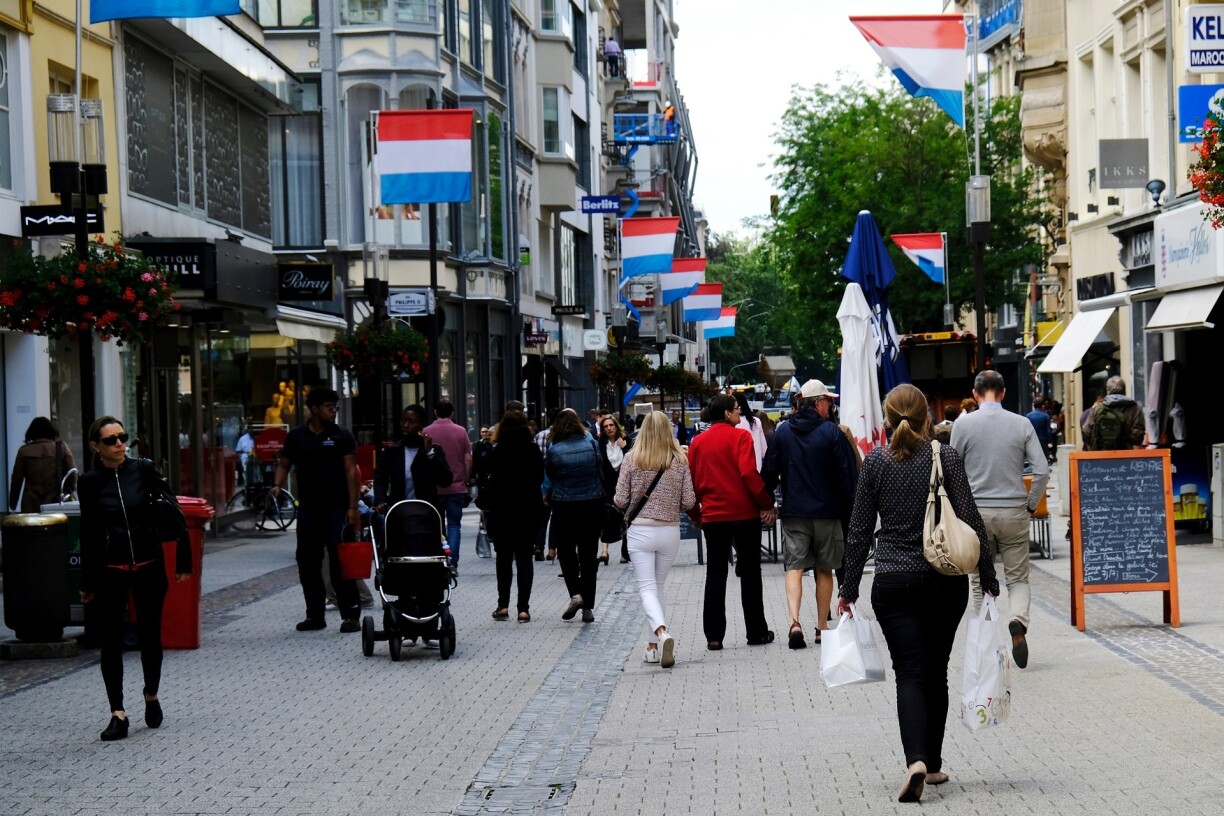
In terms of employment and public finances, Luxembourg is doing well and even continues to create jobs despite the crisis. Teleworking and government aid have made it possible to safeguard part of the country's professional activity.
Although the Grand Duchy is "resolutely one of the EU countries least affected by the economic fallout from the crisis", it has not escaped its well-known and long-lasting problems. The Idea Foundation specifically points out the impoverishment of some of its residents and property prices that are still rising. Not to mention a European vaccination campaign which "is not being rolled out at lightning speed", fuelling doubt for the coming months.
After interviewing a panel of economic and political decision-makers, social partners and economists, the Chamber of Commerce's think tank drew up a series of forecasts for the current year.
On the health front, Idea expects the main restrictions to be lifted "only in the third quarter of 2021" according to half of the respondents. They also expect that the pandemic will "probably" not be brought under control this year.
On the economic level, the risk of business failures will increase with the end of the government's aid packages. However, unemployment could remain "very close to the current level in 2021 and 2022".
The people interviewed by Idea fear a multiplication of social movements in Europe in 2021, synonymous with instability (and at their origin, substantial inequalities). According to the respondents, consumer prices are not expected to rise significantly in 2021. On the property front, the majority of respondents expect interest rates to rise gradually: up to 2.1% in 2026, compared with 1.35% last year.
Luxembourg is expected to continue to incur debt, but at quite respectable levels compared to the rest of Europe. Limited growth is expected in 2021 and 2022 (+1.5 and +2.7% according to a central scenario).
Finally, in environmental terms, "a (small) majority considers that the greenhouse gas reduction targets for 2030 are not achievable, neither in the EU nor in Luxembourg". However, it should be pointed out that this share of sceptics has fallen considerably from last year.





