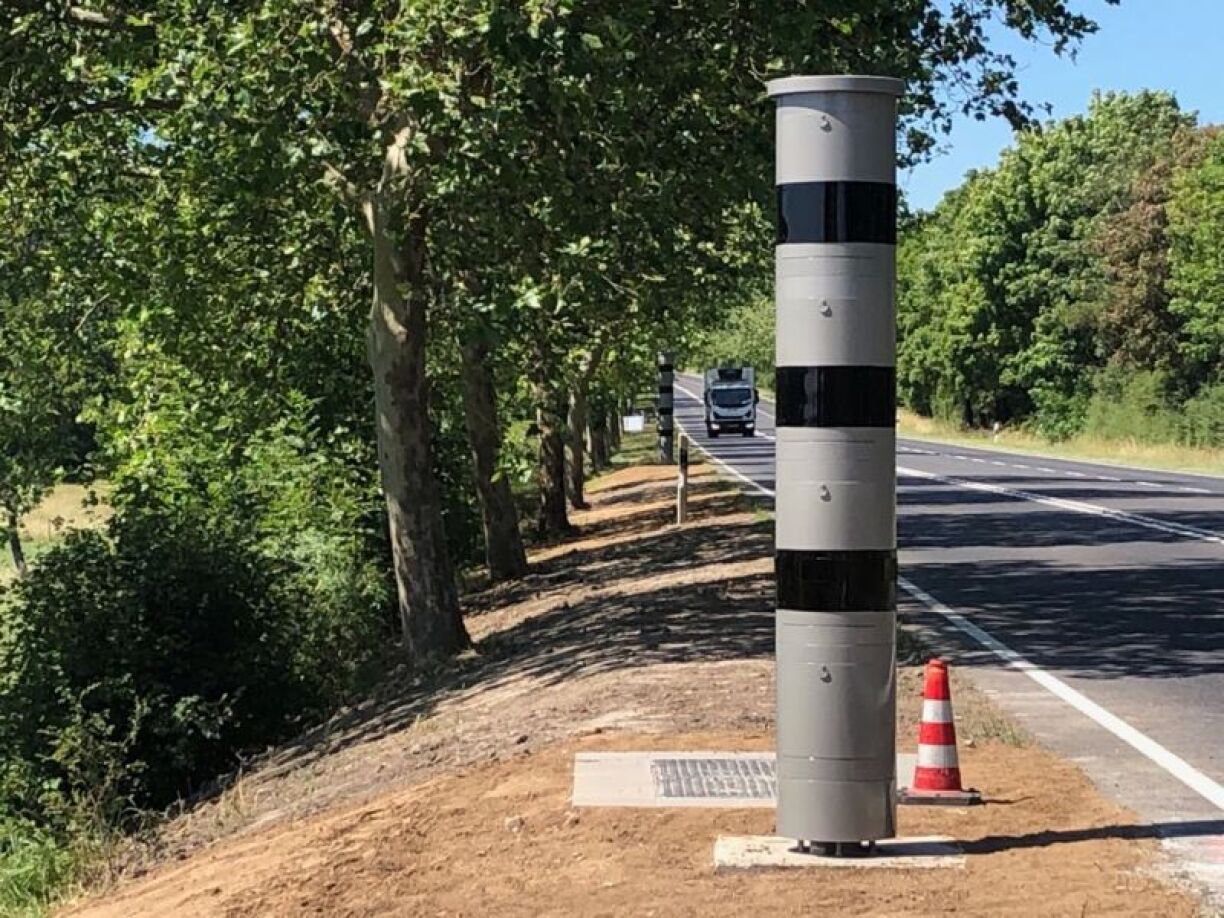
The president of the road safety association, Paul Hammelmann, declared on Monday that it is "out of the question to give up automated controls". This statement was in response to an article which was first published by our colleagues from RTL 5 Minutes on Saturday. In it, the Luxembourgish strategy in terms of road safety was compared to that of Denmark.
In his statement, Hammelmann pointed out that not so long ago, Luxembourg was one of the only countries not to have introduced automated controls. According to him, this was widely known at the time and drivers came to the Grand Duchy to "drive as they pleased".
A problem which Hammelmann stressed was resolved when controls were stepped up in Luxembourg, in particular through the installation of fixed and mobile speed cameras. Hammelmann also stressed that the law introducing them had been passed unanimously by in the Chamber of Deputies.
The president of the road safety association stated that it was a fact that people respect limitations much more once they know they are being controlled. He went on to say that this is why he was in favour of using speed cameras as the road "is not a place of lawlessness". He added that some individuals do harm to the community and as long as they are not punished, they will not respect the rules.
Hammelmann thinks that road deaths should not be considered a matter of fate. He stressed that he stands by "Vision Zéro" and hopes that Luxembourg will achieve the campaign's main objective of "zero deaths, zero serious accidents" in the relatively near future.

In order to achieve this, Hammelmann stressed, increasing the number of checks was absolutely necessary. While he is aware of the criticism surrounding the increased use of speed cameras, he argued that people accepted all kinds of controls today but found them irritating once they were done on the roads.
Hammelmann also responded to those who consider speed cameras to be "slot machines" by simply recommending that people should obey the laws and they would never have to spend a penny.
He went on to assure that the state does not make any money from speed cameras. According to him, the money collected is immediately reinvested in road infrastructure and prevention. He goes so far as to say that if one were to do the calculation, the result would be negative in terms of profitability.
Despite this statement, he confirmed that the plans to install speed cameras in tunnels and at traffic lights were still on the table.
According to Minister of Mobility François Bausch, the first devices should be installed as early as next year. Luxembourg will therefore continue its momentum in terms of road safety.
When asked about the Danish model, Hammelmann argued that it was mainly a question of mentality, stating that Scandinavians did not drive fast and accepted checks without the police having to block roads. He cited alcohol test which are sometimes carried out at red lights as an example. During these checks, the police approached motorists and made them take a breathalyser test.
Hammelmann admitted, however, that the Danish road infrastructure is to be envied, pointing out that Denmark started with what is now being put in place here 30 years ago. The country had very few trees on the roadside and when there are some left over, guardrails had been installed.
The president of the road safety association conceded that Luxembourg had some progress to make in this area, stating that the will was there, but some procedures would take too long, e.g. the presence of trees around sections considered dangerous. In his opinion, these sites should be protected by guardrails as in Denmark, or the trees should be moved.
Hammelmann stated that an advanved civilization could not accept that there still people dying on the road.
A conclusion that the Scandinavian countries came to a long time ago, he stated, pointing out car manufacturers like Volvo, who prioritised safety overall.
So the question remains as to what Luxembourg will do to change mentalities and possibly one day achieve the Holy Grail of road safety: zero deaths and zero serious injuries.





