Every few years, the Environment Agency and the Eco-council sort through waste put out by Luxembourgish residents to examine waste in detail.
Examining waste reveals a lot about the ways in which residents do not separate their different types of waste, in turn becoming a reason why the agency and council have to analyse waste at all.
Whilst the analysis is still underway, the preliminary examination shows that many residents do not separate their waste, throwing different types of waste, such as banana peels, plastic bottles, and toys into their grey bins.
The last waste examination took place in 2013. Six years later, the Environment Agency is sorting through its next examination. Already in January and February, experts took waste from 16 municipalities and separated different types of waste over four weeks in their analysis. Now, the agency and council are repeating the exercise with waste taken from a new source.
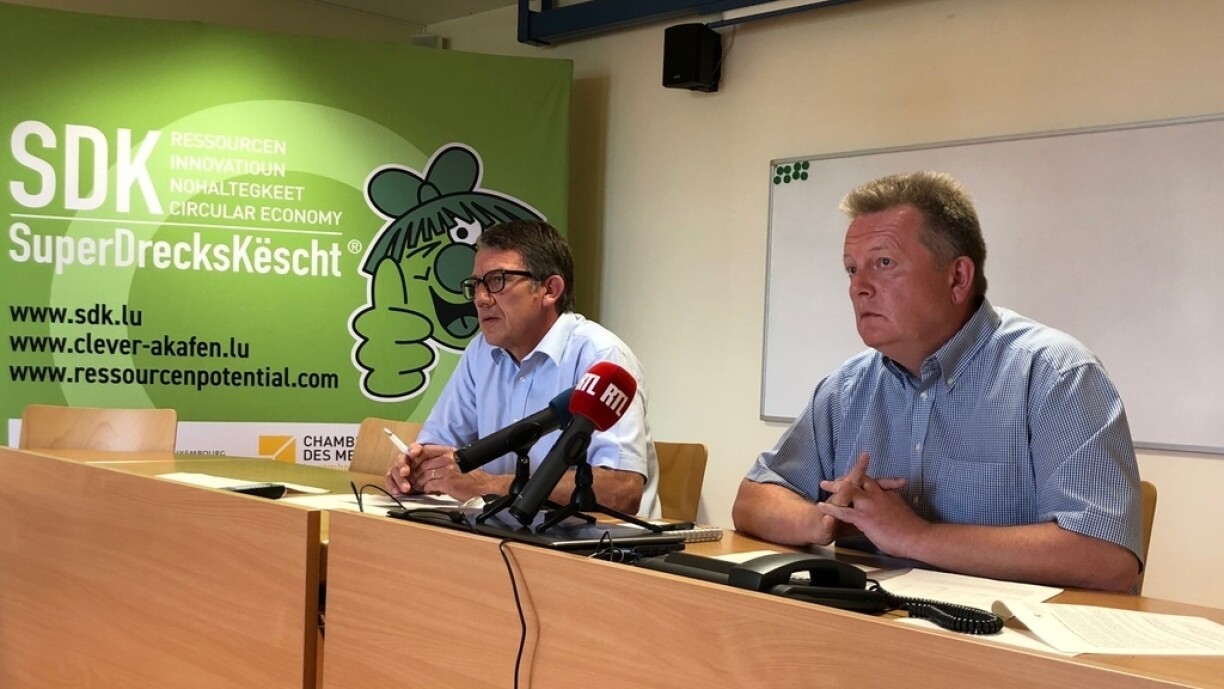
Eco-council representative Steff Schaeler explained that the purpose of the exercise is to determine what residents continue to put in their grey bins in order to provide further recommendations to the Environment Agency and the Ministry for the Environment. By examining waste, the council can tell the authorities which areas require more focus. Generally, much of the waste thrown into grey bins should be disposed of in different ways.
The process involves eleven parent categories and 27 subcategories. Sorters separate waste into each of these categories. The work may not be pleasant, but remains an important job in order to examine how Luxembourg's waste habits evolve.


Robert Schmit, the director of the Environment Agency, also explained that waste sorters experience new types of waste not previously seen.
For instance, this year they have counted a significant increase in coffee capsules, which in turn leads to the question of how to better dispose of these. Can the authorities collect them in a better way or are they recyclable? Schmit cited this as one example of how the waste analysis allows the authorities to adapt their behaviour.
On the topic of coffee capsules, Schaeler acknowledged that they may be fashionable and handy, but the environmental impact of capsules is far larger than ground coffee. Whilst the analysis is as of yet incomplete, the Eco-council has been able to determine specific tendencies. Already, the authorities are able to see that there is less printed paper and plastic put in grey bins. At the same time, there are still many body hygiene products put in household waste.
Schaeler explained that this shows that people are changing their habits and maybe even using different recycling options more. However, residents continue to dispose of problematic materials in their household waste, such as medication and cosmetics, despite the fact that Superdreckskëscht - the waste management service - offers a separate collection of these materials.
The definitive results will be published in the autumn, which will also reveal the impact of banning free plastic bags.





