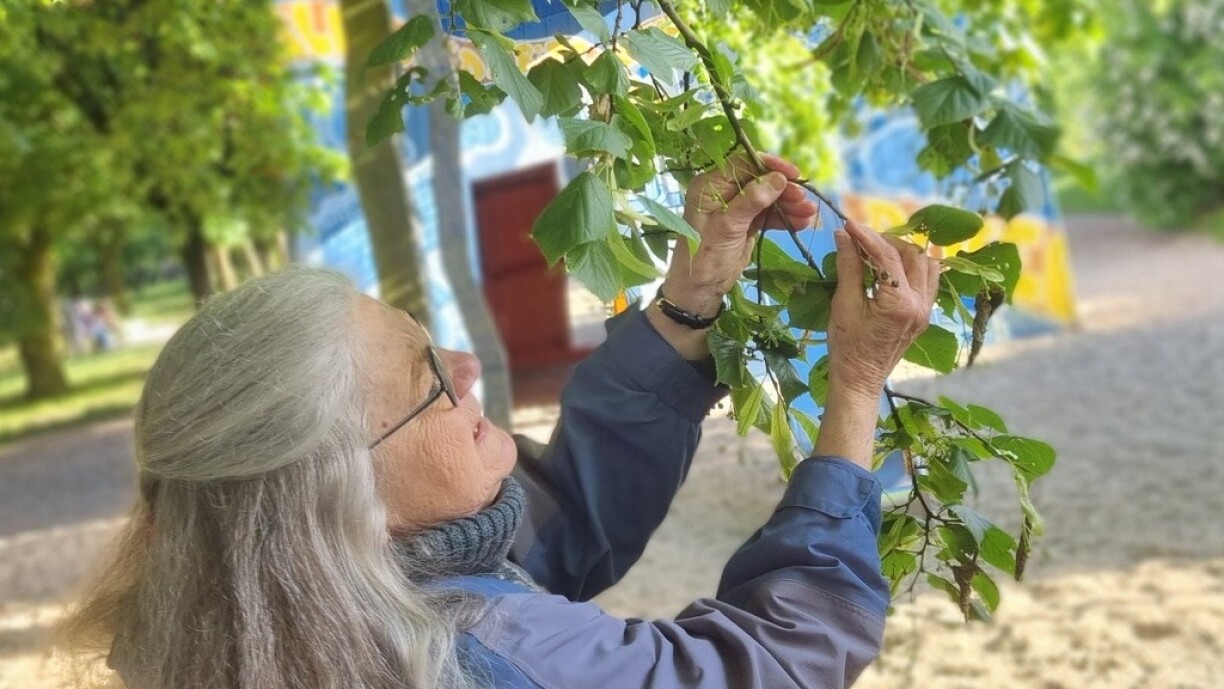
"I'm not a doctor. And at the risk of disappointing you, I'm not a witch either," smiles Viviane Craig. Regardless, the herbal therapist recognises the magic in plants, a tradition practised for thousands of years. Even modern medicine is still largely based on the extraction of active ingredients in many plants, she explains.
However, before these plants were synthesised into little tablets, people knew how to recognise them, forage them, and prepare them to treat certain conditions. Craig laments the loss of this tradition:
"Luxembourgers have forgotten the power of these plants. I realised this when I spoke to the elderly in rural Luxembourg, who reminisced back to the 1970s when they still relied on certain plants for medicinal relief. But the generations after that told me that they preferred 'real medicine' over plants."
The herbal therapist thus wonders whether this new generation might recover some of this ancestral knowledge.


Originally from Scotland, Craig is a Luxembourg-based translator. She explains that her curiosity was suddenly sparked one day when she had a feeling that these herbs might do more than just season a salad or look pretty:
"I was curious to learn what properties the aromatic plants in our garden had. Like anyone else, I started doing research online, but I always kept landing on websites about medicinal plants, herbalists, phytotherapists... "
She then made the big decision to study both plants and general medicine at the University of East London in 2011. After five years, Craig graduated with a degree in herbal medicine. "I studied plant chemistry, which looks at how these plant molecules react with our bodies to produce healing effects."
Her passion is clearly more than a hobby: she sees it as her duty to pass on her knowledge via guided tours of Luxembourg City's parks, with the support of the Kirchberg Fund.
However, she warns that herbal medicine isn't for beginners. "I don't recommend self-medication, always make sure to have a diagnosis before using any medicine or plant, as they might not have the [desired] effects depending on a person's state of health. The risk of overdosing, confusing two plants, or intoxication isn't low. And be cautious when picking your plants, as they might be sprayed with herbicides."
Here are eight plants that our colleague at RTL Infos discovered during Craig's guided tour, alongside a dozen other curious minds that gathered with them on Friday.
The identifying characteristics and properties are based on a brochure made by Viviane Craig, in collaboration with the Kirchberg Fund.
Name: Rumex Crispus (Latin); Botterblatt (Luxembourgish); Krauser Ampfer (German); oseille crépue (French)
Family: Polygonaceae
Habitat: crops, wasteland, ditches

Properties: The plant's roots absorb iron from the soil, which is then transformed into organic iron. The plant is therefore frequently used to treat anaemia. The plants are used as a tonic with dandelion, dock, and nettle leaves, she adds.
The plant also soothes the liver and lifts one's mood. It has blood-cleansing effects and can be used for skin problems such as psoriasis.
Anecdote: Viviane is a big fan of its Luxembourgish name, because it tells a story: "The literal translation of 'Botterblatt' is 'butter leaf'. It comes from the fact that curly dock was traditionally used to wrap butter."
Name: Tanacetum Vulgare (Latin); Wuremkraut (LU); Rainfarn (D); Tanaise (FR)
Family: Compositae/Asteraceae
Habitat: Grassy areas, path-sides, open scrub

Properties: Tansy leaves repel insects, especially flies and their larvae. "In the Middle Ages, people would put Tansy on the floor to perfume their homes and discourage midges and maggots. That's why meat was rubbed with Tansy."
Internally, Tansy is used to regulate menstruation and can also be used as an anti-parasitic. Externally, it is used for treating scabies, lice and fleas.
❗️Beware ❗️: Tansy contains thujone and therefore should not be used in early pregnancy as it may affect the foetus. It can also lead to allergic reactions, Craig warns.
Name: Achillea Millefolium (Latin); Dausendblietchen (LU); Schafgarbe (D); Millefeuille (FR)
Family: Compositae/Asteraceae
Habitat: Grassy areas, path-sides, hedges

Properties: Yarrow is used to treat high blood pressure, menstruation, digestion, respiratory and urinary problems. Given its long roots, the plant also resists drought, slows down soil erosion, and brings minerals to the surface.
It was used to flavour beer before hops were introduced, and its flowers can be used in salads and sauces. Its leaves can be used fresh, like spinach, or dried as seasoning, and are rich in minerals.
Anecdote: Achilles is said to have used Yarrow to dress wounded soldiers, hence its Latin name herb militaris.
Name: Trifolium Pratense (Latin); Dräijärege Kléi (LU); Wiesenklee (D); Trèfle des prés (FR)
Family: Leguminosae
Habitat: Meadows, lawns, roadsides

Properties: While it has been used in Western herbalism for over 200 years, the red clover was already a staple in ancient medicine to treat wounds and irritations, but also for respiratory problems — it has important cough-relieving properties. Additionally, its leaves are known to have phyto-oestrogenic effects and can be used to treat menopausal issues.
Anecdote: "Oh yes, I used to eat this when I was little, it tasted a bit sweet," recalls a participant on the guided tour.
Name: (La) Bellis Perennis (Latin); Maargréit(chen) (LU); Gänseblümchen (D); Pâquerette (FR)
Family: Compositae / Asteraceae
Habitat: Short grassy areas, pathsides


Properties: Daisies have been described as a ‘princely remedy for the aches and pains of old gardeners’, and continues to be used externally for bruises, cuts, bumps and skin diseases. Its internal use targets bronchitis and gastroenteritis. The leaves, buds and washed flowers are edible and can be used in soups, salads and sandwiches.
Anecdote: The name ‘Bellis’ dates back to the Romans, who used to soak strips of cloth in the juice of crushed flowers to heal wounds. The term ‘Bruisewort’ in Old English refers to its use for bruises, sprains, cuts and abrasions.
Name : Tilia X Europea (Latin); Lann, Lannebam (LU); Holländische Linde (D); Tilleull (FR)
Family: Tiliaceae
Habitat: Open areas, avenues, parks


Properties: The flower is widely used in modern herbalism to treat high blood pressure, nervousness, headaches and insomnia. "It can be taken without contraindication, even by young children". Note that fresh young lime leaves are edible.
Anecdote: The lime tree can grow to over 40 metres, making it the tallest tree in Northern Europe outside of conifers.
Name: Hypericum Perforatum (Latin); Haartnol (LU) Johanniskraut (D); Millepertuis perforé (FR)
Family: Guttiferae
Habitat: Forests, scrub, dry grasslands, roadsides
Properties: St John's Wort treats skin wounds, cuts and burns, digestive cramps and ulcers, kidney and respiratory problems. It is also said to have anti-depressant properties, as well as the ability to regulate sleep disorders and mood swings.
❗️Beware ❗️: May cause photosensitivity and shouldn't be used with certain heart medications or contraception.
Name: Equisetum Arvense (Latin); Kazeschwanz (LU); Acherschachtelhalm (D); Prêle des champs (FR)
Family: Equisetaceae
Habitat: Pathsides, clay soils


Properties: "This is a plant packed with minerals," says Craig. It is a well-known remineralising agent used to combat osteoporosis. It helps tissues regenerate and heals slow wounds. Given its high content in silica, potassium, selenium, and calcium, horsetail has beneficial effects on hair, nails and bones. Its diuretic effects can also improve certain urinary problems and stimulate the production of white blood cells.
Anecdote: Field horsetail hasn't changed since prehistoric times. It was called ‘shaving weed’ because its crunchy leaves have a high silica content and were used to polish tin and wood.
Guided tours organised by Viviane Craig are planned until the beginning of September, in the Parc Central and Parc Klosegrënnchen.
Hours: from 5:50 pm, duration 90-120 minutes. Limited number of places (15 people). To register, send an email to info@fondskirchberg.lu indicating the date of the tour and number of participants. Participation is free of charge.
Remaining dates:
Parc Central :
Wednesday 26 June (in French)
Wednesday 10 July (in German)
Parc Klosegrënnchen:
Wednesday 24 July (in English)
Wednesday 14 August (in French)
Wednesday 28 August (in German)
Wednesday 11 September (in English)
You can find more details on the Kirchberg Fund website.





