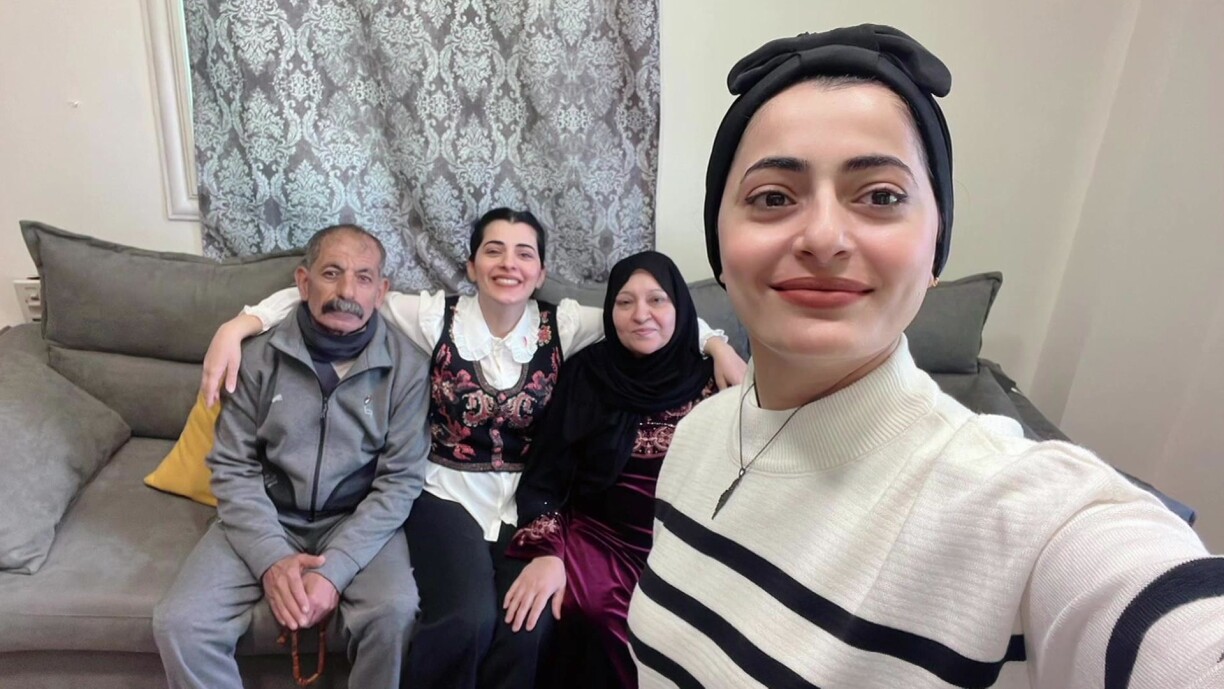
Heba Nasser and her husband paid $20,000 to help four family members enter Egypt. Although they initially had visas, those have since expired. The family overstayed their 40-day visa validity period, and now face fines if they leave Egypt for breaking the law.
Nasser's mother, who suffers from heart disease, requires treatment available only in certain private hospitals. The couple had previously applied for family reunification while their parents and sister were still in Gaza, but these applications were rejected.
An informal appeal against the first decision was also denied. According to a letter from the Immigration Directorate, the couple could not prove that their family members relied on them for healthcare or financial support. Nasser contends that gathering this proof was already challenging before the war that broke out after 7 October, which she refers to as genocide, and has since become even more difficult.
Before these events, the couple had to transfer money through finance companies based in neighbouring countries or Turkey. They would send funds to a company in Turkey, which had an office in Gaza, where the recipient would identify themselves to obtain the money. "It was very complicated, and now even more so since the genocide," Nasser explained, noting that "there is no paper trail."
The Luxembourg Association for the Support of Immigrant Workers (ASTI) confirms that proving family dependency is often challenging. ASTI social assistant Laurence Hever explains that this issue is prevalent globally, particularly with elderly relatives who often lack bank accounts.
However, the Directorate of Immigration requires proof that residents send money directly to their relatives. Hever criticises this policy for excluding those who must transfer funds indirectly or travel to deliver money in person. Proving these transactions is even more difficult in war zones, Hever adds.
The family is now exploring other options. Heba Nasser had hoped to have her parents with her when she delivers her first child in October. She explains that it is her in-laws' first grandchild, and they were overjoyed. Her father-in-law had wanted to come to Luxembourg to celebrate and see his first grandchild, but this will not be possible, Nasser regrets.
She also shared a family tradition where her mother always gave the first bath to a newborn child, a role she fulfilled with Nasser's nieces and nephews. Nasser had hoped her mother could do the same for her child, but this now seems unlikely. "This is really disappointing," she said.
Nasser's siblings, nieces, and nephews remain in Gaza. They fled to Rafah and have now been asked again by the Israeli Defence Forces (IDF) to evacuate. They travelled with all their possessions to Deir al-Balah. They do their best to keep the children's spirits up, for example with a makeshift "pool," a tarpaulin with barely an inch of water on it. All while they are still being bombed daily by Israel.
Nasser describes the situation in Gaza as "the end of the world." She emphasises that people are suffering and have been trapped since Israeli forces took control of the border and closed it. "Nobody knows what is going to happen next," Nasser says, adding that people have lost all hope and believe they will remain trapped in Gaza for the rest of their lives.
Despite this, Nasser is determined not to give up. However, she has concluded that the Luxembourg government does not want to help her family.
Early last week, our colleagues from RTL Télé enquired with the Ministry of Home Affairs about the situation of Luxembourg citizens seeking to bring their family members to the Grand Duchy. They have received no response so far, with the only explanation being, "due to the holidays, we cannot guarantee that you will receive a reply before the end of the week, or maybe early next week."
Full report by RTL Télé (in Luxembourgish)





