Cities and towns in ruins, mothers fleeing with just a few bags in hand while holding their children with the other—these harrowing images left a deep mark on Philippe's conscience, compelling him to take action.
Philippe, a native of Cruchten, was studying at the Université Libre de Bruxelles (ULB) in Brussels when news of Russia's invasion of Ukraine broke. Seized by a desire to help, he used his holidays in April 2022 to make his first trip to the Polish-Ukrainian border, where he volunteered to help those affected by the conflict.
In Medyka, where trains and buses carrying refugees from Kyiv and Odessa arrived, Philippe volunteered with Caritas to assist women and children with their bags and guide families to the right places.
Two years later, Philippe has undertaken a dozen missions to the war zone and is now actively working with the Luxembourgish non-profit LUkraine, which is dedicated to supporting the Ukrainian community in Luxembourg and aiding Ukrainians affected by the conflict. He first discovered LUkraine during his volunteering work, as the organisation frequently delivers medical supplies and ambulances to Ukraine.
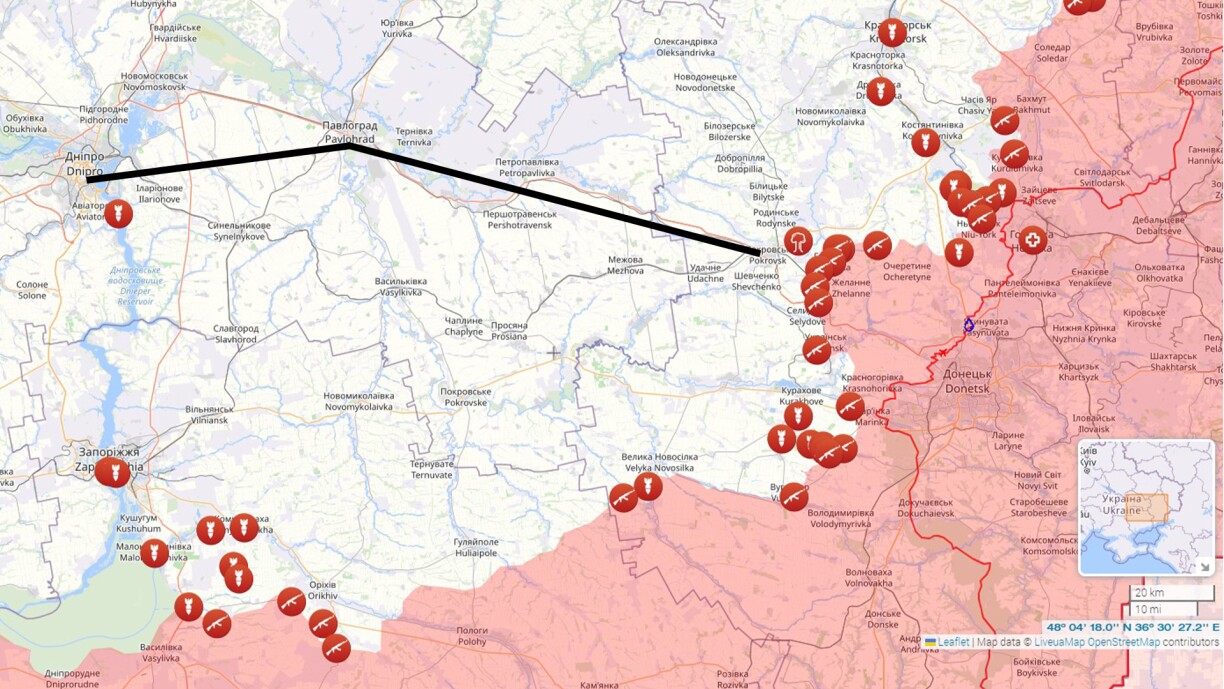
Over time, Philippe Jacob has specialised in participating in high-risk missions, evacuating civilians from areas as close as 5 to 10 kilometres from the frontline. In the Donbass region, where the fighting at the moment is particularly intense, Russian troops are advancing and taking over more and more villages.


Evacuation teams begin their arduous day-long journey from Dnipro in the early morning hours, between 4 and 5am, before the sun rises. The trip to the frontline takes around 2.5 to 3 hours, and it's only then that the actual evacuations begin. Each mission is carefully planned in coordination with local authorities, including police and military officials, "to minimise any risks," Philippe explained. By the time the team finally returns to safety, it is often midnight.
Despite thorough planning, not every risk can be eliminated, Philippe recounted, sharing an experience when his team found themselves caught in the middle of a Russian shooting.
Evacuation trips are not always successful, and these setbacks are something Philippe and his team have to come to terms with. Despite using armoured vehicles during evacuations to protect civilians, Philippe recalled a heartbreaking incident where a father was killed in front of his son.
There is always a lingering fear that an evacuation trip could go wrong, which is why Philippe always works alongside American nurse Dominic Figueres, who is specially trained for emergency situations and has completed "tactical combat casualty care" training. The two have known each other since April 2022 when they first volunteered together, helping carry refugees' bags at the Polish-Ukrainian border.
For the past seven months, evacuations are taking place in villages surrounding Pokrovsk. The situation on the ground can change in an instant, and as soon as artillery fire begins in one village, the phones start ringing with people desperate to be evacuated. Unfortunately, many residents wait until the last possible moment to leave their homes, which only complicates things for people like Philippe, who are trying to bring civilians to safety as quickly as possible.
By now, Philippe has even picked up some Ukrainian and manages to get by in his work. The Cruchten native has only his Master's thesis left to complete, which he plans to write in Luxembourg. Fittingly, he has chosen to focus his thesis on communication between smaller NGOs operating in a war zone, with a specific emphasis on Ukraine. After spending five months in the Donbas region, Philippe will be returning home to Luxembourg at the end of January.





