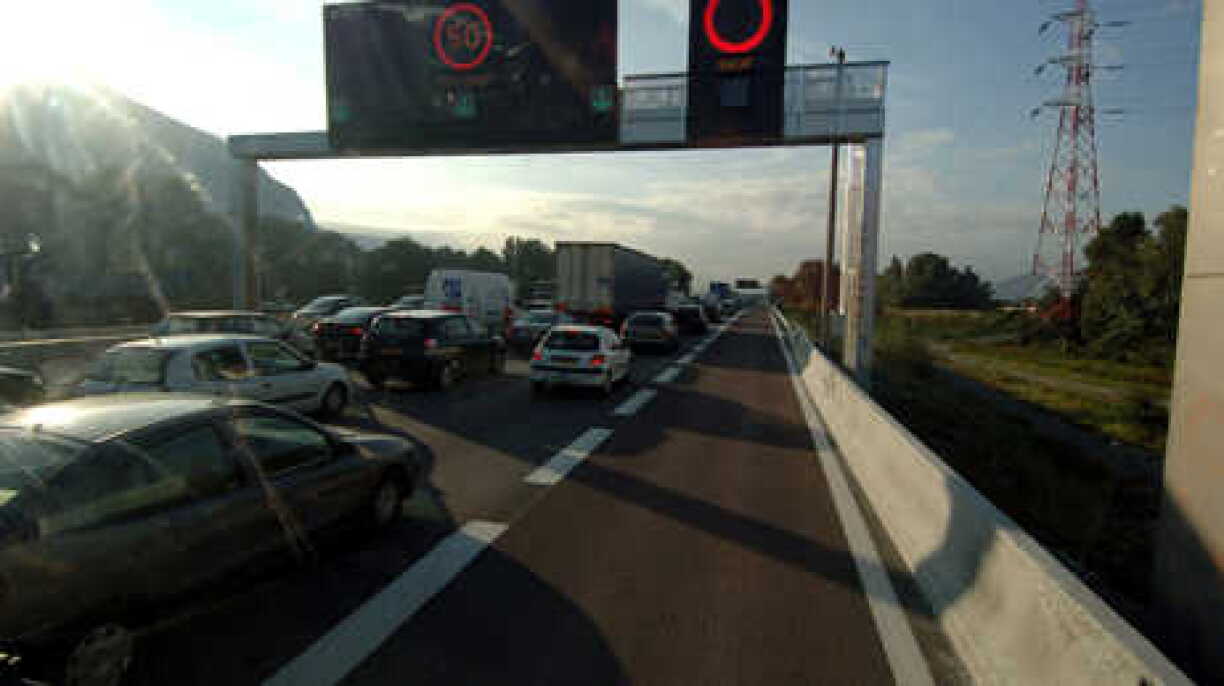
Every morning, some 250,000 car seats stay empty on Luxembourg's road systems.
A finding, which forces those in power to find incentives for carpooling.
The app "Copilote" is a first response, but those who use it need to be able to see the benefits of carpooling, said François Bausch, the Minister for Mobility.
He noted that many opinions on traffic density consider the number of vehicles rather than the number of people. "Every car with three passengers, means two cars less", he said.
As part of the programme Modu 2.0, a study has been launched to find measures which make carpooling more attractive, such as the development of a hard shoulder reserved solely for public transport and carpooling.
The Belgians are currently putting this system into place on the E411 in direction of Luxembourg, and it's the extension of that motorway, on this side of the border - the A6 - which will be the first to be adapted in the Grand Duchy. The stretch comprises the 6.5 km between the border in Sterpenich and Kirchberg.
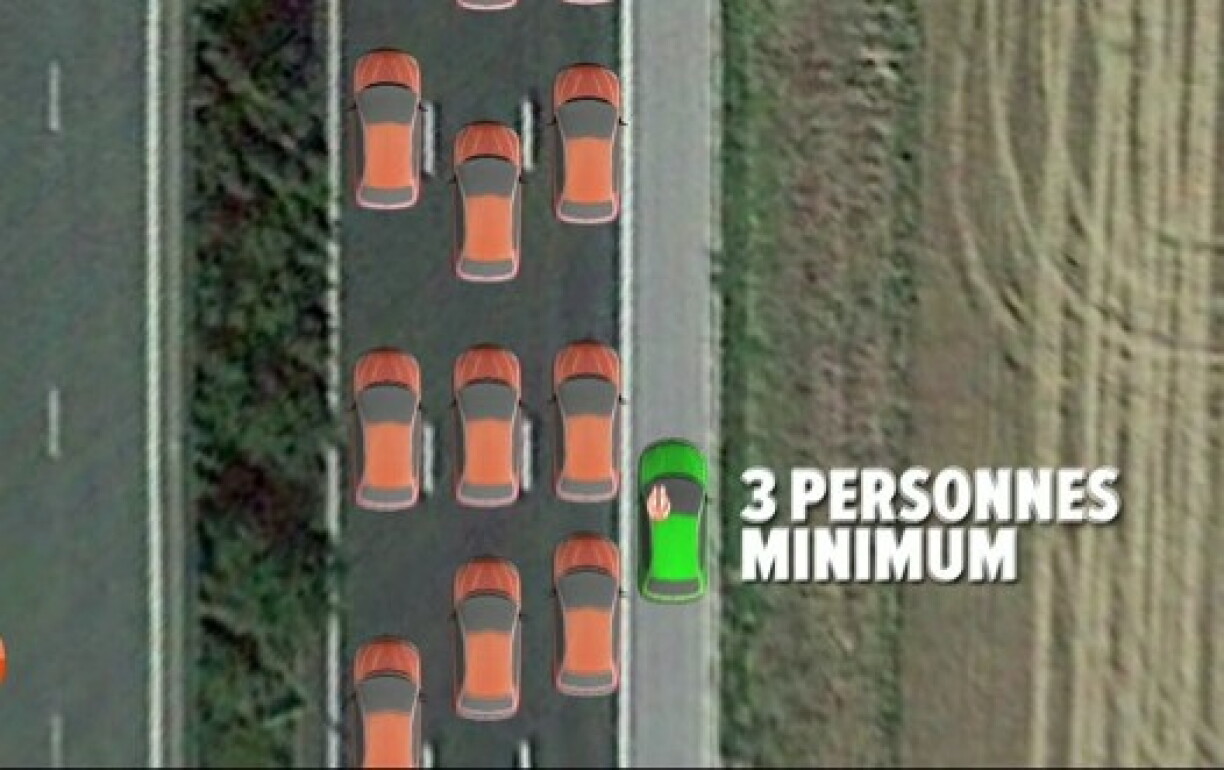
The plan is to enlarge the current hard shoulder, which measures between 1.5 m and 2.5 m, to 3.5 m, to add shelters reserved for broken down vehicles (nine of those are planned on the first stretch, so there would be one every 500 to 1000m), and there would be additional signs to regulate traffic.
One of the main problems already recognized are the interchanges that punctuate the route and also where the speed of the carpooling lane needs to be adapted.
Nevertheless, there are many steps to take before said changes can come into effect. "We have to develop a project which is coherent with Modu 2.0, develop the technical project, then a detailed preliminary draft for a financing law, followed by authorisations, calls for tender and submissions...", explained Roland Fox on behalf of Bridges and Roads authority (Administration des Ponts et Chaussées) that estimates the cost of the works to be around €60 million.
The commencement of the works is expected toward the end of 2021 and they are estimated to take about two years to complete. The "code de la route" (highway code) would also have to be adapted to define the term carpooling and the control system (traffic cameras, radar, ...) would have to be chosen in line with the technological advancements that will appear in the meantime.
As of now, ffrom the Pentecost holidays onwards, a system which modulates speed limits depending on traffic will be tested between the Belgian border and Kirchberg. During the morning rush hour, the signs will indicate the maximum speed limit - typically 90 km/h - to avoid clogging. "We have theoretical models, but we need to learn from reality", said Fox.
Contrary to the Belgian system, which will impose a speed limit of 50 km/h on the reserved lane, Luxembourg wants to adapt the speed to the amount of traffic. "Speed modulation is a traffic stabilising element, which prevents accidents and the accordion effect."
Fox did not take any position on the controls planned during the test phase, which will last until the end of the year.





