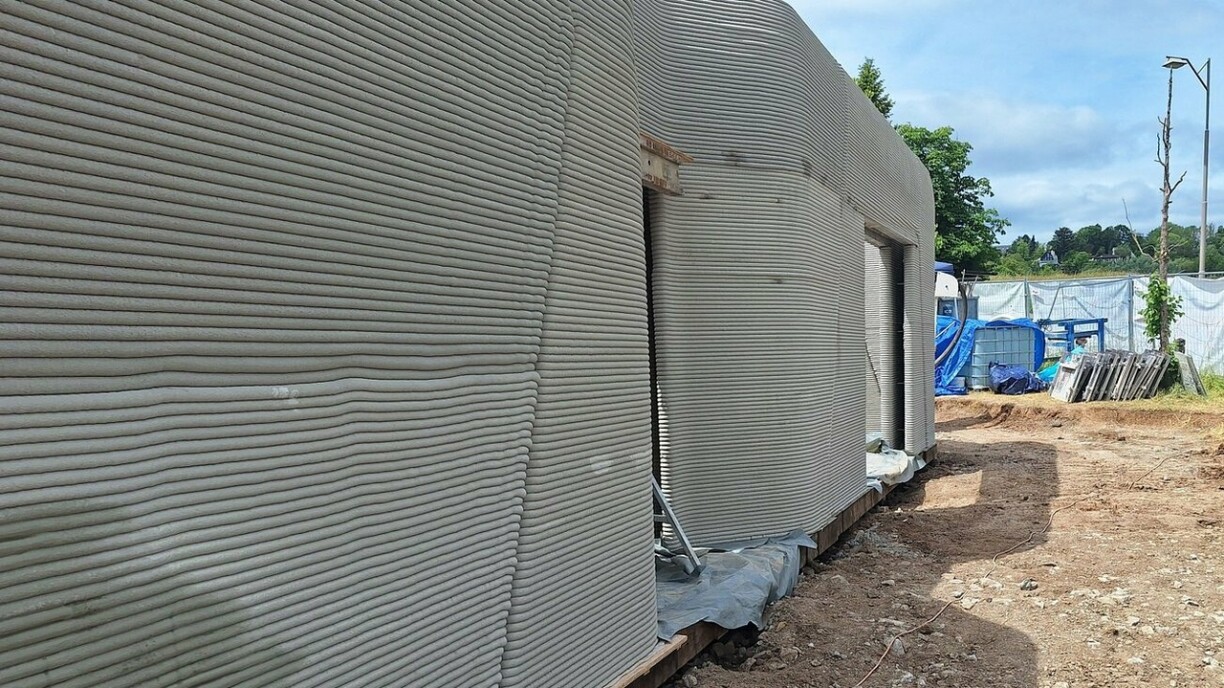
Housing continues to be a pressing issue in Luxembourg, prompting many to look for creative solutions. One such innovation is the growing interest in tiny houses – compact homes that require little land, which is increasingly scarce and expensive. Among the latest projects is a pioneering initiative by the municipality of Niederanven, where a tiny house is being constructed using a 3D printer. The structure is now steadily progressing. Two weeks ago, printing began on the walls, using a type of concrete that sets in just two minutes.
The project is part of Niederanven’s broader housing campaign 'Hei wunne bleiwen', which aims to develop more sustainable and accessible housing options for both young people and seniors.
A standout feature of the initiative is that it includes Luxembourg’s first 3D-printed tiny house, which is now structurally complete. While the build has experienced a minor delay, First Alderwoman of Niederanven Josselijn de Vries considers the progress to be largely on track. This short setback, amounting to about one or two weeks, was caused by adjustments to the printing process, she stated. Initially, the printer was meant to operate from inside the house, printing outward, de Vries explained.
She added that the setup caused excessive vibrations, which led to the decision to move the printer outside. Despite this adjustment, de Vries said the team continued to work efficiently and remained dedicated throughout the process.
Ownership of the printed home and the other housing units linked to this campaign remains with the municipality. These residences are intended to serve as “springboard housing”, helping residents transition to the regular housing market. Tenancy will be capped at ten years, and eligibility is limited to individuals who either live in Niederanven or have volunteered for local initiatives.
In total, the municipality has received 18 applications for the five housing units available through the project – including the tiny house, the next phase involves installing the roof, which will be made from wood to further enhance the ecological credentials of the initiative.
Architect Bujar Hasani of ODA Architects explained that sustainable materials have been prioritised throughout the design. Instead of using conventional steel, the project incorporates glass and wood fibres to keep the environmental footprint as low as possible.
Despite its forward-thinking goals, the project has not been without criticism. Local opposition parties, including the Luxembourg Socialist Workers' Party (LSAP) and Democratic Party (DP), voiced concerns about possible technical, environmental, and legal shortcomings. They also called for a formal debate during a municipal council session to scrutinise the initiative further.
Nevertheless, the coalition council, composed of black and green parties, continues to back the project. According to Jacques Bauer, Second Alderman of Niederanven, public interest is strong. During recent council discussions, technical aspects were brought up, though Bauer noted these were better addressed by the project’s architect. In terms of community engagement, there appears to be clear enthusiasm – the number of applications speaks for itself, according to Bauer.
The interior of the house is designed with flexibility in mind. Furniture will be adaptable, such as foldable beds, to maximise the use of space. The entire 3D printing process for the pilot structure took approximately 27.5 hours.
To balance the environmental impact of the project, the municipality also plans to plant 21 trees.





