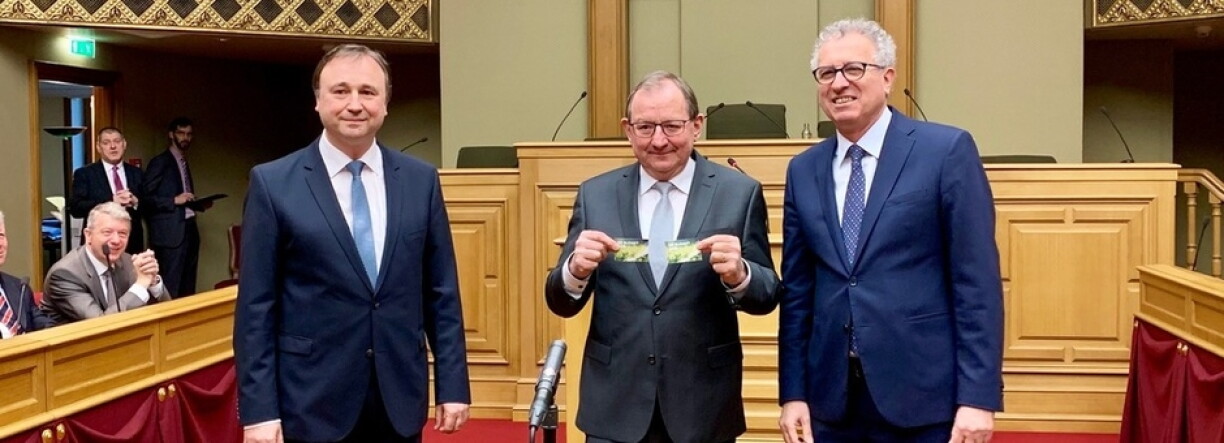
The three pillars that the 2019 budget project is built on are social equality, competitiveness, and sustainability. Pierre Gramegna presented the details of the budget to the Chamber of Deputies on Tuesday morning.
In his presentation, he highlighted a healthy financial situation. Looking ahead, Gramegna said, the next step is to choose the right course with a forward-looking budget based on sustainability, justice, social cohesion, and competitiveness.
For 2019, the public administration has been allocated €632 million, corresponding to 1% of the country's gross domestic product. The increase is meant to rise gradually until reaching €1.4 billion in 2022.
The central state's expenses lay at €19.6 billion, which is a 5.8% increase. However, state revenue has also increased by 1.6% to €18.9 billion.
Of the state's expenses, nearly half (48%) are dedicated to social work, subsidies, etc, making it a budget of social cohesion, Gramegna stressed. He also highlighted the need to be cautious with the budget, which is why he has not presented a more balanced budget. The government chose to be cautious with the budget, and instead to bank on strong investments and focus on social funding.
The finances of the central administration are currently in the red, with a deficit of €650 million. By 2020, those numbers are supposed to be balanced.
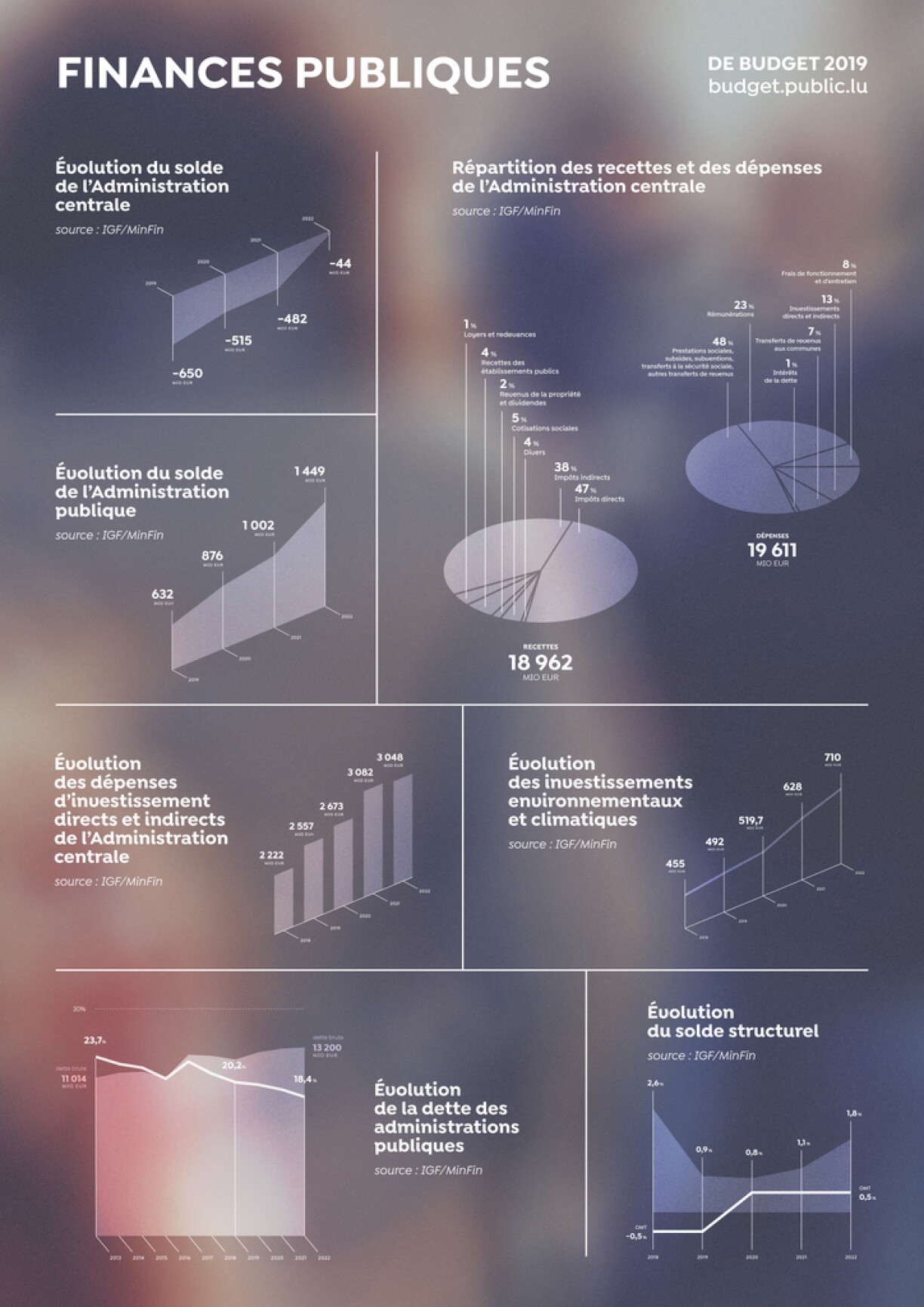
The government is planning a record number of investments concerning housing, education, research, digitisation, infrastructure and transport, energy, culture, and social structures.
Gramegna stressed that the absolute spending priority is housing. The budget of the Ministry of Housing will in turn increase by 6.8%.
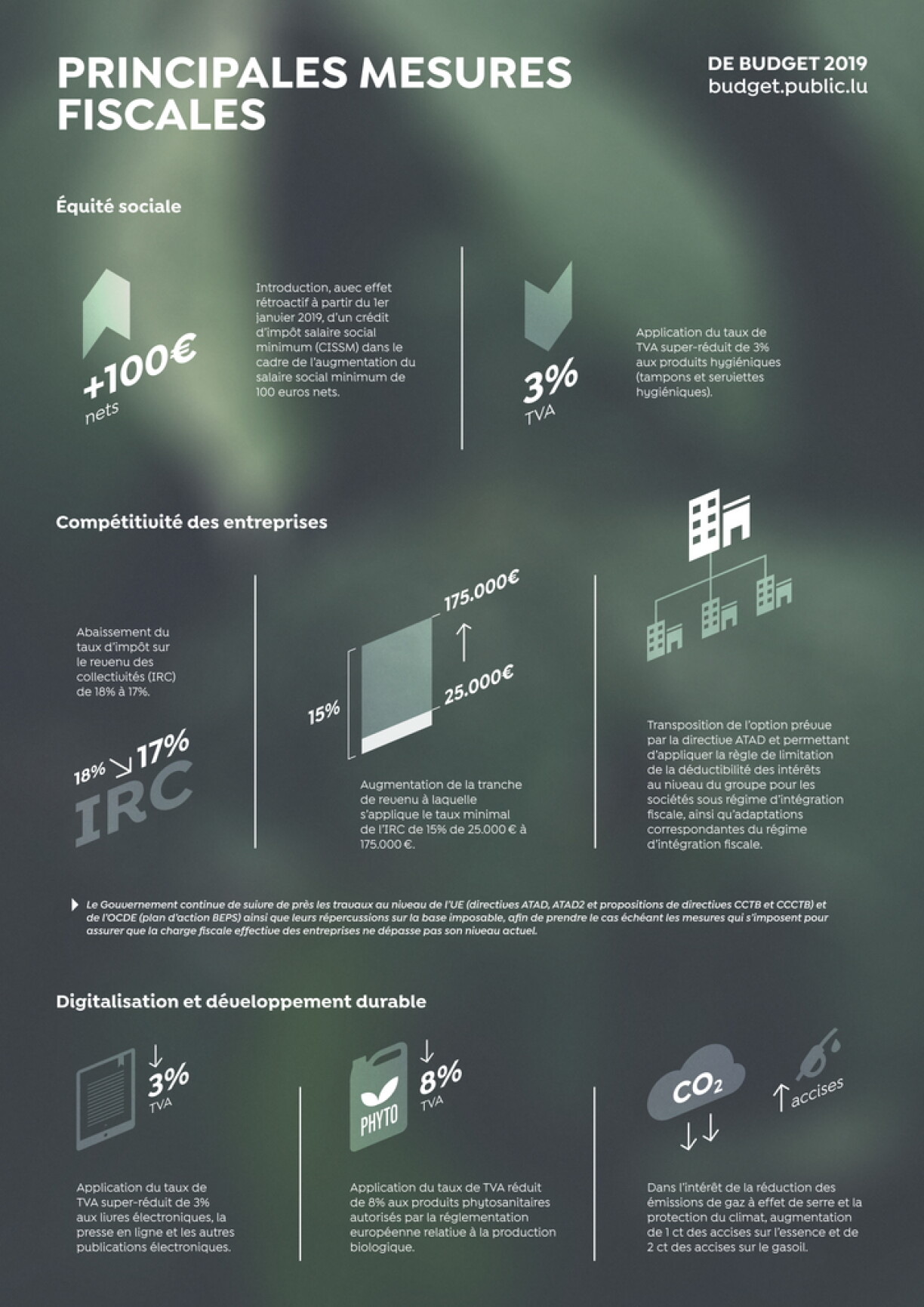
As announced in the coalition agreement, there will also be concrete tax measures. Amongst these is the tax credit for the €100 increase of the minimum wage and the reduced VAT on feminine hygiene products, as well as the business tax which has been reduced from 18% to 17%. It should be noted that the €100 increase of the minimum wage is regulated via tax credit.
Duties for petrol and diesel are meant to increase by 1 and 2 cents respectively, bringing in an additional €2.5 million to the state treasury. The minister spoke of a moderate increase, signalling that Luxembourg no longer wants to encourage to consumption of petrol products.
Following the speech in the Chamber of Deputies, the Minister of Finance gave further explanations at the parliamentary commission on finance and the budget on Tuesday afternoon alongside representatives of the Treasury's finance inspection.
One of the discussion topics was the practical implementation of the minimum wage increase, which is now supposed to be managed via tax credits. Those people whose wage falls between the unqualified and the qualified minimum wage will also be able to benefit from the new measure, Gramegna confirmed following the commission meeting.
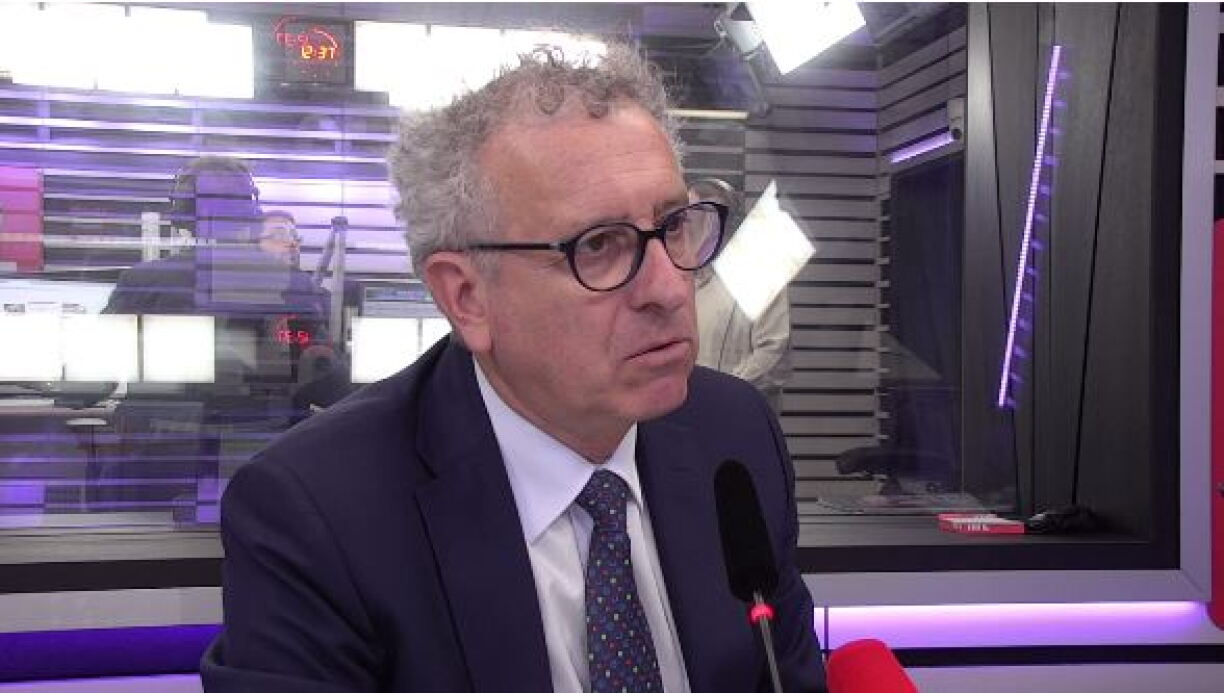
In an interview with RTL, Gramegna confirmed that the government is expecting an economic growth of 3% alongside growing employment and increasing investments. He highlighted that the budget is a cautious financial policy hoping to be balanced by 2022. He also explained that the current interest rates would make paying back the state debt a mistake.
The CSV criticised a lack of orientation towards a goal. The party's faction president Martine Hansen highlighted this, claiming it appears that money is being spent left and right without any particular direction. She also deplored the €650 million deficit and hoped for better.
Whilst happy that the budget is aiming to redress some key issues in society that require aid, CSV MP Gilles Roth said that he hopes that Luxembourg's economic situation remains healthy and that the budget deficit doesn't grow to an undesirable amount.
The ADR and MP Gast Gibéryen also expressed disappointment, pointing out that the 2018 budget was nearly balanced and the government has returned to a deficit in 2019. Gibéryen pointed out that the €650 million deficit is based on European calculations and the national calculations reveal a deficit of €850 million despite the current economic boom.
Gibéryen also criticised the fuel tax, claiming it is presented as a measure to lower the impact of climate change. Instead, Gibéryen believes it is the state seeking further income.
Déi Lénk focused on housing, believing the government is still far behind. Specifically, MP David Wagner criticised the government's taxation policies, claiming money is not being taken from the right places.
Marc Goergen of the Pirate Party admitted that the 2019 budget had been very well presented, but highlighted that there was a lack of clarity in what is occurring behind the scenes.





