The health crisis has changed the way residents live and work in Luxembourg since March, according to new findings from Statec.
Containment measures and changes to restrictions, combined with an unprecedented use of teleworking, have had a strong impact on consumer purchasing behaviour.
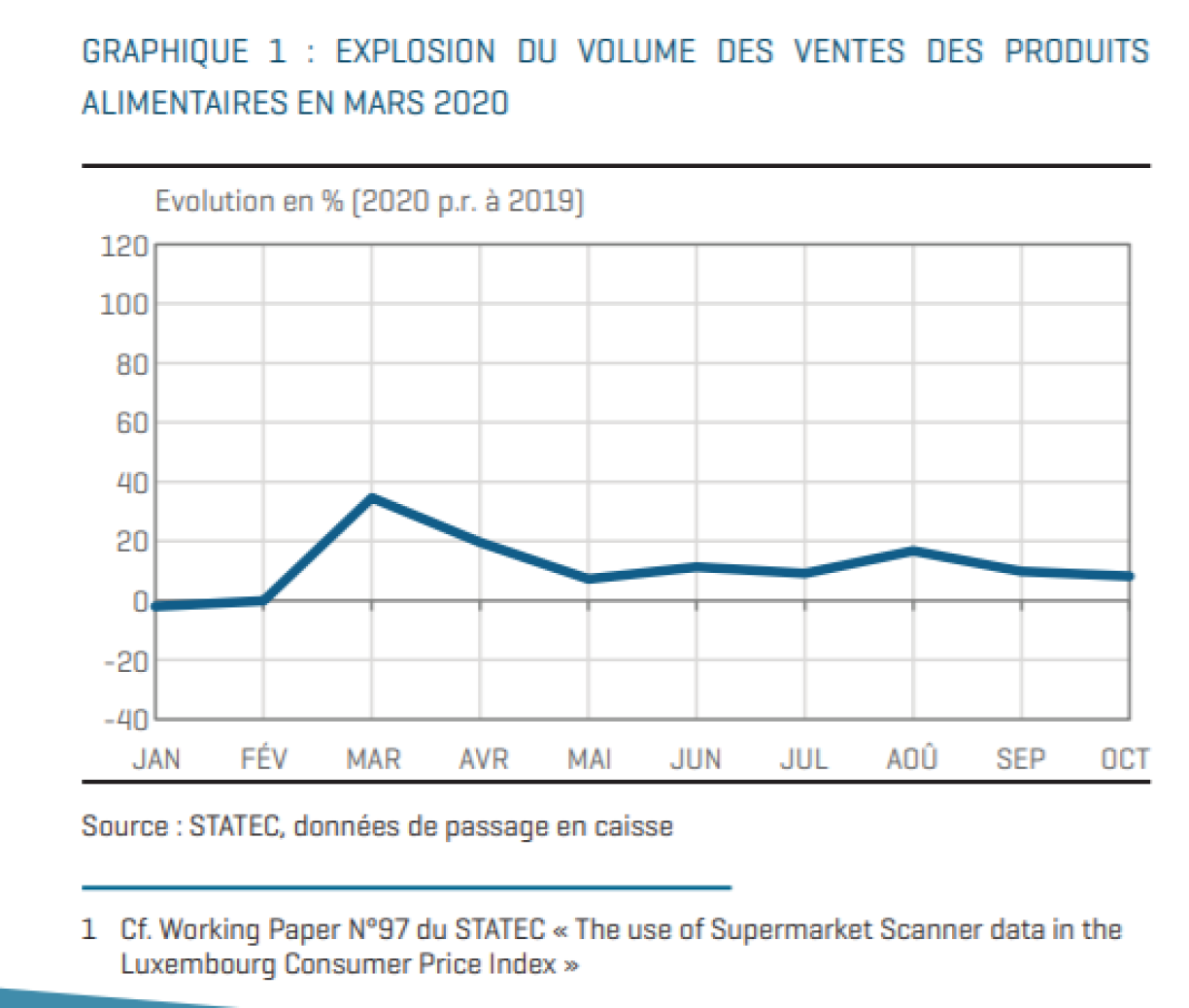
In March 2020, the sales volume of food products (turnover adjusted for price effects) increased by 35% compared to the previous year.
However, food prices were rather stable during the health crisis' evolution, with the exception of fresh fruit and vegetables.
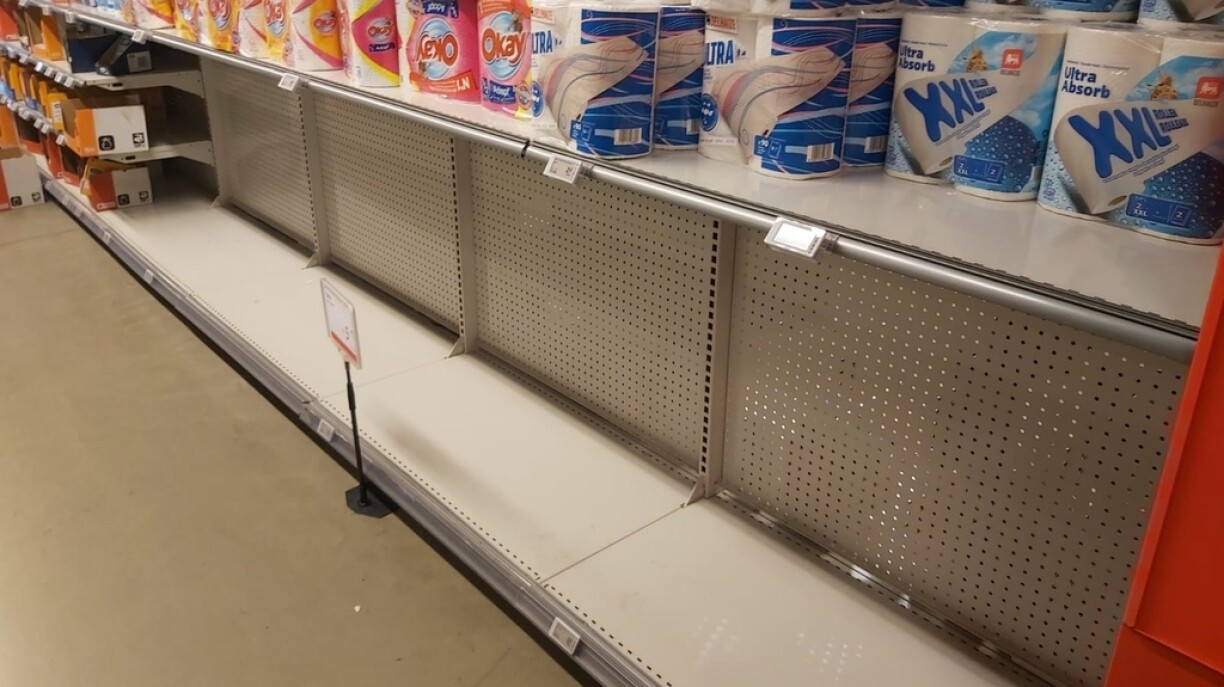
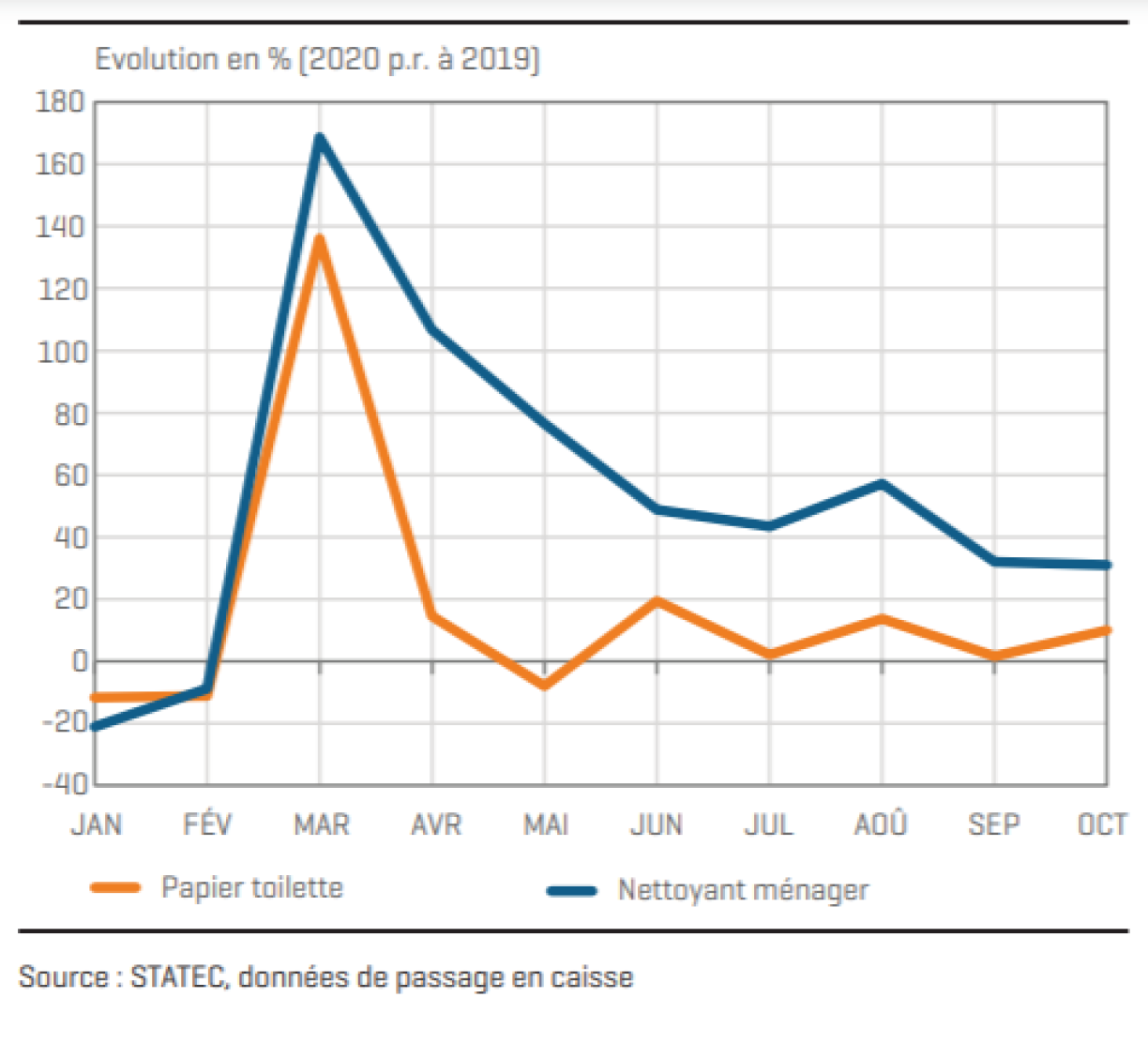
Non-food products also showed interesting developments: the star product of the lockdown, this will be a surprise to few, was toilet paper — with sales volumes increasing by 130% in March 2020!
At the beginning of the initial lockdown, consumers purchased long-life foods such as rice, pasta, couscous, preserves/jams and soft drinks.
Before the pandemic struck, the volume of rice and pasta was well below the previous year's level, but it doubled in March 2020.
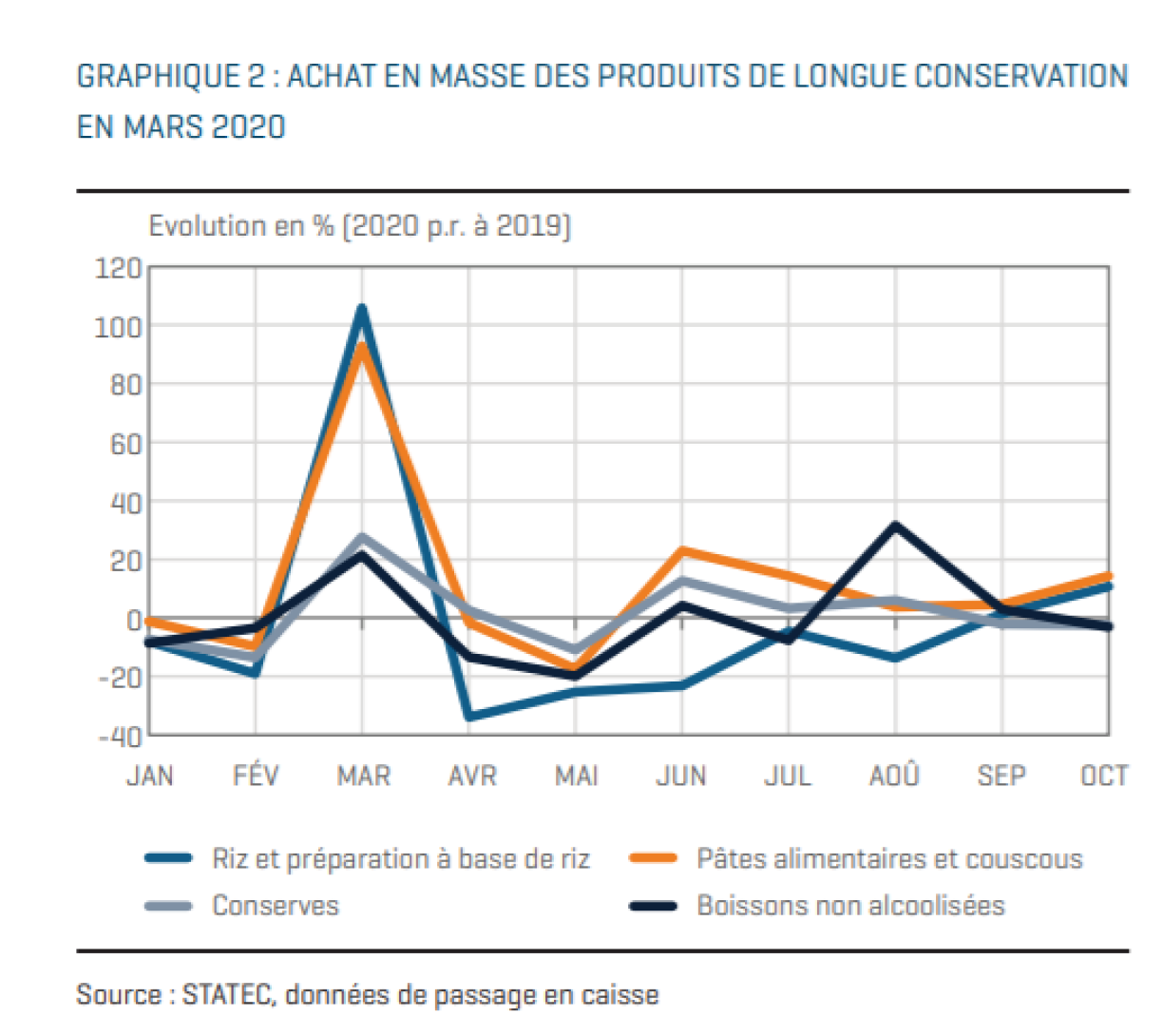
As fears abated, sales then fell to a level that was largely lower than in 2019 (-34% in April, -25% in May and -23% in June), while the volume of sales for pasta and couscous returned to its 2019 level in April.
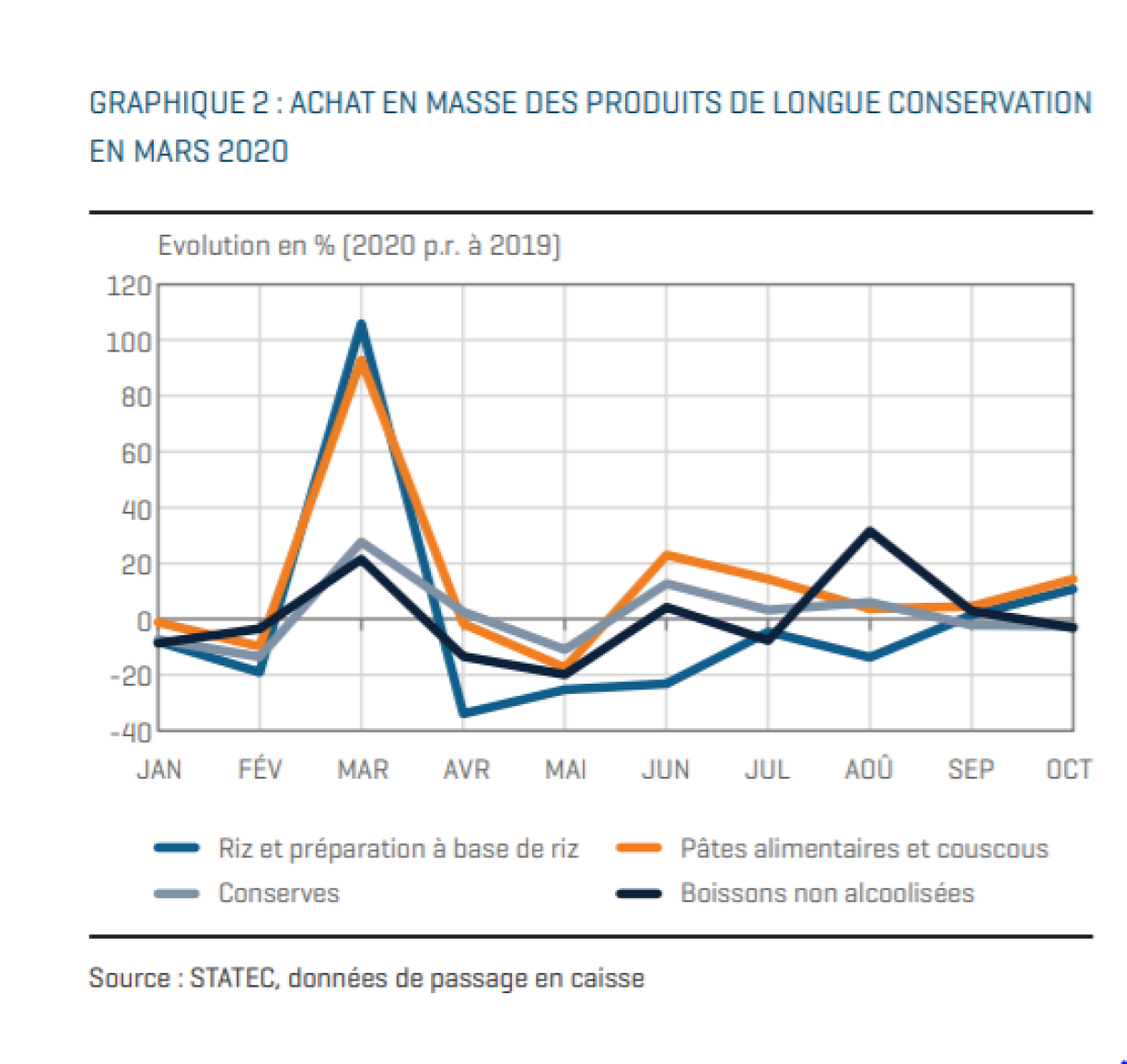
In August 2020, a second peak in sales volume was observed with 17% more purchase overall than the same period last year.
Sales of educational materials, such as books, pens, puzzles and electronic devices also saw a significant boost.
As Christmas approaches and a partial lockdown is in effect, economic specialists will be watching these trends with a keen eye.





