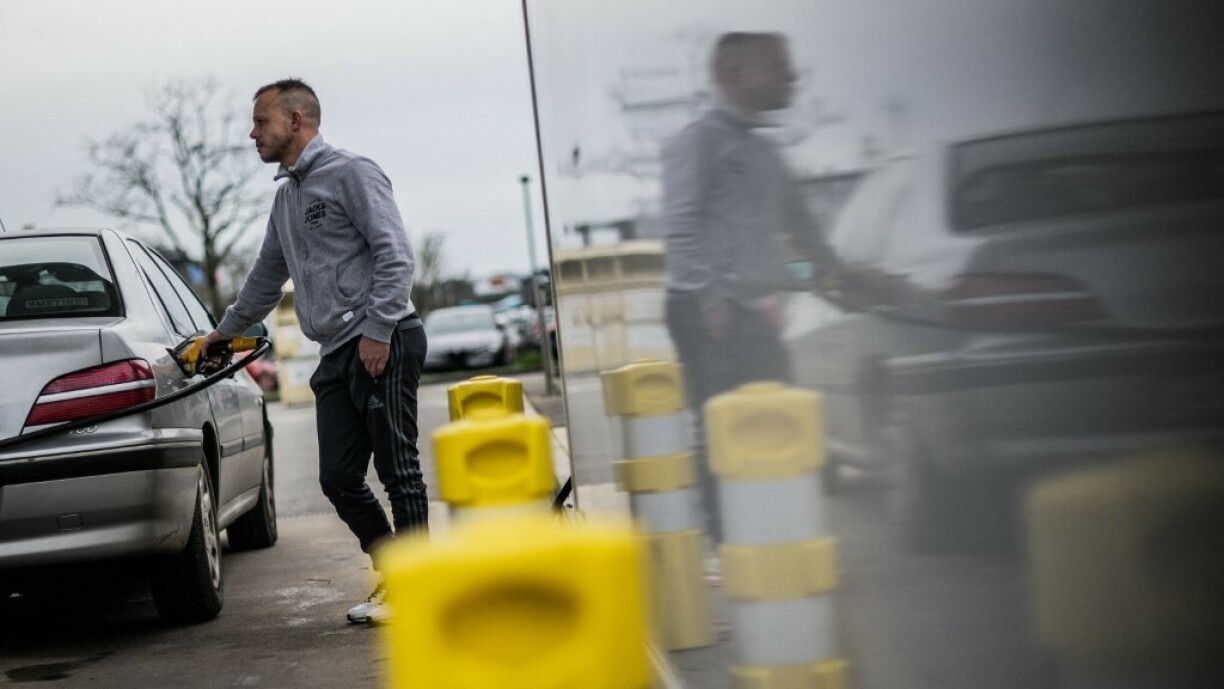
The French state is said to have generated around €270 million in additional revenue in March alone from the rise in petroleum prices.
Like France, the Grand Duchy levies taxes on all petroleum products sold in the country. Those revenues are composed of excise duties, which are fixed amounts, and VAT, which depends on the current price per litre.
On 10 April, the Finance and Economy ministries provided their assessment of how much additional revenue the rises in petrol, diesel, and heating oil prices had brought into the state coffers. The excise duties remained unchanged, but through VAT, an additional €5.65 million was collected between 1 March and 9 April. Mars Di Bartolomeo and Georges Engel had sought this information in a parliamentary enquiry.
Although €5.65 million sounds like a lot, it amounts to just 0.02% of what the state estimated at the end of last year it would take in for 2026, with revenues projected at €27 billion. The state budget would nonetheless be in deficit, as expenditure is estimated at €30 billion.
Our colleagues at RTL Infos ran the numbers. On 3 March 2026, a litre of diesel cost €1.485, of which the state collected 21.58 cents through VAT. On 4 April, when diesel reached its record high, a litre cost €2.186, of which 31.76 cents went to the state via VAT. That is an increase of over 10 cents per litre, while the rise in the retail price was around 70 cents per litre. On 15 April, the price fell back below two euros. Of the €1.934 that motorists had to pay per litre, 28.1 cents went towards VAT.
Whether the state receives a tax surplus also depends heavily on the volume of petrol, diesel, and other fuels sold. If motorists fill up and consume less, the state collects less VAT in total, even though it technically receives more per litre. The same applies to excise duties, which stand at 46 cents on diesel and 57 cents on petrol.
The Luxembourgish government has not planned to allocate the €5.65 million collected as a surplus from petroleum product sales as targeted assistance measures. Both ministers concerned justify this decision on the grounds that the law does not permit the state to earmark specific revenues for specific expenditure. However, Lex Delles and Gilles Roth point out that the government has already taken various measures to ease the burden on households, including an increase in the cost-of-living allowance and a tripling of the energy bonus, two decisions taken in 2025. In addition, the state has contributed to electricity network costs and adjusted the tax brackets.





