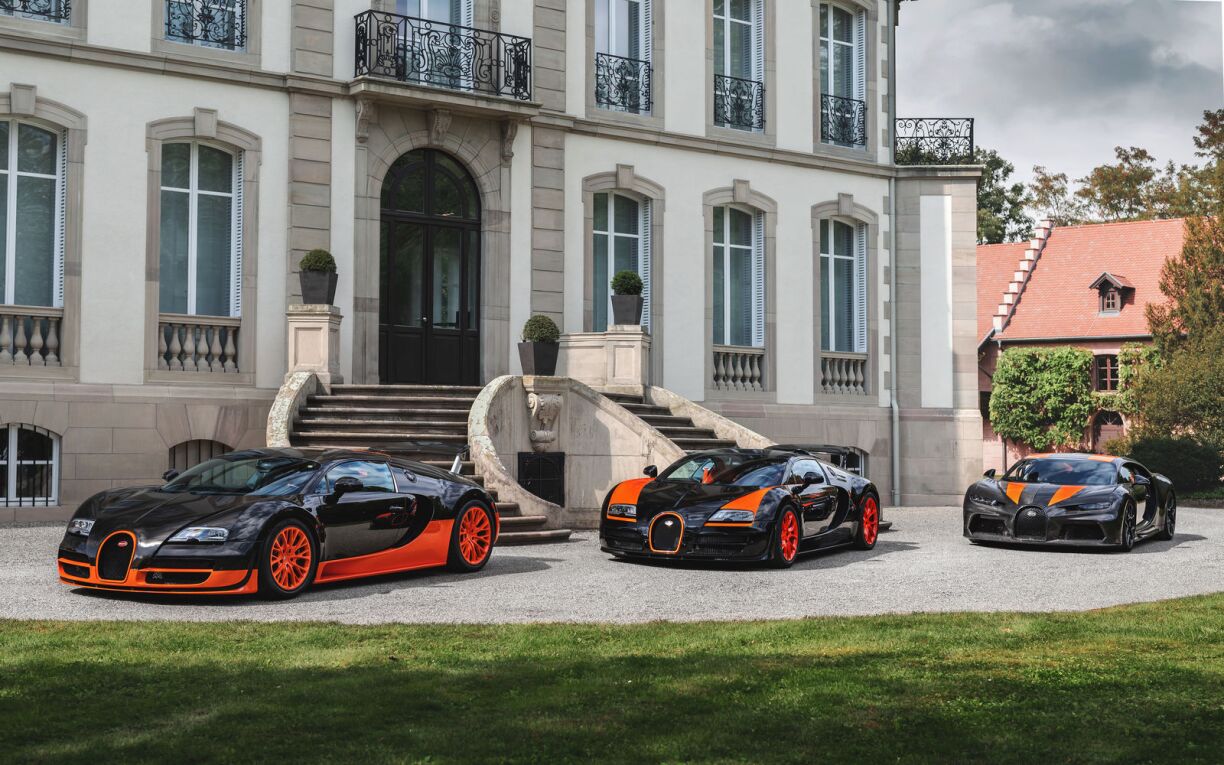
In Molsheim, to the west of Strasbourg, the 'happy few' who can afford a sports car for a minimum of 2.5 million euros (excluding tax) are welcomed to the castle that was bought a century ago by Ettore Bugatti. For more than 110 years, the brand has been regarded as the spearhead of automobile construction. Bugatti produces luxurious sports cars, true to Ettore's motto: Nothing is too beautiful, nothing is too expensive.
It has been over a century of luxury and automobile performance, but there is also a chaotic history behind it.
Born in Italy, the young Ettore Bugatti began building his own cars in Molsheim in 1909. The interwar years saw the birth of the legendary Type 35, the Type 57 SC Atlantic, and the Royale. However, the death of his son and designated successor Jean in 1939, and the Second World War, which forced Ettore Bugatti to flee to Bordeaux, hastened the decline of the brand. Bugatti managed to recover his Molsheim factory after the war, but died in 1947.
The rebirth did not take place until the 1990s, first under the impetus of an Italian entrepreneur, then with the Volkswagen group, which in 1998 bought Bentley, Lamborghini and Bugatti.
The patriarch of the German automobile giant, Ferdinand Piëch, gave his engineers a precise plan: to create a car with the acceleration of a Formula 1 race car, over 1,000 horsepower, capable of driving at 400 km/h...all while being elegant and comfortable enough to go to the opera.

For the time being, Bugatti always built one model after the other: first the Veyron, of which 450 units were sold, and now the Chiron, of which 500 units were planned to leave the Molsheim workshop. A quiet workshop, where 25 pairs of hands meticulously assemble parts made in different European countries.
The 32-year-old mechanic Loïc proudly explains that there is no trade that resembles what they do, that there is no car like this. It's a bit like the Holy Grail of the automobile, adds Alexandre Leyder, a 24-year-old who is busy pre-assembling a 16-cylinder engine.
It takes about eight weeks to assemble a car, which will be tested by former race drivers, including Le Mans 24 Hours winner Andy Wallace, and then further examined for six hours under a special light to detect the slightest mini-imperfection in the bodywork, completely invisible to a novice eye.
At the back of the workshop, five cars with characteristic Bugatti curved lines are hidden under canvas, with buyers expected to be the first to see them after waiting at least two years between purchase and delivery. Bugatti remains primarily a collector's item, more than just a matter of swallowed up mileage.
Apart from a few football and film celebrities, 80% of Bugatti owners are wealthy entrepreneurs who don't drive their cars much. Those currently on the road barely cover 2,000 kilometres a year, some of which are only admired in a garage.
But now, after 76 cars were produced in 2018, Bugatti feels ready to produce much more in Molsheim and to start building a second model alongside the Chiron. It would be a car that could be used every day, Stephan Winkelmann envisages by 2024. With a price that is still luxurious"but lower, and possibly four seats.
A vehicle with an electric battery is one of the options that the CEO is very much in favour of. He adds that no decision has been taken so far, and that Volkswagen's implications are that it will be a luxury car nonetheless.
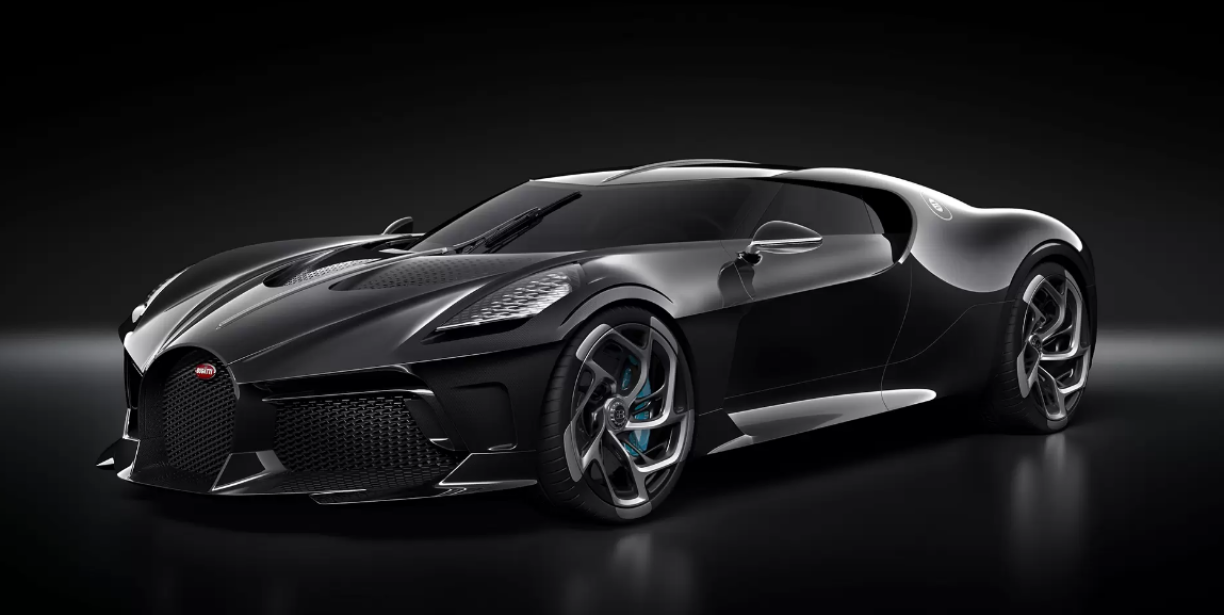
In the meantime, luxury remains at its peak. At the Geneva Motor Show in March, Bugatti unveiled 'The Black Car', a unique specimen worth 11.5 million euros (excluding taxes). Its buyer is unknown. And "The Black Car" remains to this day the most expensive new car in the world...