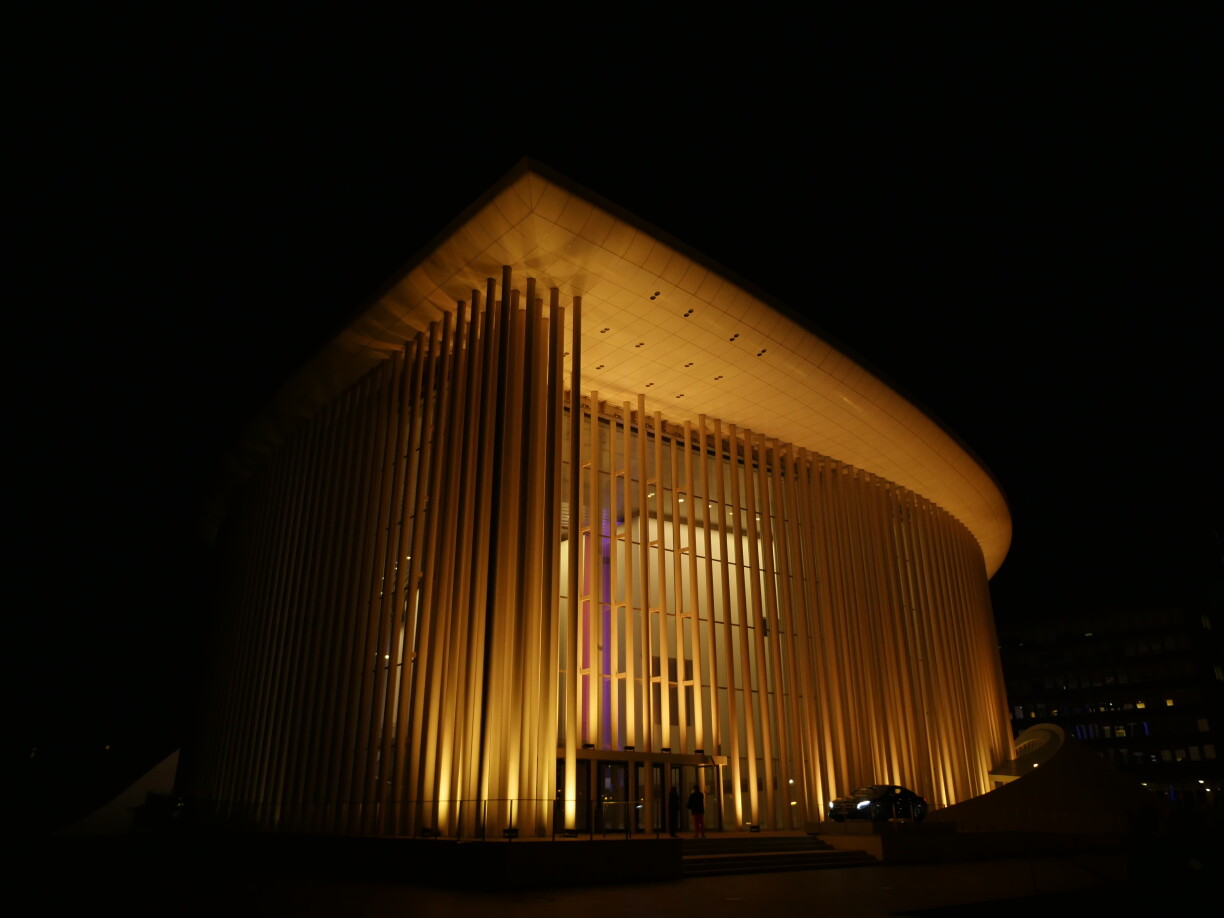
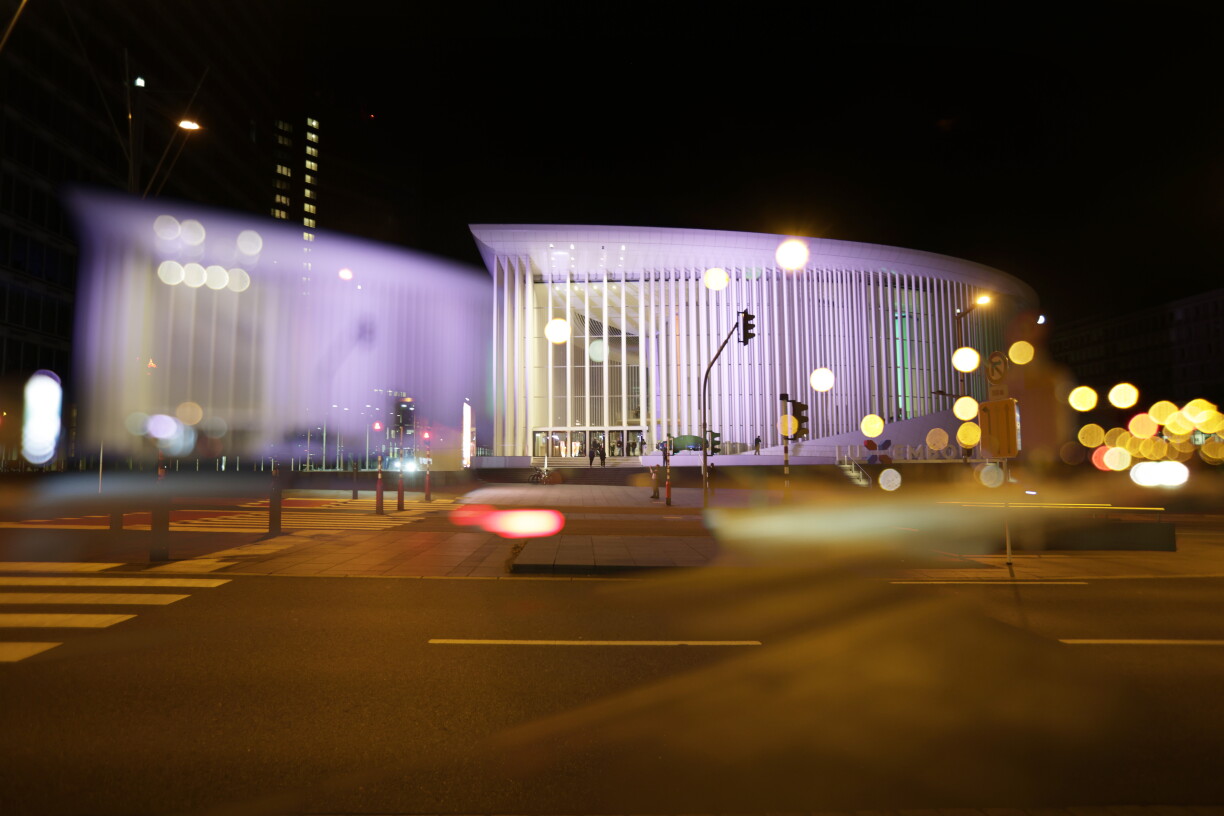
Inaugurated in 2005, the Salle de Concerts Grande-Duchesse Joséphine-Charlotte, commonly known as Philharmonie Luxembourg, has established itself not only as one of Kirchberg’s landmarks, but also as a cherished place for cultural events.
The renowned architect Christian de Portzamparc designed the Philharmonie, which was commissioned by the Ministry of Public Works in 1997. Portzamparc, a recipient of the Pritzker Prize, is known for his elegant designs and particular understanding of urban spaces. In the case of the Philharmonie, the architect initially wanted to give visitors the feeling of stepping into another world by planting trees around the building, that people would have had to cross in order to enter.
However, due to a lack of space, Portzamparc had to abandon this plan and came up with the peristyle – a porch of columns surrounding a building – that now characterises the place. The 823 columns surrounding the Philharmonie are designed to filter the light in a similar way to trees and thus encourage people to forget their hectic urban environment momentarily when they enter the world of music.
Seen from above, the concert hall looks like a leaf; in addition to the organic connotation, this particular shape allows the audience to gather around the stage in the Grand Auditorium, ensuring a particularly pleasant auditory experience. The Philharmonie regularly offers guided tours where you can learn more about its architecture and general functioning. If you are unable to attend a tour, this video, created for the Philharmonie's 15th anniversary in 2020, nicely captures its architectural beauty.
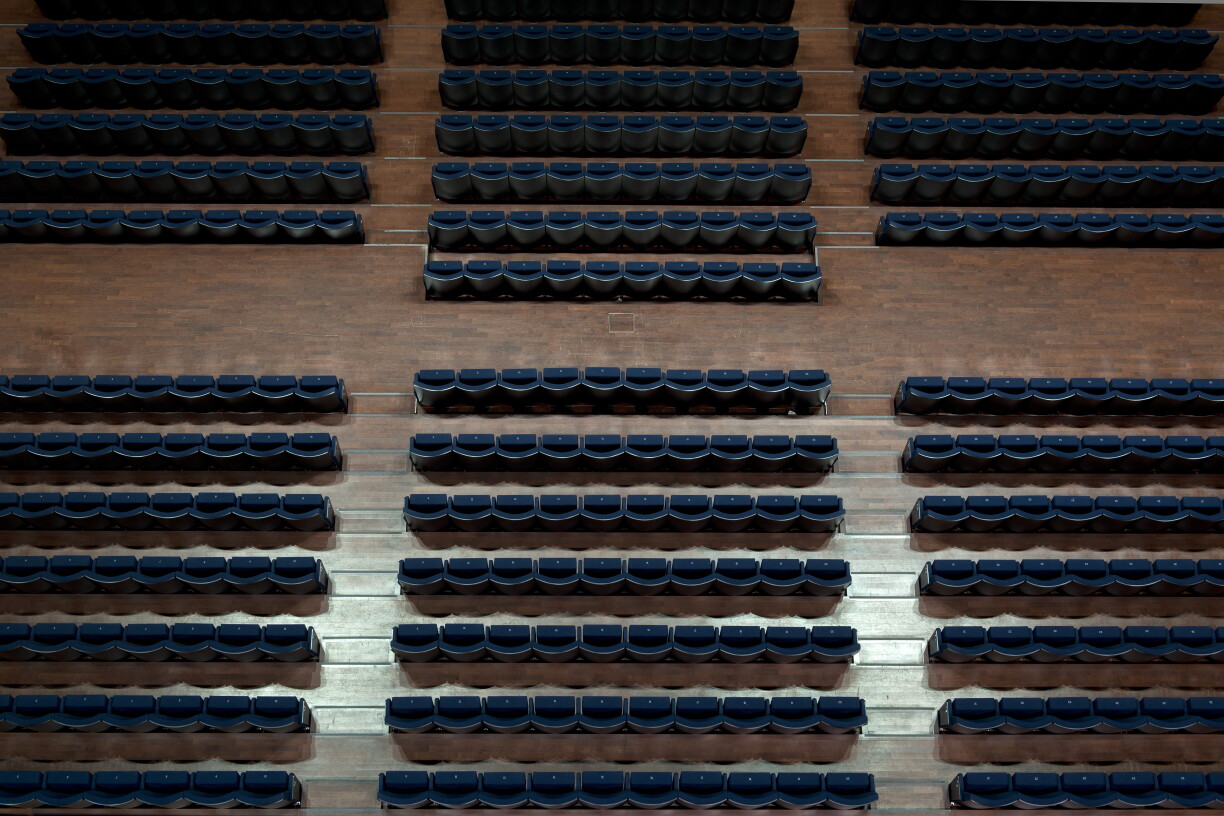
The Philharmonie has three venues of different sizes. The largest, the Grand Auditorium, can welcome an audience of up to 1,471 people. To enhance the room's acoustics, the hall combines a "shoebox" design with elements of a Shakespearean stage. While the shoebox is a typical design for concert halls, consisting of a simple rectangular room and several balconies, the Shakespearean stage originated in theatre. It is visible from every side, involving the audience and creating an immersive experience enhanced by the particular acoustics of the hall.
In contrast to the large Grand Auditorium, the Salle de Musique de Chambre (Chamber Music Hall) provides a more intimate setting for around 300 listeners. Curved walls reminiscent of a petal and a sound reflector above the stage maintain the sound quality in the room. The smallest but, at the same time, most versatile hall is the Espace Découverte (Discovery Space). With a capacity of 120 people, the room is used not only to host musical events, but also workshops. All three main rooms, as well as additional foyers, can be rented for private or corporate events.
The Philharmonie is the home of the Luxembourg Philharmonic and its current conductor Martin Rajna. Founded in 1933 as the in-house orchestra of RTL Radio, it came under public administration in 1996 before finding its permanent home at the Philharmonie in 2005. Today, the orchestra brings together 99 musicians from over 20 different countries and has released 14 albums since 2017. Alongside its orchestra, the Philharmonie also has a resident organist, Maurice Clement.
Dedicated to bringing music closer to children and adults, the Philarmonie regularly offers workshops in addition to the more traditional concerts. Depending on the event, these workshops are suitable for toddlers, providing a great way to introduce children to music and instruments.
For adults, the Philharmonie offers lectures and short talks before concerts, as well as longer "study days" that explore one theme in depth over the course of an afternoon. Through these initiatives, the Philharmonie challenges the perhaps constrained and stuffy reputation of concert halls, creating a more accessible space for families to enjoy and learn more about music. To make the concert hall more accessible to visitors from abroad, the Philharmonie Luxembourg operates a shuttle service from Trier for selected concerts.
If you would like to visit the Philharmonie, you can find the current programme here. Tickets and subscriptions can be bought online, via the new app, or at the box office, with people under 30 receiving a discount. Alongside in-person events, the Philharmonie also offers a wide range of digital content, including interviews with musicians and digital concerts.


