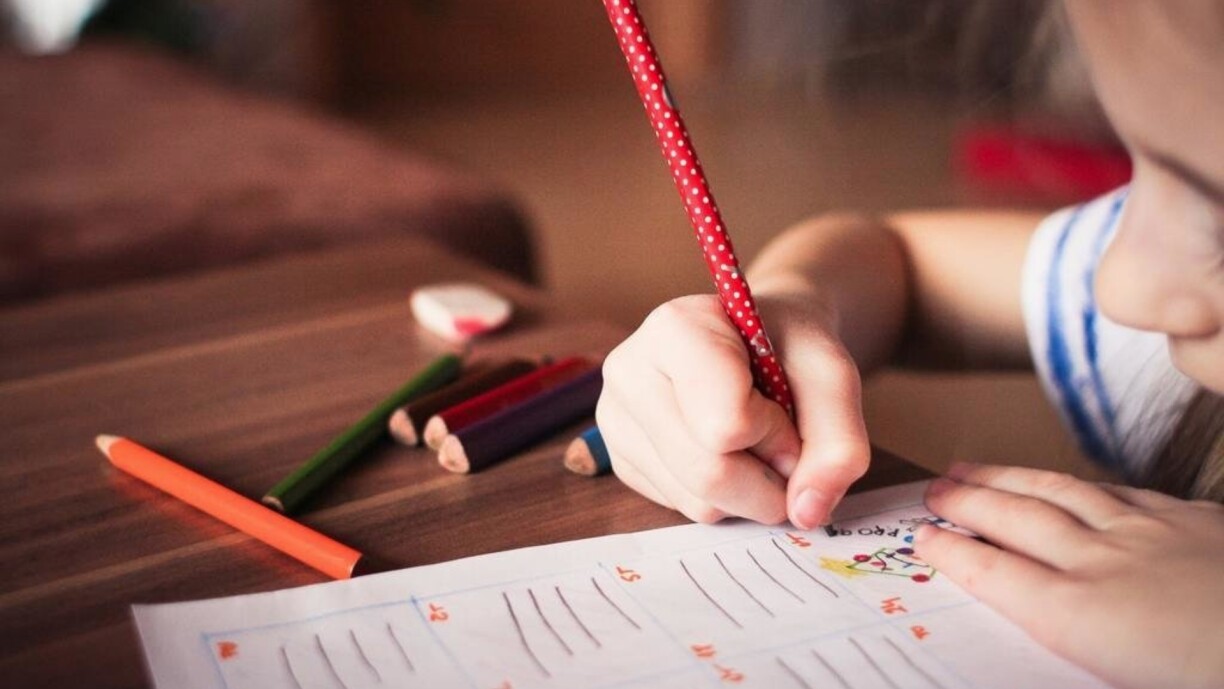
In Luxembourg, going to school is mandatory for anyone between the ages 4 and 18. Most schools are free and run by the state, however parents have the opportunity to choose a private school for their child. The school year usually begins on 15 September and ends on 15 July.
Fundamental school includes pre- and primary school, and is organised into four cycles. With the exception of cycle 1, which is comprised of three years, each cycle is two school years.
The very first year, Précoce, is non-compulsory – parents can decide to enroll their child into this supplementary, non-mandatory year at school.
Précoce prepares children for the mandatory school years by helping them gain important social skills in a playful environment. Précoce is also ideal for learning Luxembourgish, in cases where children's parents speak a different language at home.
Activities include arts and crafts, going to the forest, and singing songs. In most municipalities, parents can decide on which days their child should attend school during that year, giving them more freedom than in any other school year.
After Précoce, children move up to pre-school, also known as 'Spillschoul'. The programme of Spillschoul builds on what children have learnt in Précoce and gradually prepares them for primary school, by focusing on motor skills, logical reasoning, and working on particular themes such as the human body or nature. Education is still playful and children will have no trouble following the activities, even if they did not attend Précoce.
Children generally automatically move up to the next cycle as long as they are proficient enough in Luxembourgish. With cycle 2, the fundamental education truly starts and children learn how to write, read, and do maths.
In the first year of the second cycle, formerly known as Eischt Schouljoer, children start learning their first foreign language, namely German. French will gradually be introduced in the second year, and at the end of the four cycles, children usually have a good level of understanding and writing in both languages.
When the children have attained literacy, other subjects such as natural sciences, history, and geography are introduced. The curriculum also includes arts, music, PE, and moral education.
Textbooks are free and provided by the state, ensuring that every school works with the same curriculum.
From cycle 2 onwards, children will also no longer automatically pass to the next school year, but they have to acquire a specific set of knowledge, which is tested in class papers.
However, no marks are awarded in fundamental education, in order to not put pressure on the children. Teachers may use a variety of systems, such as smiley faces, to show how well someone has done in a test.
It is possible to stay in the same cycle for three years if, for instance, the child has learning difficulties.
At the end of the fourth cycle children have to sit tests, which determine to what kind of secondary school they can apply.
Secondary school is usually called Lycée in Luxembourg and represents the next level of education after fundamental school. There are two main kinds of Lycées: Lycée classique and Lycée général (which you may also hear referred to as 'technique', its old name).
The former is designed to prepare students for university, whereas the latter focuses more on vocational education. However, students attending a Lycée général may be able to attend university, depending on how they choose to graduate.
Contrary to fundamental schools, children can apply to the secondary school of their choice, independent of its location. If the application is denied, children have to go to the school closest to their home. It is possible to transfer schools and students can switch between the different types of Lycée.
In both Lyceés students start in year 7 and graduate in year 1. Their progress is tested in class papers with marks ranging from 0-60, with 60 being the best and anything under 30 a fail.
In the Lycée classique, students can choose to study Latin from year 6 onwards. English is also introduced in year 6, except for students taking Latin, who start learning English in year 5. Moreover, the language of secondary subjects and maths switches from German to French.
Up until year 4, more subjects, such as chemistry and physics, are added. Students cannot choose their subjects until year 3 where they have to choose a 'section', i.e. a category of subjects they want to focus on. Students can choose from the following:
In year 1, students need to take the 'Examen de fin d’études', final written and oral exams, in order to graduate. The obtained diploma will allow them to apply to university either in Luxembourg or abroad. The exams are the same for the entire country and only vary from section to section.
Lycée général also allows students to go to university but in addition it prepares them for professional life, by focusing on a more practical education. In contrast to the classical Lycée, courses are taught in German.
Students complete their general understanding of topics matching their interests, and practical classes, work experience, workshops, as well as visits to businesses are possible. Core subjects will be consolidated (e.g., languages, maths, science, history) in parallel to technical subjects (e.g., mechanics, electronics, textiles), and English, physics, and chemistry are added to the criteria.
Test scores, participation, homework, and general attitudes are all factors evaluated throughout the year.
This Lycée does not offer sections but students can still choose a pathway after year 5. They can either choose to continue their general education or choose vocational training. Students choosing the former graduate with a 'Diplôme de fin d’études secondaire générale' and can access higher education. The latter offers different diplomas, some of which also allow students to pursue higher education.
Additionally, students have the opportunity to attend a school which focuses on one specific type of job such as the hotel or health sector.
Back to school - part one: Who are the namesakes of Luxembourg's lycées?
Back to school - part two: Luxembourg's lycées and their namesakes





