It is rare to find Sidney Scho without a musical score in hand. For the 24-year-old musician, music is more than a profession; it is a passion bordering on what he calls a "beautiful" addiction.
Once he starts playing, he admits that he cannot stop. Whether he is listening to music, rehearsing, or studying – music is a constant companion in his life.
Scho’s musical journey began early, influenced by his mother, herself a musician. As a child, he was immersed in concerts and regularly interacted with musicians and orchestras, nurturing an environment where music became second nature.
From a young age, Scho was captivated by Dutch conductor and violinist André Rieu, which inspired him to take up the violin as his first instrument.
He studied violin at the Dudelange music school, where he also began learning music theory. Later, his fascination with the organ developed while serving as an altar boy after his communion.
His musical education took him from violin classes at the Conservatoire de la Ville de Luxembourg to organ studies in Metz, drawn by a teacher specialising in early music, which is a field that particularly intrigued him.
At the Conservatoire, Scho also began studying conducting. After finishing secondary school, he chose to pursue organ studies in Saarbrücken, while simultaneously studying organ improvisation in Nancy.
He has since completed his degrees both in Saarbrücken and Nancy, as well as his conducting studies at the Luxembourg City Conservatoire.
Scho admits his schedule has at times been overwhelming. The biggest mistake he made was thinking "things would calm down next year", however, they never did, he laughs, acknowledging the frequent stress of juggling commitments in multiple cities.
Currently, he is pursuing a Master’s degree in Lausanne. Although officially based in one place, projects regularly keep him on the move.
Despite being only 24, he is the youngest student in his programme. "For the music world, I am average age. For conducting, I am still quite young", he says.
Musicians, he points out, typically begin their careers very early: "No one starts after the age of ten".
Conductors, however, often follow a different path, as you need a "huge amount of musical knowledge and experience" for that profession, making most conductors really working professionally around fifty.
The first time Scho stood in front of an orchestra as part of a university project, he immediately knew he wanted to pursue conducting professionally.
He is currently specialising in orchestral conducting and already conducts regularly for various projects, whether invited to lead external concerts or required to prepare material for university assignments.
He also serves as musical director of the Cercle Symphonique in Rumelange, a role that involves planning seasons, bringing musicians together, and managing both artistic and organisational aspects.
Scho has led the Cercle Symphonique for nearly four years. The orchestra is a hybrid ensemble comprising both amateur and professional musicians; many of them, like Scho, are students he knows from his studies.
This mix prompted an important question: “What should we perform?” It struck him that Luxembourgish music was rarely played, leading him to champion local works.
Luxembourgish pieces hold a special place for Scho. "There is so much beautiful music that is never performed", he says, noting the challenge and excitement of bringing little-known repertoire to the stage.
Often, this involves substantial research such as tracking down references to pieces, seeking out scores, and sometimes even reconstructing parts from handwritten manuscripts, as he did for a recent Jean-Pierre Kemmer concert.
To facilitate this work, he collaborates closely with the National Library, which provides access to rare scores.
Even with a degree in conducting, Sidney explains that a diploma alone does not open doors in the music world. There is never a guarantee, and the studies are rather to gain knowledge and experience, not just the diploma, which that is worth less than what you really learn.
Many conductors gain experience and recognition through assistant positions with established conductors. Sidney exposes that the " hardest thing is to become known, for people to know who you are. You cannot just sign up and say: Here I am."
Competitions also offer a way to become recognised. Sidney has already participated in several international competitions, such as those in Hungary and Bucharest, where he reached the final and won second prize last year.
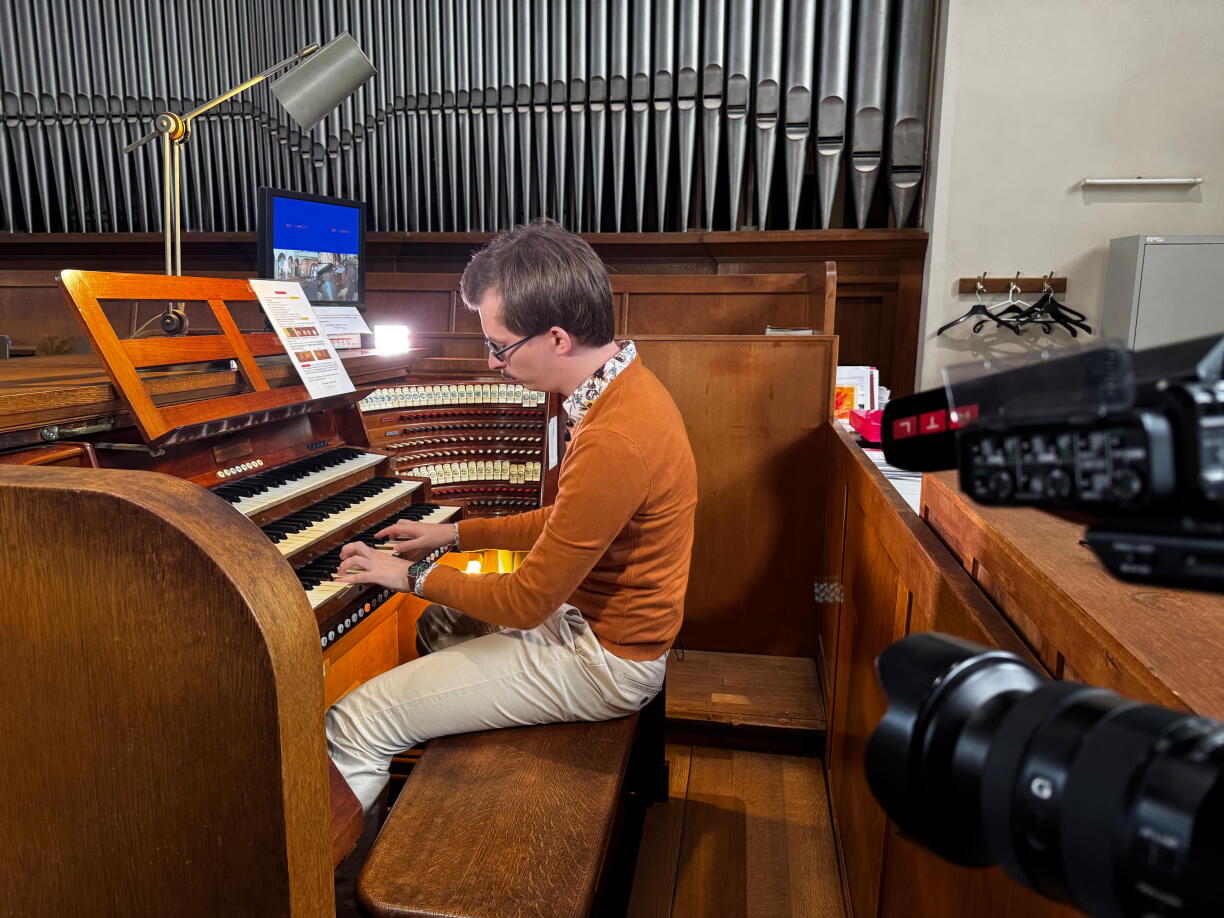
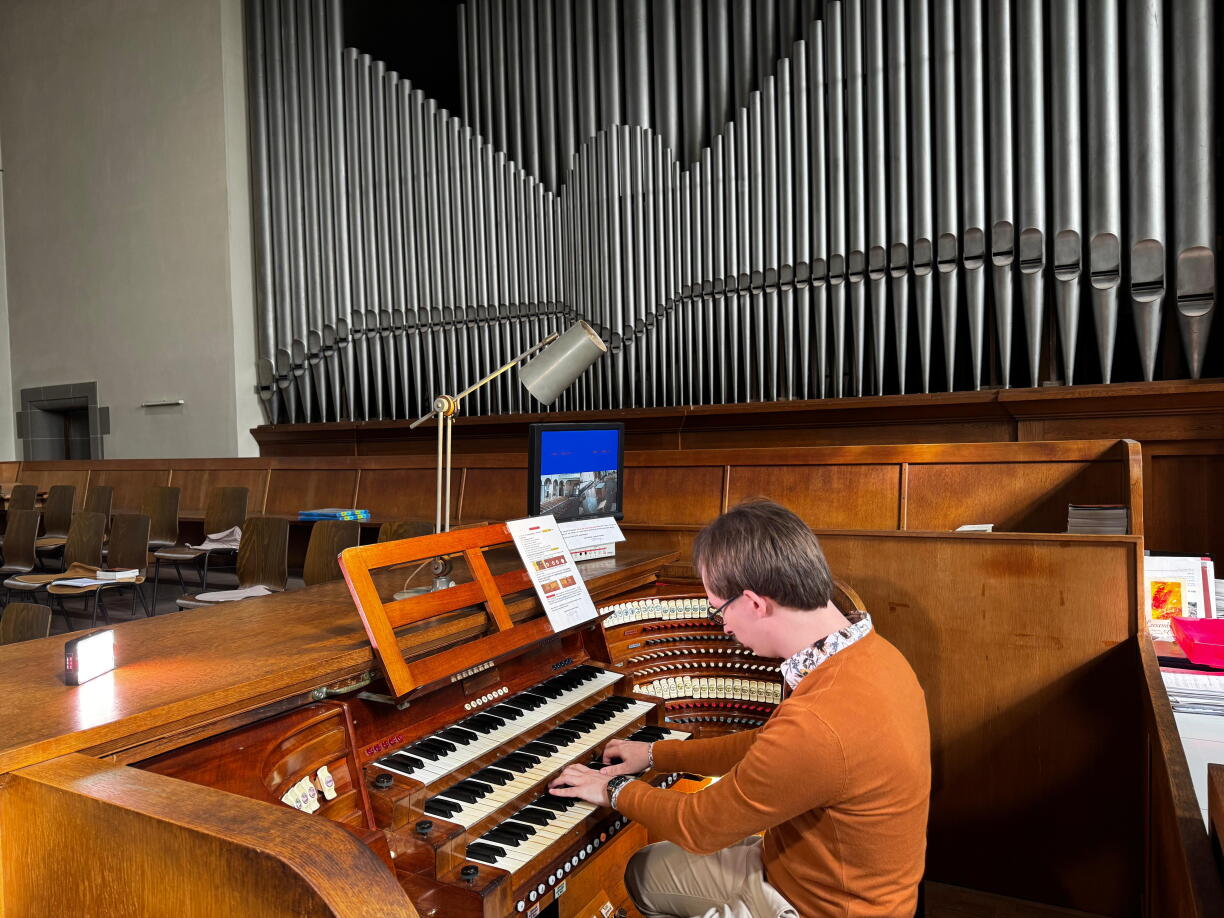
When we meet him for the Sunday interview at the Sacré-Coeur church in Luxembourg City, Sidney is at the organ, which is an instrument that has fascinated him since childhood and is considered among the most challenging to master.
He explains that it is probably one of the hardest instruments when it comes to coordination, as one works with both hands, your feet, and must read three lines of music at once.
Sidney compares organ playing to conducting an orchestra, where multitasking is essential and you must have your eyes and ears everywhere.
It is a challenge he hopes to focus on even more in the future: "If I succeed, then I will have one of the most beautiful professions there is."





