You might know Caroline Criado-Perez as the woman who successfully campaigned to get Jane Austen, instead of yet another man, on the new British £10 note in 2017.
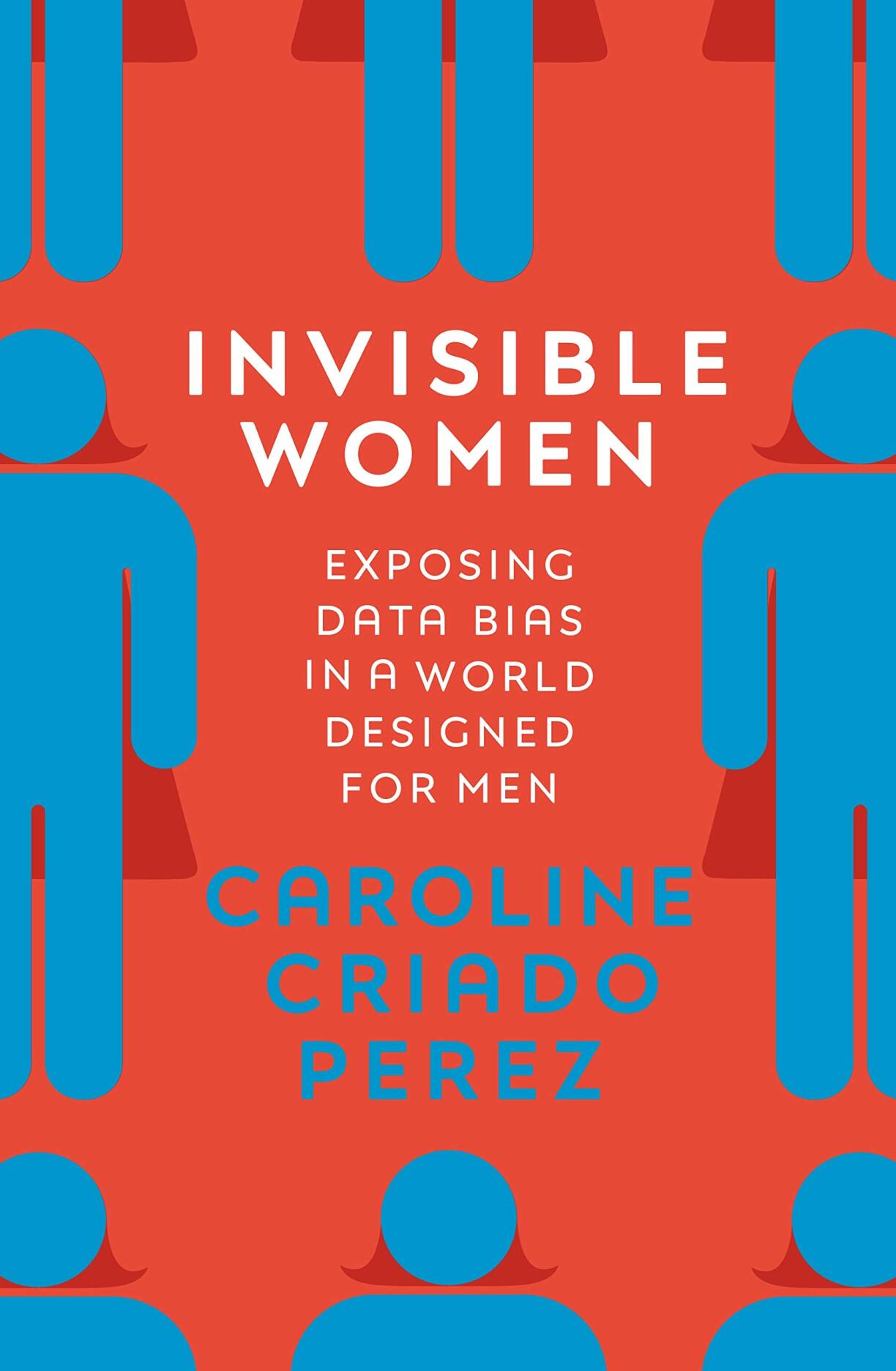
Other than that, she is a feminist activist, journalist and author. Her most recent book Invisible Women was published in 2019 and quickly began to climb the bestseller lists. It is a non-fiction book and although it does contain some numbers, statistics and technical terms, it is still very readable and can be easily understood by anyone.
Criado-Perez starts off with the premise that for the majority of areas in our society the male is considered to be the norm. It might not be surprising if you consider that men held all the power for large parts of history but by now it should be possible to challenge this norm which disadvantages women in almost every area.
The concept of male-as-norm is very much ingrained in our brains and, deliberately or not, we pass it on to our children, making it hard to initiate change. As an example of this concept she states the fact that if you ask someone, adult or child, to draw a person without specifying their sex, most people will draw a man.
I myself have to admit that I probably would have drawn a man too, without even thinking about. This is just to show that whether you want it or not you probably are a victim of this concept.
This longstanding idea of male-as-norm leads to a gender data gap, this means that in most fields we have way more data about men than about women, if we even have any at all. The book focuses on this data gap and the negative impact it has on women’s lives.
Different areas of life such as medicine, work, or urban planning are explored and the author gives us accounts of well-known women mixed in with stories of ordinary girls and their problems. It is thus good to see the perspectives of different women who are all disadvantaged by the system in one way or another.
Some of the examples probably sound familiar: for example that women are generally paid less and do much more unpaid work in the form of housework than men do. Other examples might sound less familiar. The gender data gap in urban planning for examples leads to streets and pavements that are a lot less adapted to women’s needs and therefore make their lives unnecessarily harder.
Data gaps in other areas can have even more serious consequences and put women’s health and security in danger. In the automotive industry, the apparently female crash test dummy was just a smaller version of the male, not taking into account any of the anatomical differences and - believe it or not - this endangers women in car accidents because we are not just smaller men.
Similarly medical research often does not really focus on the effects a new drug has on the female body or doesn’t properly segregate the data, because even when it is a matter of life or death, the notion of male as norm still persists, putting women’s lives in danger day by day.
The book is a call to finally put an end to this gender data gap and with its numerous examples in different areas Caroline Criado-Perez makes it very clear why this is so necessary and important. You would think that by 2020 maybe not every gap, but at least some, would have been filled, but unfortunately inequality is still very much present and affects women of all ages across the world.
I am well aware of the inequalities in our society, especially in the context of women but seeing everything collected in one place was still shocking and did make me angry at times. The reading of this book might not always be enjoyable - I had to put it down occasionally, because being confronted so many injustices, which, if you are a woman, might even directly concern you, is hard.
You might even find yourself in one of the examples or realise that some situations you just took for what they were, are in fact, extremely unfair and could be avoided if the data gender gap didn’t exist. In spite of this uncomfortable book I think it is important for everyone to read it, whether you think it directly concerns you or not, as we all live in this society together and need to try and eliminate its injustices as one.
These gaps cannot be filled by looking away or ignoring them therefore we should be thankful for Caroline Criado-Perez’s work which explains them so well and makes them easily accessible for everyone to see.
Happy reading!





