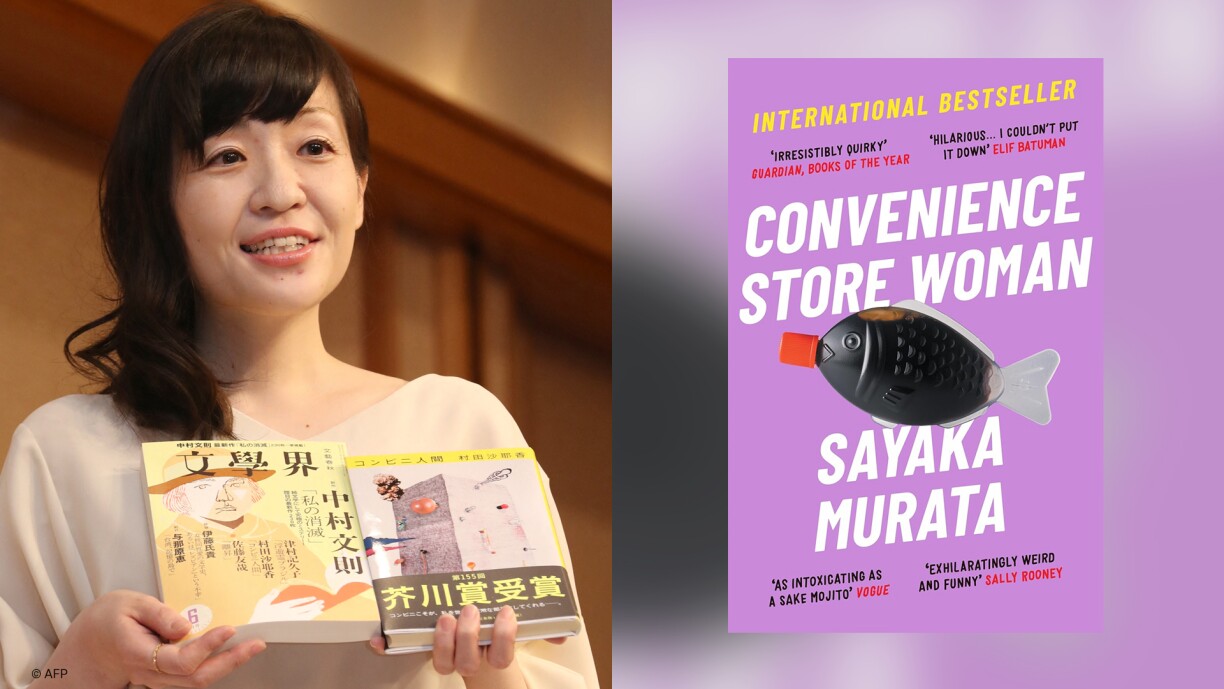
Sometimes a book appears often enough – on shelves, in conversations, online – that you eventually give in, pick it up, and hope the hype is justified. So far, those highly praised reads have mostly left me disappointed, and I was hoping this one would be different.
The book in question is Convenience Store Woman by Sayaka Murata. First published in Japan in June 2016 and translated into English in 2018, it sold over 1.5 million copies domestically and has since been translated into more than 30 languages.
From the back cover alone, I was hooked. Keiko is 36, has never had a boyfriend, and has worked in a convenience store for half her life. The store is not just her job, but her structure, her comfort, her entire way of making sense of the world.
Placed within Japan's high-pressure social environment, her life choices are inevitably seen as odd. Long working hours, rigid expectations around marriage, children, and gender roles still shape the norm. In that context, being single, childless, and content in a part-time convenience store job does not fit the script.
The first half of the novel is genuinely engaging. Murata builds a compelling rhythm, layering in small, almost unsettling details that hint at something stranger beneath the surface. It feels like the story is building towards something bold, and I found myself already imagining where this story would take me.
But halfway through, that promise begins to fade. Instead of leaning further into the peculiar world she has so carefully constructed, Murata shifts towards a more conventional narrative path. Without giving too much away, Keiko starts to entertain the idea of a 'normal' life – not because it aligns with who she is, but because it satisfies societal expectations.
And that shift is where the novel lost me.
Murata spends so much time immersing us in Keiko's distinct way of thinking – her detachment from the world, her logic, how she doesn't quite fit into social norms – that it feels like a missed opportunity not to let that strangeness fully drive the story forward. The groundwork is there for something sharper, darker, or simply more daring. Instead, the narrative pulls back just when it could have pushed further.
I read the book in two goes. It is just over 160 pages and fabulously translated. I could have read it in one sitting, but I needed a break halfway through to adjust to the new storyline. And that's the thing: I love weird girl literature, so this should have worked for me.
On the other hand, the ease of it and its length make it a perfect quick read – and you will not be too deeply engaged if, like me, you find yourself wishing it had gone in a different direction.
Or maybe you're not like me, and this is exactly the kind of weirdness you've been craving – because weird it is.





