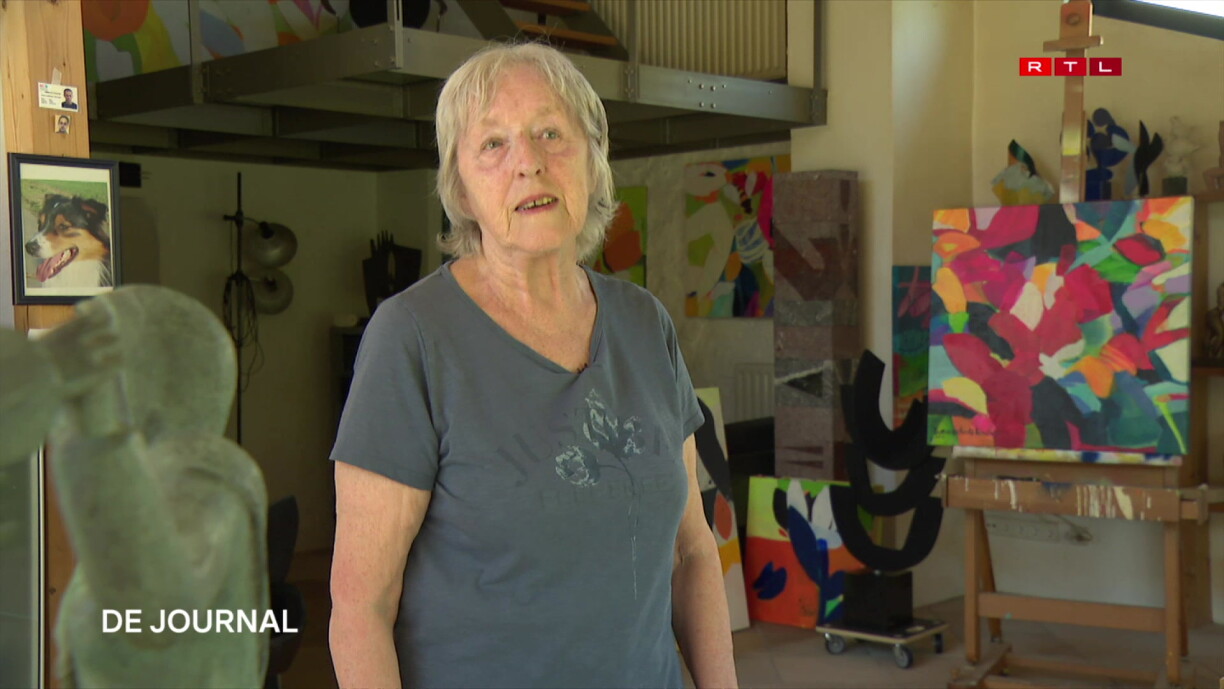
Benedicte Weis is a familiar name to admirers of Luxembourgish painting and sculpture, with works displayed in prominent public spaces across Luxembourg. The 76-year-old has left a substantial mark on contemporary art in the Grand Duchy.
Primarily known for her Saltimbanques sculpture on Place du Théâtre in the capital, creativity has always been central to her life. The Luxembourg City native, who began exploring art at an early age, spoke to RTL in her colourful home studio, looking back on a career spanning over five decades.
Alongside several other works, her interpretation of Grand Duchess Charlotte particularly stands out. The sculpture, which is not easily accessible to the public and is located in the entrance hall of the Banque et Caisse d'Épargne de l'État’s (Spuerkeess) historic building on Place de Metz, was created for a competition in 1990.
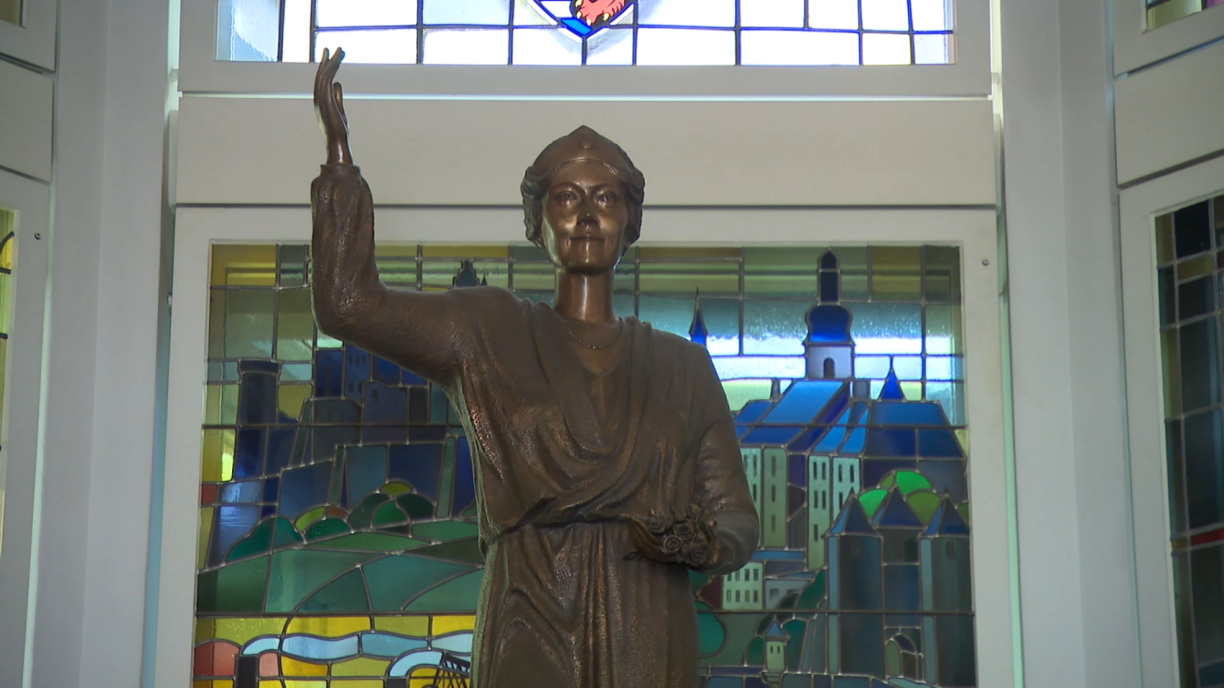
The sculpture portraying Grand Duchess Charlotte was subsequently purchased by Spuerkeess, and later inspired the Council of State to commission a bust from the artist the following year.
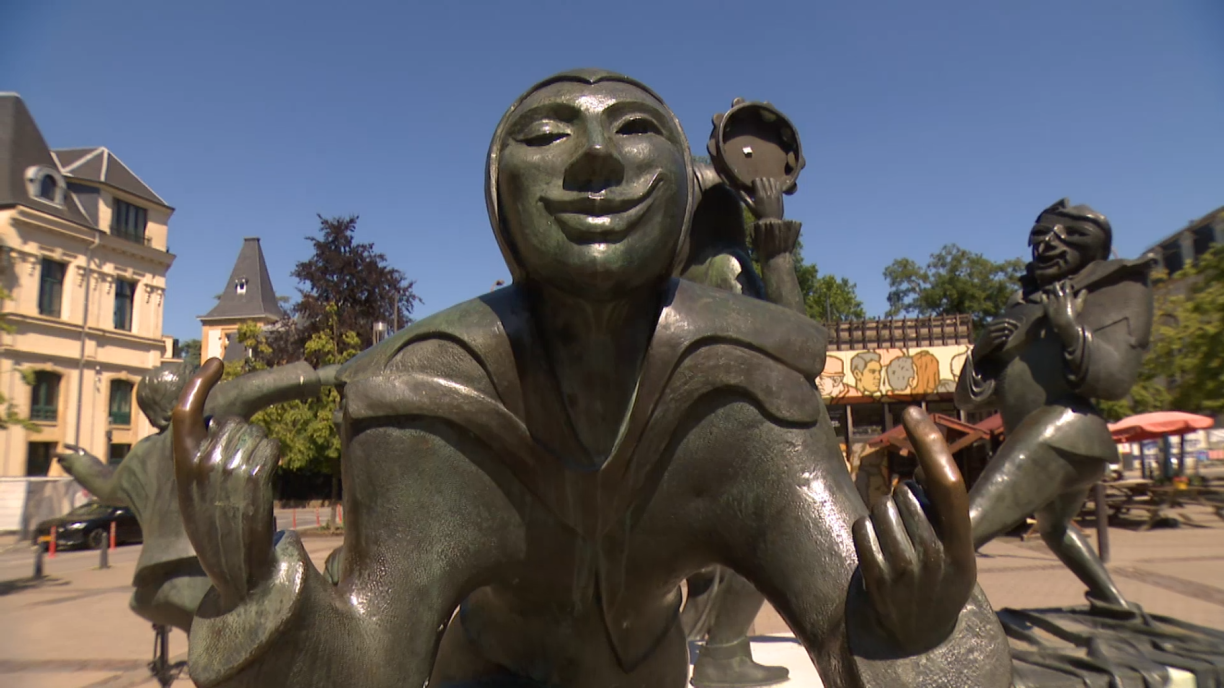
As a young woman, she produced what would become her largest and best known work: Les Saltimbanques, which now stands on Place du Théâtre.
Produced in 1987 in a studio she rented in Italy over the course of four months, the work depicts figures meant to evoke Luxembourg City in earlier times. They are fire-eaters, musicians, and dancers, making them particularly well suited to Place du Théâtre.
In 1995, when Luxembourg was the European City of Culture, Weis also took part in an exhibition organised by the municipality of Hesperange, which is now planning a retrospective of her work.
One of her sculptures previously stood on the opposite side of the park in Hesperange. It has since been repainted and moved to a new location near a school.
The municipality has embraced Weis's organic style, incorporating it into the space in which municipal and aldermanic council discussions take place.
Hesperange's interest in art dates back to former mayor Marie-Thérèse Gantenbein and remains an important part of its cultural policy. Current mayor Diane Adehm explained that the municipality had changed and expanded over time, comparing it to a flower whose leaves represent its different localities.
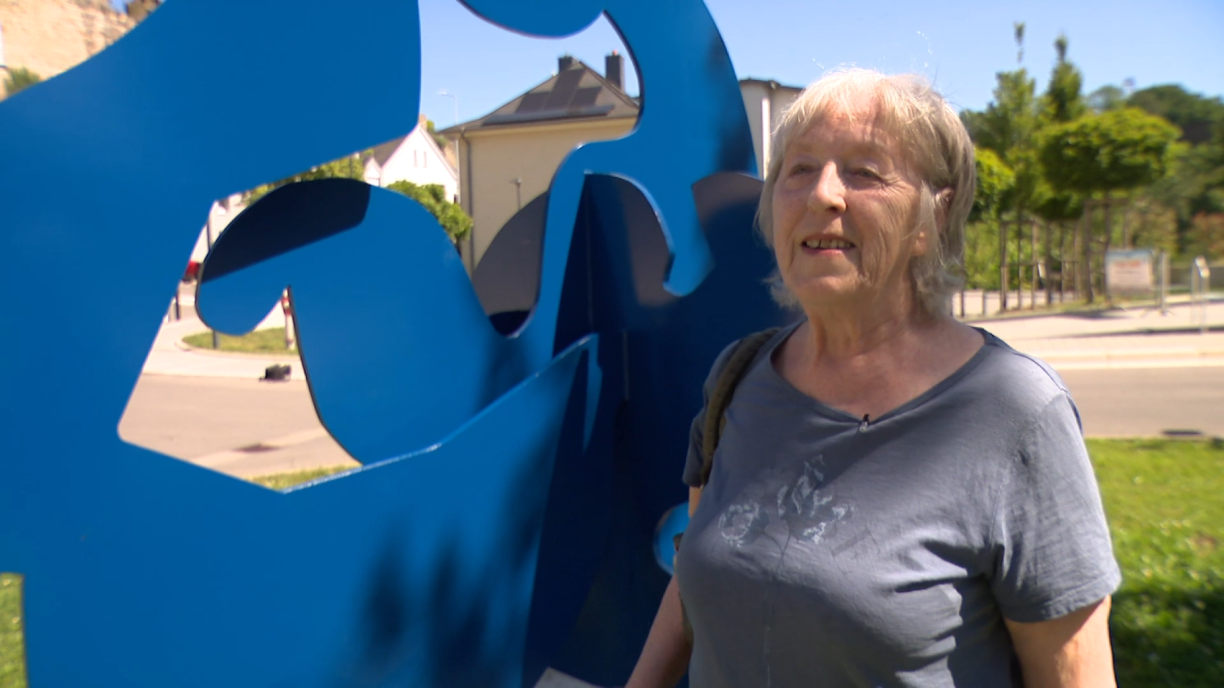
Weis lives in Hesperange and has become closely associated with the municipality through her work.
She said she initially worked in a more figurative style before moving towards abstraction and, eventually, organic forms. Weis added that she had never been entirely satisfied with remaining in one place creatively and had continually sought variety, leading her to work in both sculpture and painting.
Weis belongs to a generation of artists who not only develop imaginative ideas but also possess the craftsmanship required to bring them to life themselves.
Among collectors of Luxembourg's artistic heritage, there are likely few whose collections do not include a work by Benedicte Weis.





