Tomorrow belongs to those who innovate. This was one of Philip Aghion's, who won a Nobel Prize in economics, messages at the Global Urban Festival (MIPIM) 2026 in Cannes. A message that carries particular weight in light of the United Nations' recognition that the international real estate market is facing a crisis. However, some cities did not waste time investing in the transformation of their housing and, subsequently, their entire economic model.
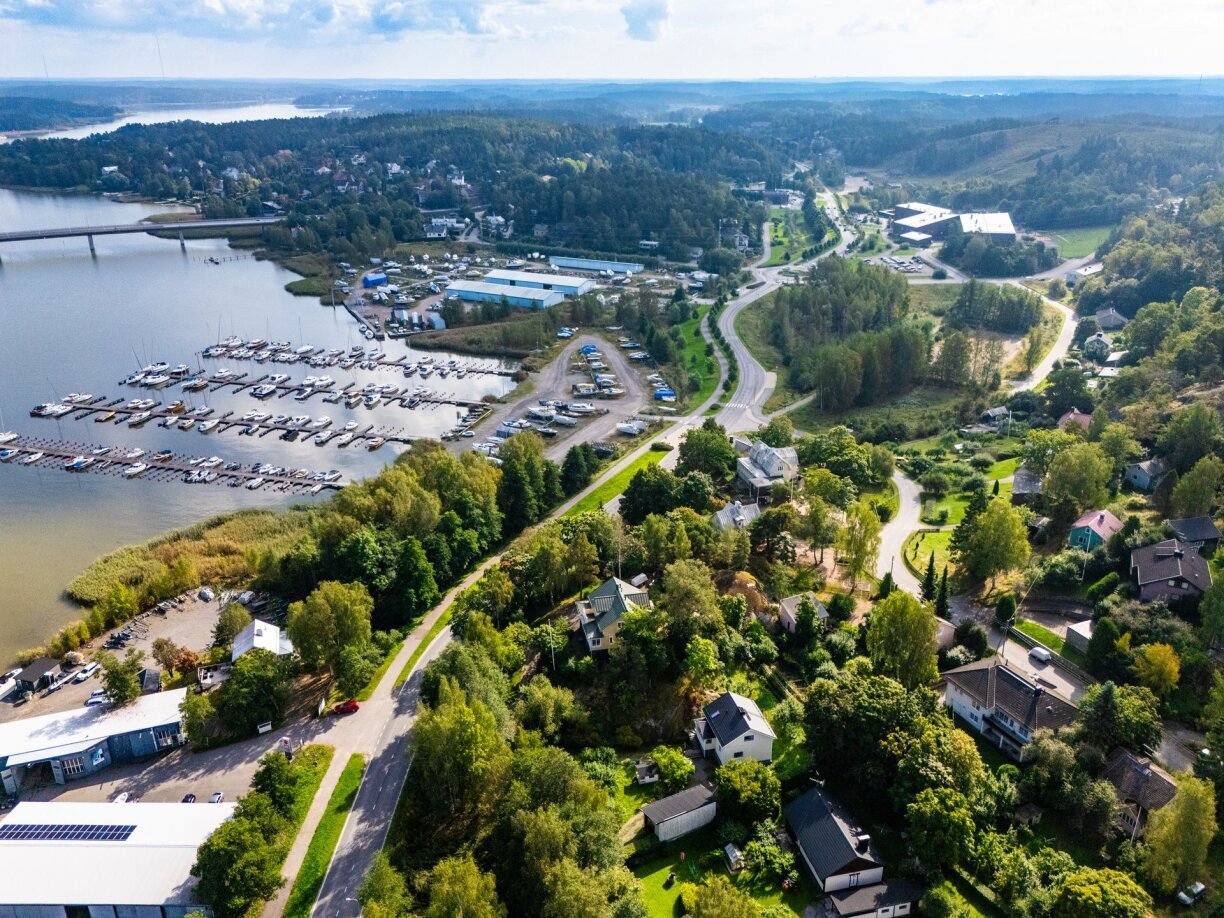
The Finnish city of Turku, home to around 210,000 people, is undergoing a period of rapid transformation driven by long-term investment in energy, industry and education. Finland’s oldest city, with an 800-year history, is now recording strong economic and demographic growth and is on track to become climate-neutral within the next three years.
Unlike many others, Turku began investing early. Since the 1990s, the city has prioritised renewable energy, education, public transport and industrial renewal, and is now reaping the results. These decisions have made it an increasingly attractive destination not only for businesses and investors, but also for residents.
"Life is good in Turku," says Mayor Piia Elo, who gave RTL an interview at MIPIM in Cannes. The dynamic atmosphere draws people in. Around 4,000 new residents arrive every year. Today the city counts roughly 210,000 inhabitants, including nearly 50,000 students. "It is a very lively city, there is a lot of celebrating," the mayor adds.
The city owes its present-day attractiveness ,above all, to its long-term strategy. Turku moved early to implement a district heating system using waste heat, and did not hesitate to completely rethink and redesign its industrial zones from the ground up. The revitalisation of the Science Park, which today is home to over 400 companies and has created more than 26,000 jobs, has been particularly successful. But the ambition goes beyond an industrial zone, as the mayor explains: "We are carrying out a regeneration project here. We are in the process of transforming this district into a mixed-use zone containing both offices and housing. Our university campuses are also located here, so it really is a vibrant neighbourhood."
The success of this strategy is reflected in the 16,000 people who now live there.

Major companies have also set up in Turku, including the pharmaceutical giant Bayer and cruise ship builder Meyer. When asked how the city managed to get such giants to commit to the goal of climate neutrality, the mayor seems almost puzzled: "We don't need to impose anything. For them, it is an honour to be part of our project. It is also proof of their competitiveness, not to mention the marketing advantage they gain from it. We work together."

The message of collaboration with the private sector was echoed at the Luxembourg Pavilion at MIPIM. When it comes to creating affordable housing, real estate experts are increasingly recommending public-private partnerships.
Housing is, in fact, one of the main reasons why Piia Elo and her delegation were present at MIPIM. Turku's strong growth could bring new challenges in the future: "The housing market is not yet a problem, but it could become one. That is why we are here at MIPIM. We need to build more sustainable housing. We own land, and we have room to grow. All we are still missing are developers and investors."

The mayor insists that construction must be both sustainable and carefully managed if Turku is to meet its climate-neutrality target in time for the city’s 800th anniversary. “In 2029, we celebrate 800 years of our history, and it matters to us to mark that milestone while achieving climate neutrality,” Piia Elo told RTL. “That is something we want to pass on to future generations.”
At the same time, the city continues to invest heavily in public transport and education. New schools, nurseries and a tram line are currently under construction. “Education is very important. We constantly invest in our children,” the mayor added.
Such long-term investment is widely seen as a contributing factor to Finland’s position at the top of the World Happiness Report, reflecting strong public infrastructure and education systems.
Turku also stands out for its leadership profile. According to the mayor, the city’s administration is led entirely by women, a pattern reflected in senior positions at local universities. Research at the Science Centre has also shifted focus towards women’s health, an area long overlooked. “That had not been the case before – it was time to change that,” Elo said.





