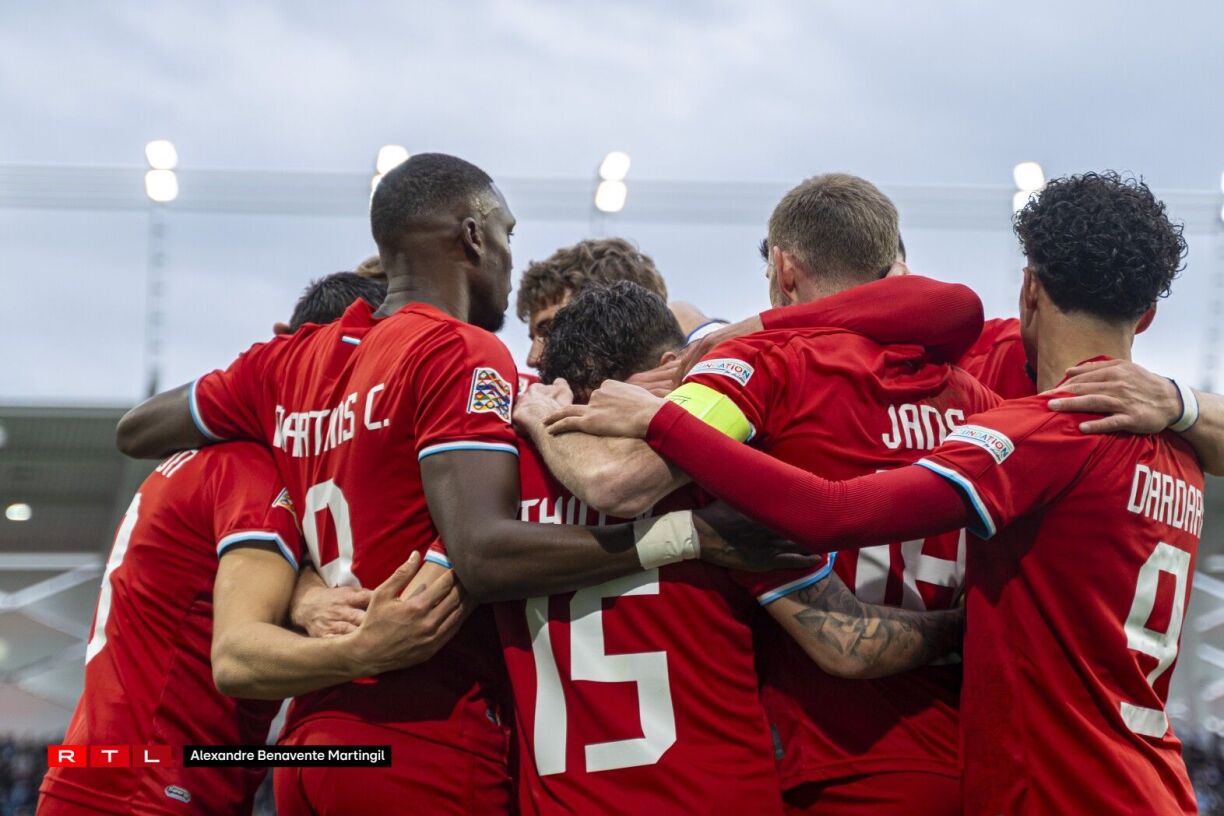
For the first time under Strasser’s tenure, Luxembourg have truly dominated an opponent and coasted to comfortable victories without ever looking like folding under pressure. Granted, the opponents were lowly Malta, a squad comprised largely of amateur players, but the positive experiences will boost the team’s morale for months to come.
The last several international windows have been challenging for Luxembourg to say the least. The latest edition of the Nations League brought three draws, three losses and zero wins in six matches. While defending was never an issue, the lack of efficiency in the opponents’ box was remarkably lacking, with only three goals scored across the autumn.
Having started the campaign with a new manager and on the back of an upward trajectory over the past few years, a period of adaptation was always going to be necessary. As well as the setup facing several delicate situations.
Gerson Rodrigues, the nation’s record goalscorer, was removed from the group with immediate effect following his conviction for domestic abuse last April. Brian Madjo, his potential successor in the attacking line, rejected a call-up in September to join England’s youth setup instead, with an eye on a future with the Three Lions.
Other influential members of the national team have seen their minutes reduced this season. Maxime Chanot and Ralph Schon retired from international duty. Marvin Martins, Olivier Thill, and Mica Pinto both had to change clubs during the season, while Enes Mahmutović, Seid Korać, Yvandro Borges, and Vincent Thill are among those struggling to get regular minutes at club level. In short, there was plenty of mitigation for the repeated under performance.
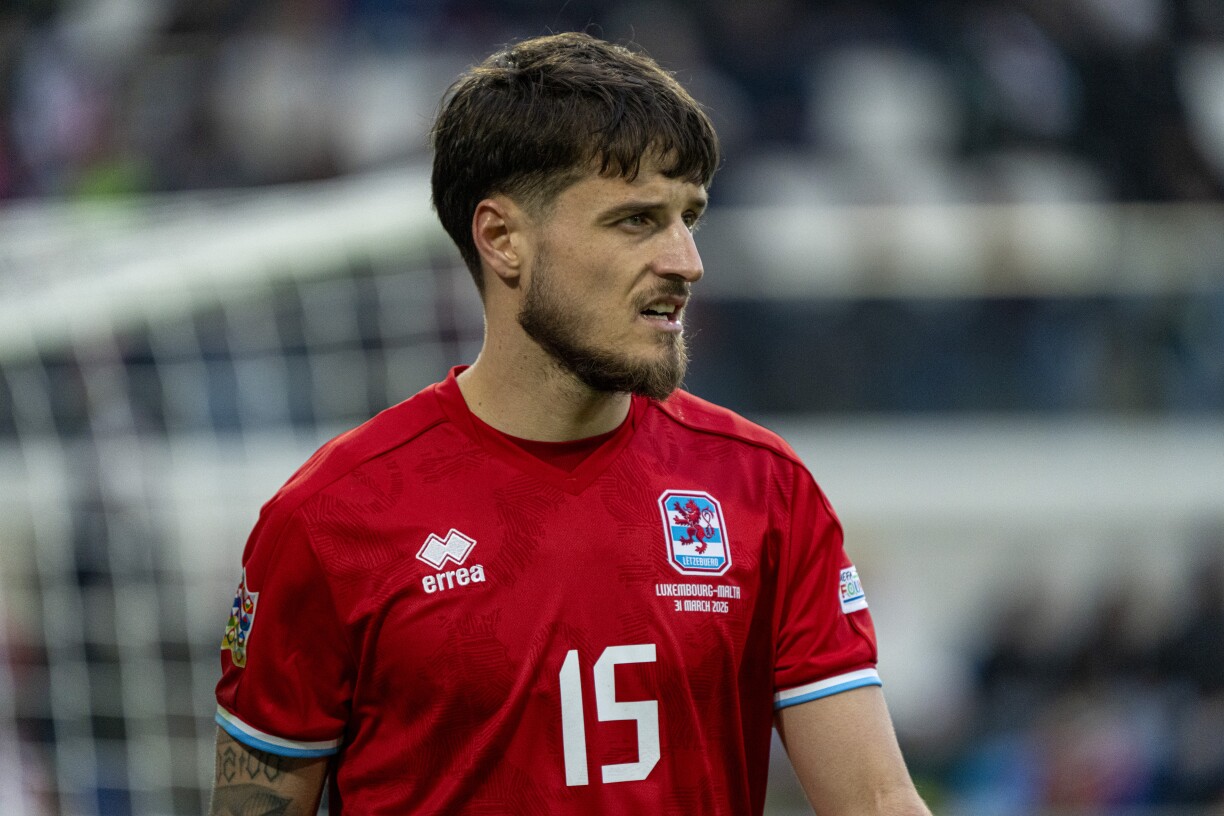
Nevertheless, a second consecutive winless campaign (following six losses in six at the 2026 World Cup qualifiers) set alarm bells ringing ahead of two must-win clashes against Malta. A loss would have resulted in significant financial damage, and Luxembourg’s first-ever relegation from the Nations League since the launch of the competition in 2018.
In light of all the difficulties the team faced in the past six months, the Malta tie was a relieving, surprisingly one-sided affair. A topsy-turvy away win in Valletta was followed up by a brave display and an impressive 3-0 scoreline to complete a 5-0 rout on aggregate and secure Luxembourg’s spot in Division C for the next edition of the competition. An improved record in 2026-27 would go a long way towards a first-ever qualification for a major international tournament, with the 2028 European Championship approaching.
The last ten years have marked one of the most successful periods in the history of Luxembourgish football. Luc Holtz’ Red Lions achieved their best-ever qualification record with 17 points in ten games in 2023, and were 180 minutes away from booking a historic Euro 2024 spot.
All of the recent milestones have been achieved with a largely unchanged core of the squad. Goalkeeper Anthony Moris has been indispensable with his leadership qualities. In defence, Pinto, Chanot and Jans have routinely stood guard, while any midfield without the brilliant Leandro Barreiro and Christopher Martins is unthinkable nowadays. In attack, Danel Sinani was often flanked by Rodrigues, and if fit, Yvandro Borges.
The generational transformation period has already started taking place without Chanot and Rodrigues, but many more of the above list (and beyond) are expected to be preparing for their last shot at making a major tournament when Nations League action restarts in September.
Moris left Belgium last summer to join Saudi Arabian outfit Al Khaleej, and his international involvement has been doubtful for several windows. Laurent Jans has been freshly crowned Belgian second-tier champion with his club SK Beveren, but at 33, his powers are waning. His experience and discipline keep him in the starting XI on a regular basis, but for Luxembourg, his on-pitch impact has been reducing consistently.
On the other side of the backline, Mica Pinto has spent the best part of the season without a club, and while he is now featuring for Dordrecht in the Netherlands, the level of competition is drastically lower than what he had experienced before. The same stands for Marvin Martins and Eric Veiga, who have transferred to Latvia and Albania, respectively, since the start of the 2025/26 season.
Luckily, the defensive situation is not an area of concern for Luxembourg. Korać and Dirk Carlson have grown into their roles as regular starters since Chanot’s retirement, while Florian Bohnert is an incredibly versatile wing-back able to play in a number of different roles and tactical setups. Others, like Mahmutović, Vahid Selimović or Edin Osmanović, are waiting patiently for their opportunity to impress Strasser. If he can make a move abroad, Kévin d’Anzico seems like another capable option in the long run.
The problems begin on the attacking front. Rodrigues’ omission was entirely justified – belated even. Picking a convicted abuser to represent a nation is unimaginable. However, the failure to attract numerous other candidates to fill his void has left the team scrambling for solutions.
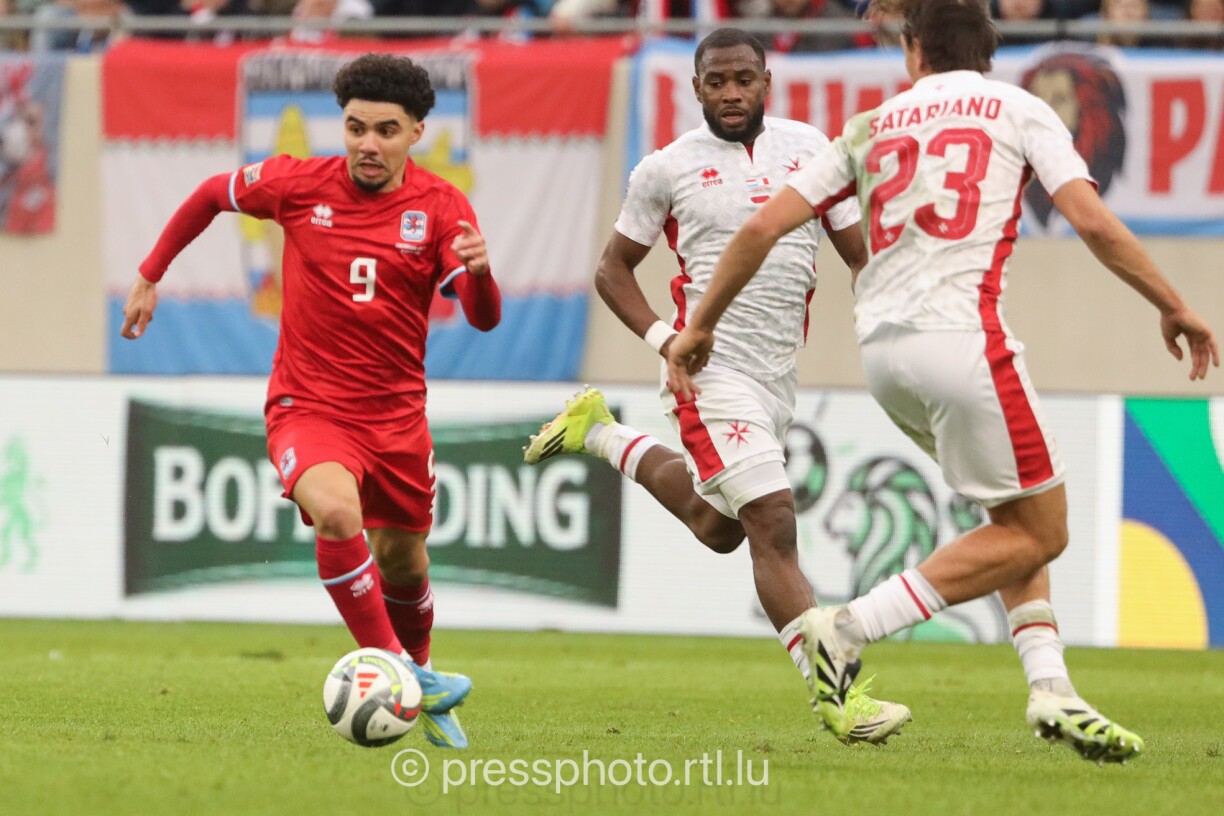
Aiman Dardari’s fast-track route to being a regular starter was mostly a result of the circumstances (Yvandro’s injury played a big part), but the young Greuther Fürth winger has every chance to pin down a spot for himself up front for years to come. Unfortunately, every other out-and-out striker needs to prove themselves more to earn Strasser’s trust. Edvin Muratović and Alessio Curci had long spells for the Red Lions before, but were never particularly productive. Michael Omosanya and Jayson Videira have both had very limited opportunities with the senior national team to date.
Vincent Thill’s surge to top form under Holtz at Waldhof Mannheim in the German third tier might just be the best thing that has happened to Luxembourgish football in 2026. The former wonderkid played a crucial role in helping Luxembourg through with two goals against Malta, and can reasonably expect more chances to show himself in the future.
Another winger was similarly talked about throughout last month, for entirely different reasons. Fábio Domingos, a former Progrès Niederkorn academy product, has been making rapid progress for PSG’s youth team and consequently received his first senior call-up at the age of 18. Merely days later, however, an injury in the Cape Verdean setup led to a last-minute emergency plea to lure the young talent away, who said yes, ditching the Red Lions for a potential involvement at the World Cup this summer.
Domingos has already made his debut for the African side and is now only three competitive caps away from locking down his future with the Blue Sharks. If that happens, Luxembourg miss out on yet another gem and will have to get creative with their attacking choices.
While many of the starting lineups have been unchanged over Strasser’s tenure, there is always a space for in-form players to carve out a spot due to the shallow player pool the staff can choose from. With a new international cycle starting in September, it can be the perfect timing for some of the lesser-featured players to step up.
Perhaps the most unfortunate of the pack is Tomás Moreira, whose inclusion in the national team was a breath of fresh air in the autumn of 2024. The midfielder is currently plying his trade for Benfica’s reserves, and scored his first-ever international goal against Malta only two minutes after coming on.
His situation is far from straightforward. Always the first to hold the fort if Luxembourg is missing someone in the middle of the park, he has so far found it impossible to displace Barreiro, Christopher Martins, or Mathias Olesen from the XI. At times, he featured on the wing but offered little in terms of creativity and poise. When Olesen plays as a third defender, Moreira’s ability to operate as a box-to-box link between the lines has been appreciated, but despite his strong form, he is yet to be a regular.
Another midfielder is expected to return to the fold soon. Timothé Rupil made his international debut aged only 17, and five years later, he has finally kickstarted his professional career, featuring regularly for Swedish side Helsingborg. The diminutive playmaker has always been reduced to bit-part roles in the national setup, but at the age of 22, he still has plenty of time to grow into a household name in Luxembourg. Elsewhere, Mirza Mustafić has been performing well in Indonesia, and could potentially see himself on the roster soon.
In attack, the pathway to a call-up seems much less complicated. Omosanya is back in the professional world right now, which will boost his chances. Muratović and Curci can always expect to be back. Regarding debutants, there are two surprising names who can see themselves in the squad soon if they continue to feature for their clubs.
Issa Bah’s case has been dragging on for years. The Guinea-born winger, who also has Portuguese origins, has not been eligible to start for Luxembourg since his solitary under-17 cap in 2018. Now that he is a Luxembourgish citizen and has clocked up over 1,000 minutes in the Serbian top-flight, though, he can no longer be overlooked by the federation.
A more unlikely scenario for the near future is the inclusion of Luxembourgish-Brazilian born Lucca, who has spent most of his life in South America, but is now trying his luck in faraway Armenia, where he has hit the ground running, scoring two important goals in his last two matches. He is still only 21 and can play in different positions across midfield and attack, while he has already played for the Red Lions at youth level. His inclusion might not be on the cards for September, but he is worth keeping an eye on for years ahead.
The most painful moment in the upcoming months and years will undoubtedly be Moris’ departure from between the posts. A leader and dedicated professional, he brought not only heart and a winning mentality to the national team, but top-level performances that have earned Luxembourg many a point against superior opposition since his first cap all the way back in 2014.
His loss will undoubtedly hurt the team, but there are a handful of prospects eyeing their chance of taking over the reins from Moris. The obvious pick here is Tiago Pereira Cardoso. He was the one who jumped in for Moris every time in the last three years, and he has looked mature and commanding beyond his age. If he can secure himself a move in the summer and become first-choice goalkeeper in a professional environment, the future is in safe hands.
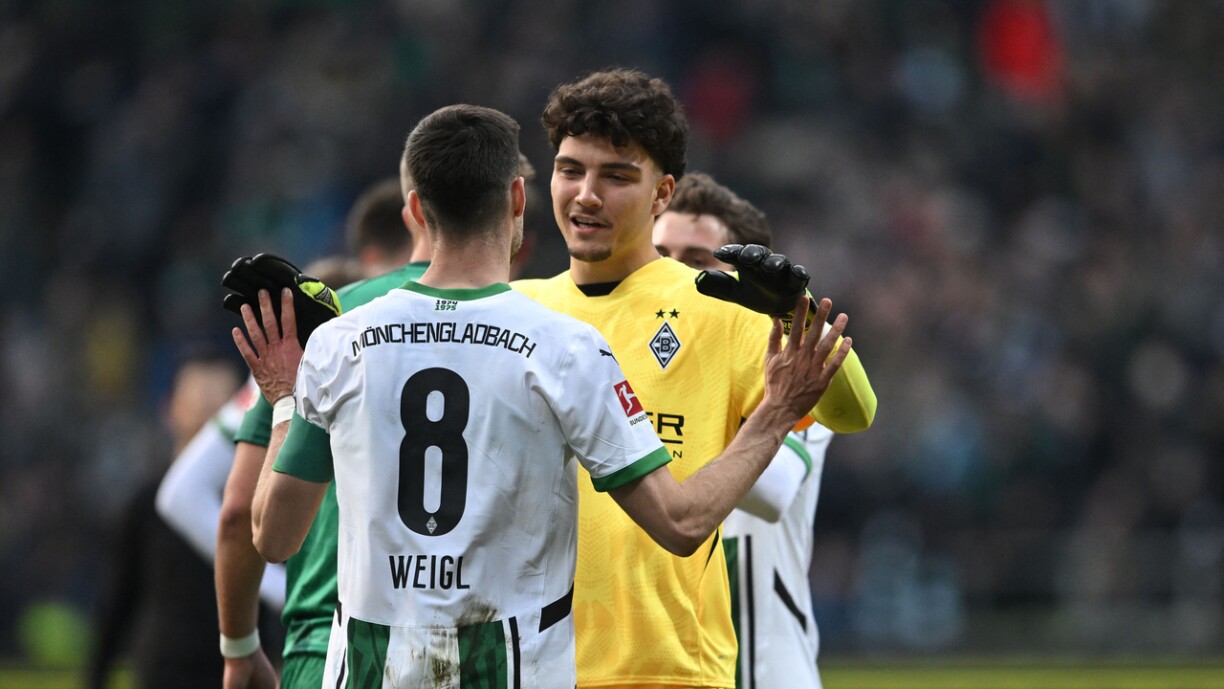
Besides Pereira Cardoso, there is healthy competition for spots in the squad. Lucas Fox has been regular third-choice option recently, but his departure in the summer from the German regional league could help elevate him to a more prominent position, and will place him back in the spotlight. Timothy Martin is preparing for his second season with Irish side Cobh Ramblers, while Tim Kips has also performed well for Phönix Lübeck this year.
Further ahead, Noah Scheidweiler’s name is expected to be part of the conversation again when he finishes his university education in the United States. His displays in the BGL Ligue point to a really exciting profile that has what it takes to become the next big thing, pending a return to Europe.
There are four more international windows in the calendar year. The next one starts in June, but will only feature friendly games as teams prepare for the World Cup. Luxembourg did not qualify.
The 2026-27 edition of the UEFA Nations League kicks off on 24 September, and will finish in November. The Red Lions were given a tough hand, having to play Iceland, Bulgaria, and Estonia in Division C.
Luxembourg have good recent memories against Iceland, having collected four points in two matches against the Scandinavians in 2023, but the tide seems to have turned since. Overtaking Bulgaria and Estonia can still be enough for a second place, though, which can earn the team a promotion play-off to Division B, and a chance to compete for a Euro 2028 spot regardless of their qualification campaign.
The European Championships will be held across England, the Republic of Ireland, Scotland and Wales. Qualifying will start in March 2027 and the last matches will be played a year later, three months before the tournament. The official draw is expected to take place later in 2026.





