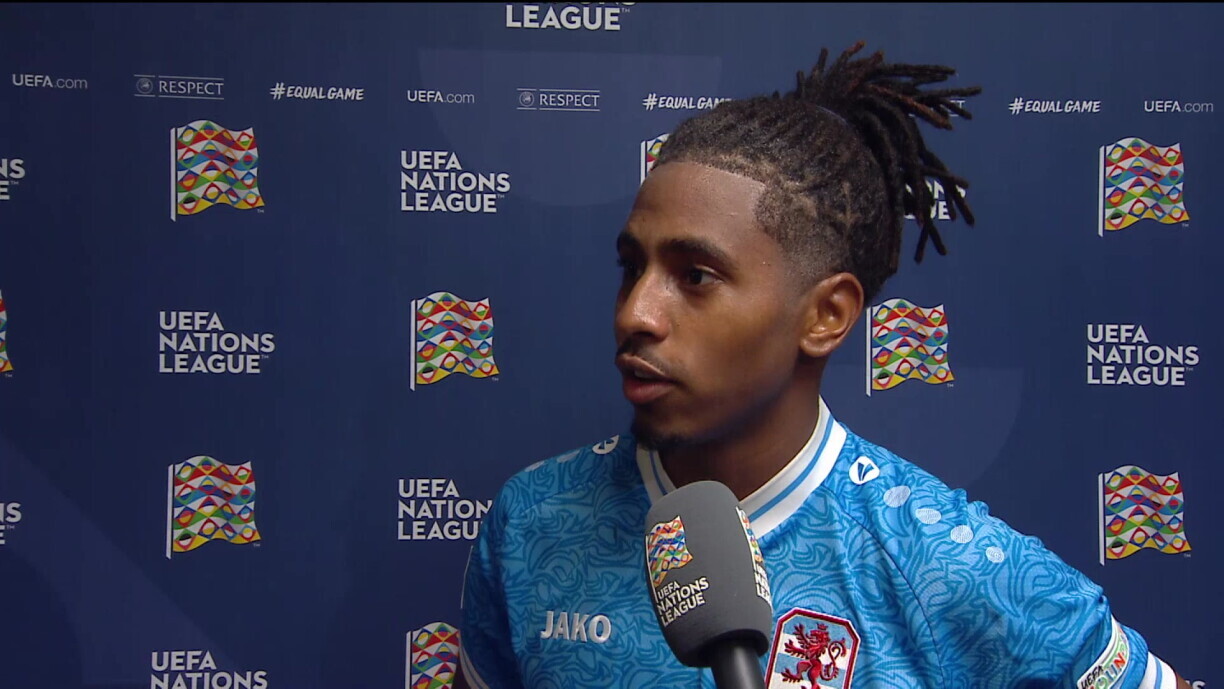
Jeff Strasser’s Luxembourg side ran out 2-1 winners in Bulgaria on Saturday night in what might have been the single biggest achievement of his tenure since taking over in July 2025. A brave, attacking display brought plenty of joy and excitement in the first half, but the group’s resilience was tested after the hosts scored an unlikely opener.
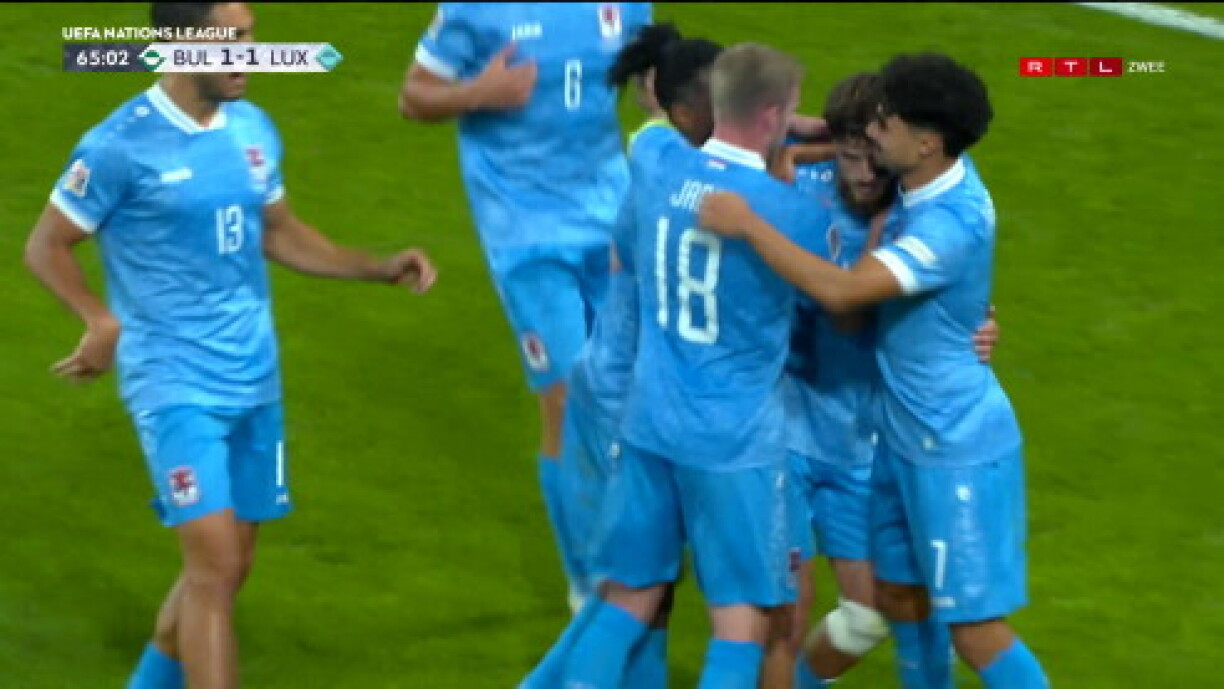
The Red Lions did not back down from their aggressive 4-2-4 shape, though, and their confident approach bore fruit throughout the game. Capitalising on two defensive errors, Leandro Barreiro and Vincent Thill helped turn the game around and land a much-needed three points to start off the campaign.
Attackers galore – without an attacker?
As news broke that Mathias Olesen’s lingering fitness issues will prevent him from playing a full 90 minutes just yet, two obvious beneficiaries got the upper hand. Tomás Cruz, often restricted to a peripheral role in the last few months, got the nod in midfield, while 17-year-old Hamza Kadamani featured up top, making his first Luxembourg start.
What transpired on the pitch was different from any pre-match line-up predictions suggested, though. Danel Sinani, nominally playing as an attacking midfielder, was often leading the line, staying involved in attacks and getting on the end of them at times. In practice, Luxembourg’s formation resembled a four-attacker setup, with full-backs Florian Bohnert and Laurent Jans also encouraged to support their teammates going forward.
The approach eventually yielded success and made for an eye-catching display, but it was slightly paradoxical to see such a radical shift at a time when the country is crying out for an elite, out-and-out forward.
In Gerson Rodrigues’ absence, there have been no real centre-forwards to lead the line for Luxembourg in the past years. There is simply no Aurélien Joachim or Dave Turpel in this team right now – versatile players can be invaluable, but finding someone to put the ball in the back of the net on a reliable basis has been a source of struggle in recent times.
Edvin Muratović and Alessio Curci both had their chances last year – neither of them has been invited this time around. Michael Omosanya, David Jonathans, Aiman Dardari and Jayson Videira have all been called upon to inject some attacking mentality to an otherwise well-oiled machine, but none have convinced to date.
Peculiarly, Strasser’s solution to the problem was… to double down. Often attacking with five forwards, his Luxembourg team showed ambition and looked ready to share the goalscoring burden with different players popping up in dangerous positions time and again.
Unfortunately, Sinani’s injury thwarted the original plans, paving the way for a more conservative setup. Throughout the second half, four different midfielders were brought on (and only one of them taken off) as Luxembourg sought more control.
Once again, the idea worked to a tee. The haphazard long balls and frantic recovery runs stopped, Luxembourg’s dominance more and more pronounced as the game wore on. The question heading into the final minutes wasn’t whether Bulgaria could equalise, but rather if the Red Lions muster a third.
After losing Brian Madjo to England and missing out on Luxembourgish-Portuguese Dany Mota, finding a way to play strikerless was crucial. And whisper it quietly, but Strasser might be getting there.
What is the ceiling of a depleted squad?
The problems started before the full squad announcement. Christopher Martins, instrumental at the heart of midfield, dropped out of contention with a light injury.
Not long after, Seid Korać was taken off ten minutes into his game with Italian side Hellas Verona in Serie B, requiring treatment. It has now been made clear he would miss the entirety of the three-month Nations League campaign thanks to a knee problem.
Olivier Thill and Enzo dos Santos were both unfit and had to be rested for the first game in the hope they can contribute in one of the following three matches. Olesen’s rehabilitation went slower than expected, so precautions had to be taken.
And when Luxembourg were finally finding their groove despite their makeshift line-up, disaster struck. On the verge of half-time, Sinani collided with an opposition defender while performing a shot, and stayed down. He never returned for the second half. After the match, it was revealed that he will join Korać on the sidelines for the upcoming period.
While the performance against Bulgaria was by far the most complete and consistent display under Strasser’s tenure, the ever-expanding injury list begs the question: how far can this team reach without its biggest stars?
Sinani and Korać have arguably been the most important backbones in their respective positions. Any replacement will be a necessary downgrade for the time being. On Saturday, it only took a few minutes for the irrefutable evidence: Enes Mahmutović, deputising for Korać, failed to control a simple back pass and was lucky not to have given away a clear goalscoring opportunity from a completely harmless situation.
The pattern repeated itself before the hosts’ opener. Mahmutović couldn’t read a long ball coming his way, and let it fly past him, straight into the path of the opposition’s attacker, who duly set up his teammate for an easy finish, bamboozling the defender in the process.
Mahmutović has long been an emergency solution for the national team – a strong, experienced defender who can win an aerial duel or two but constantly produces shaky moments. Having him (or Vahid Selimović) for the entire group stage will not come close to the established Korać-Carlson partnership we saw last year.
In midfield, Martins’ absence prompted a change in formation, with both Barreiro and Cruz being asked to cover acres of ground against a Bulgarian side keen to run at their opposition at pace. Olesen managed to ease the burden as the game headed into its final stages, but with four games in 11 days, it would be unreasonable to rely on Barreiro to keep the structure together on a one-man mission.
A more consolidated approach might be on the cards against Iceland, the strongest opponents on paper, on Tuesday. If Olesen is fit, his place in the Xi is almost guaranteed, but Timothé Rupil, Sébastien Thill and Miguel Gonçalves were all called upon at some point last time around, too.
In attack, Sinani had served as the focal point of the team for long periods in previous years. Against Bulgaria, he did get into scoring positions but failed to truly impose himself on his opponents. Contrastingly, Vincent Thill’s surge into form will go a long way towards alleviating his strike partner’s absence.
As a result, Kadamani and Dardari can both expect to keep their starting spots, if only for the lack of options available. Videira and Omar Natami remain untested at this level, and Iceland will be the opponents Strasser has to take the least risks against.
What’s next?
Iceland’s players are already in the Grand Duchy, where they will face the Red Lions on Tuesday evening, from 8.45pm. Next Saturday, Luxembourg will play away in Estonia, before hosting the Bulgarians for the return fixture three days later at Stade de Luxembourg.





