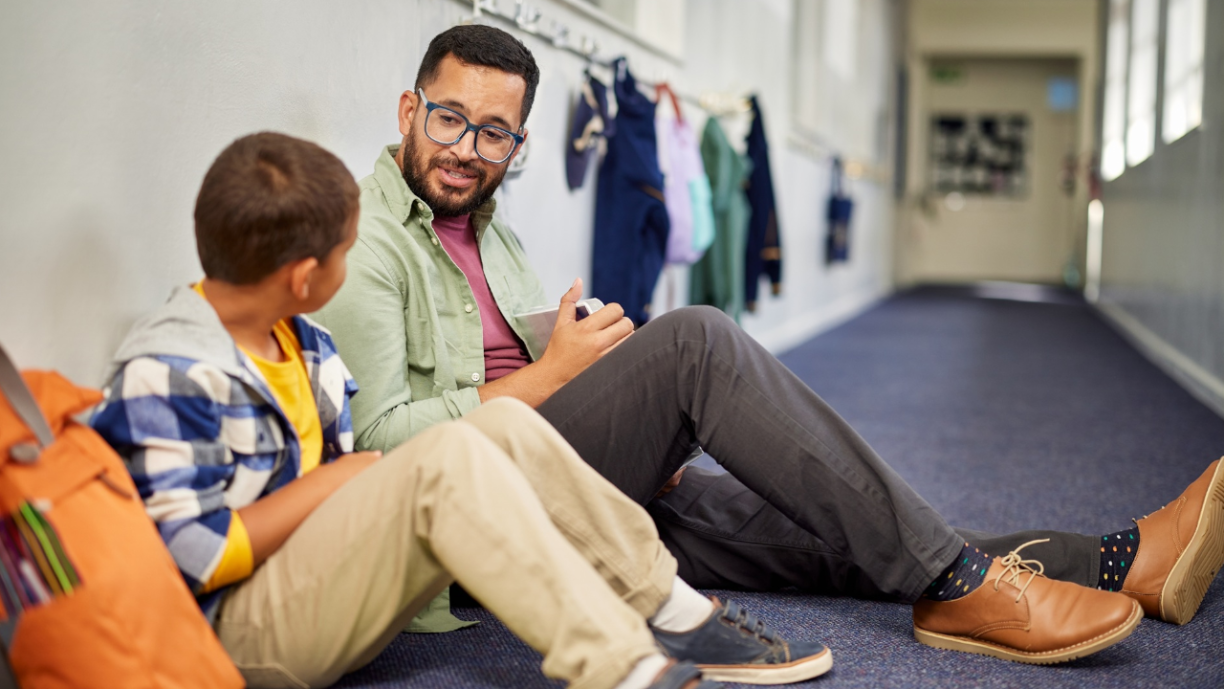
Bullying has many faces. Experts distinguish between different forms of bullying (verbal, social, physical, psychological, digital bullying), the context of bullying (e.g. school), the relationships between those involved (vertical versus horizontal), and duration (systematic bullying versus occasional bullying).
Words are not the only way to devalue, insult, exclude, and hurt a person. Body language, non-verbal signals, and actions can also hurt others:
For example, all of Pierre's (12 years old) classmates run away when he enters the schoolyard.
Lisa (15) is followed and pushed around by Jessica (15) and Amelie (15) every time she goes to the toilet.
Rumours are spread about Sarah (13) that she has already been intimate with 10 boys from her class, and a nude photo of Luca (16) is currently going viral on the internet.
Bullying creates an unequal balance of power between the perpetrator(s) and the victim(s), which is/are repeatedly abused and exploited. It is particularly noteworthy that cyberbullying, exclusion, discrimination, and verbal abuse can continue indefinitely, regardless of time and location. The digital world in particular knows no day-night rhythm. Published content spreads rapidly and is not easy to delete. Thus, bullying in a school context does not necessarily end when the children go home but continues.
Often, small "differences" can cause a person to become the focus of attention.
For example, Pierre is new to the class, and Lisa loves hobby horsing, which can lead to the first negative comments about the young people.
It can also happen that the person is initially made fun of in a humorous way. The person is given a label, a word, a tag (e.g. outsider, the new kid, the nerd), and more and more people gather around the victim and join in the dynamic. These people in turn see themselves as a group and a unit, which can lead to the other person being increasingly systematically excluded.
So initially there is one potential "bully" and many potential "victims". The bully observes and tests boundaries. There are followers – who are afraid of becoming victims themselves – supporters of the bully, and spectators. The increase in the number of participants and a lack of interruption to the process ultimately leads to the exclusion of the victim and a manifestation of the respective roles.
The expressions used do not necessarily have to be negative or insults. They can also refer to the person's positive abilities or strengths (i.e. good school grades), which are ridiculed by the way the term is expressed ("You nerd" accompanied by laughter).
Some children confide in their parents directly because they come home from school visibly distressed.
Others, however, keep the bullying to themselves, hardly speak, and even withdraw more into themselves. The child feels ashamed or unjustly guilty, thinking that they are being treated with hostility or excluded because of a mistake or because they are "different".
Bullying often leads to feelings of helplessness, powerlessness, and loneliness. The journey to school or to another place where bullying takes place is associated with insecurity and fear. In some cases, physical symptoms may also appear: the child reports stomach aches, which is why they are absent from school more often; they sleep poorly and/or have nightmares. In the most serious cases, the child's self-confidence, self-esteem, and thus their mental health are so severely affected that suicidal thoughts arise and can turn into impulses and actions.
How can I support my child as a parent?
If your child is already confiding in you, encourage this behaviour!
Let them know that you are glad that they trust you and that you want to understand how they are feeling.
Offer support by listening attentively, taking time, and taking their feelings seriously.
You can also tell your child about the support services offered by KJT (Kanner-Jugendtelefon, a helpline for children and young people). Confiding in someone can help. KJT gives your child the opportunity to talk, write, or chat with other young people in real time, anonymously, confidentially, and free of charge. Further information and access to the individual services can be found on the website: www.kjt.lu.
Do not try to act alone, but actively involve your child in your considerations. Together, consider the positive and negative consequences of possible solutions.
Ask for support – from teachers, the Centre psycho-social et d’accompagnement scolaire (CePAS), or call the parents' helpline (anonymous, confidential, free of charge – 8002 4444) for advice and further points of contact.
In cases of cyberbullying, it is particularly important to secure evidence and report posts. In such cases, it is advisable to contact the BEE SECURE helpline on 8002 1234 or online (https://www.bee-secure.lu/de/formular-bee-secure-helpline/).
You can also inform the police and file a report.
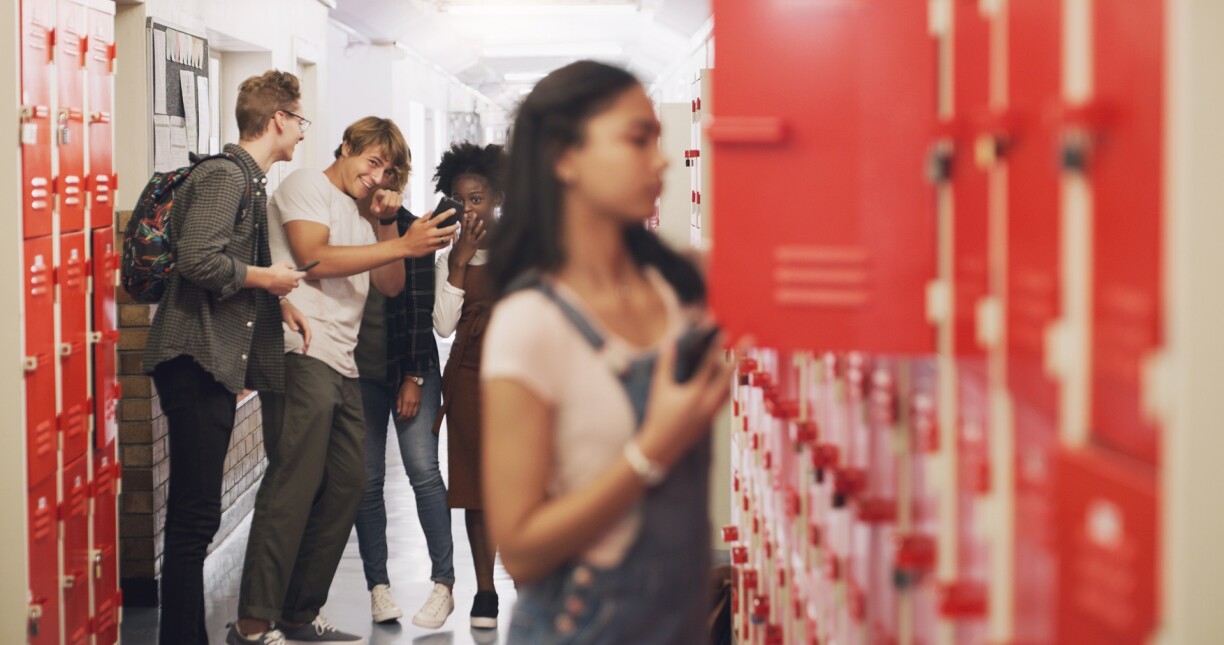
There are many different reasons why children are bullied. The same applies to the reasons why young people become perpetrators.
The desire for superiority, power, low empathy, aggressive and impulsive behaviour, feelings of inferiority, peer pressure, lack of boundaries or parental control, and personal experiences of violence and exclusion can lead young people to bully others. Often, unresolved personal problems play a role.
Seeing your own children behave in this way can be painful and may not be in line with your own values. The fact that your child exhibits such behaviour is not necessarily a sign of poor parenting!
How can I support my child as a parent?
Try to get closer to your child by asking them how they came to behave in this way. It may also be important to make the limits of their behaviour clear and to convey your values.
It is important not to trivialise this behaviour ("He/she doesn't mean it..."). Be clear and take a clear stand against disparagement, exclusion, and bullying.
Remain open to discussion and involve important partners (e.g. school). The aim is to find a solution for EVERYONE.
The fact that the child has been "exposed" as a "bully" in front of other authorities can also cause negative feelings (shame, fear, anger). It is important to make it clear that the bullying will now end without triggering an aggressive and punitive reaction towards the perpetrator.
Teach your child that we all make mistakes and that it is a positive trait to admit one's mistakes, take responsibility for them, and make amends or apologise.
As a professional, it is not easy to re-establish a safe environment in the class and respond to the individual needs of those involved. In addition to the people involved in the bullying process, it is also important to seek out contact persons at the school level and to seek support as a professional. Not only the children or class affected are often part of the whole, but also the parents. All these things can sound overwhelming at first and often present an obstacle to actively addressing bullying in the classroom.
What can I do as a professional?
Do not turn a blind eye. Belittling, exclusion, and bullying are unacceptable! Do not hesitate to stop inappropriate behaviour in the classroom.
Also bear in mind that among the children affected are those who do not receive sufficient support at home and are therefore caught in a vicious circle between a critical home and school situation.
Create a change of perspective by encouraging children and young people to put themselves in the other person's shoes.
Approaches such as the No Blame Approach and the KiVa prevention programme provide good guidance, especially in a school context, on how to deal with bullying in a solution-oriented manner without resorting to punishment. In Luxembourg, the Finnish KiVa approach is already being used and has been well received.
Removing the victim from a stressful school environment should be the last resort. Solutions should be worked out locally first.
It is also possible to build up your own self-confidence in dealing with bullying by participating in appropriate training courses. From the end of the year, you will be able to book training on cyberbullying via the BEE SECURE website. The Institut de Formation de l'éducation nationale (ifen) also offers training courses on (cyber)bullying.
The "Stop Bullying" initiative run by the Centre for Socio-Emotional Development (CDSE) provides support in particular for cases of bullying in the fundamental sector. Requests are usually made via teachers.
This applies to victims, perpetrators, parents, and professionals!
Over the past few years, the KJT (Kanner-Jugendtelefon) has received numerous contact requests in the context of bullying and cyberbullying (primarily via the BEE SECURE helpline).
Our counsellors are available to children and young people via 116111 (LU/FR/DE), online help (LU/FR/DE/EN), and peer-to-peer chat counselling (LU/FR/DE/EN).
Parents, professionals, and anyone who is concerned about a young person can find support via the parents' helpline on 8002 4444.
The services are free of charge, anonymous, and confidential. The counsellors listen without judgement and work together to find solutions. If desired, they can refer callers to other points of contact.





