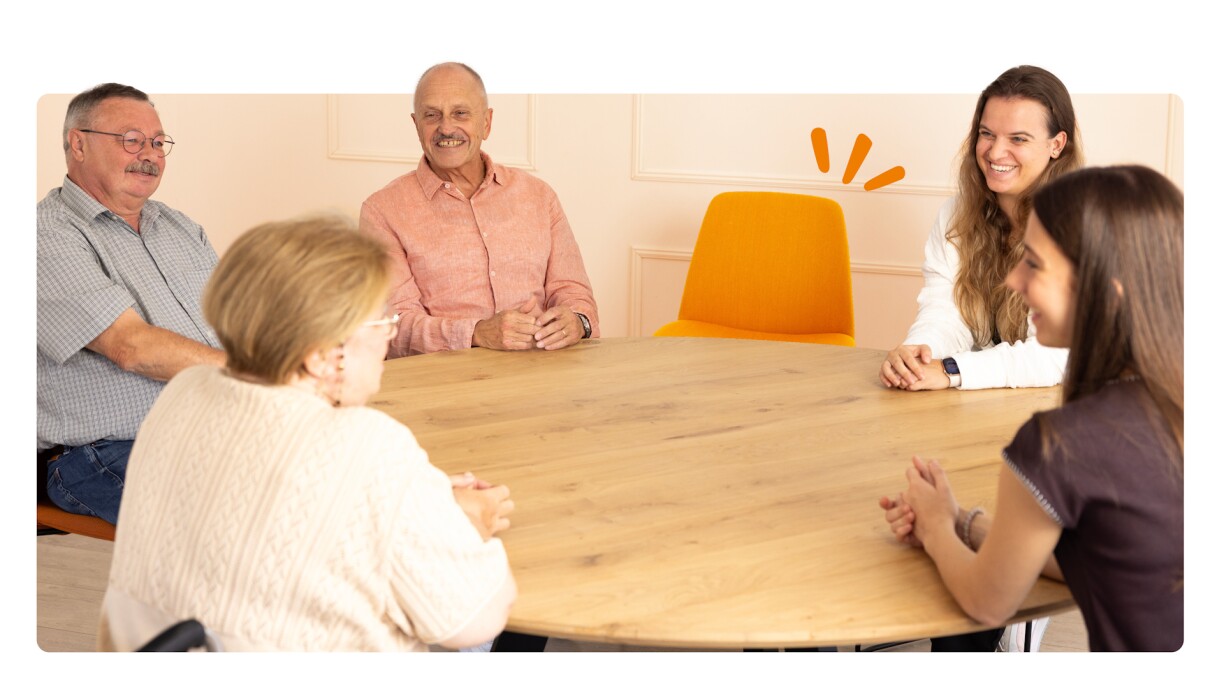
Across Luxembourg, countless clubs and associations rely on people whose work is rarely visible to the wider public. Behind every rehearsal, competition, training session, neighbourhood project or inclusion initiative, there is a group that plans, organises and decides. This group is the committee. It is the backbone of associative life, yet its importance is often underestimated. A new nationwide campaign by the Agence du Bénévolat brings this reality forward, using a simple and striking symbol: an empty orange chair.
This chair appears in different formats, from public posters to digital content and a series of volunteer portraits hosted on benevolat.lu. It represents a position that many associations are struggling to fill: a place where decisions are made, projects are shaped, and the long-term future of a club is secured. The campaign seeks to show that these roles are accessible to far more people than one might think. The chair is empty not because the role is overly complex, but because many citizens do not realise that they are already qualified to take it.
In recent years, more and more associations have reported increasing difficulty in recruiting new committee members. There is often no shortage of active participants, but taking on administrative or strategic responsibility is something many hesitate to do. Some believe they lack time. Others assume they need specific expertise. Yet most committees adapt to individual availability and divide tasks according to strengths and motivation. The empty orange chair makes this issue visible and invites citizens to revisit old assumptions. Joining a committee is not a matter of perfection. It is a matter of willingness and commitment.
To illustrate this message, the campaign highlights five volunteers from very different fields. Their experiences reveal how varied and meaningful committee work can be.
Paul is the president of the Fanfare Strassen. For him, the committee is the place where musical tradition meets organisational responsibility. It is where questions are discussed, projects are prioritised, and the future of the ensemble is shaped. He sees the committee as a space where ideas circulate and where the cultural life of a community finds continuity.
Esra serves as the general treasurer of the national Firefighters’ Federation. She explains that, even as a child, she admired people who managed to make things move. Her engagement in the committee allows her to contribute to a structure that supports the operational work of firefighters across the country. She emphasises the importance of giving younger voices a place in decision-making, where fresh perspectives are needed.
Julie is vice-president of the gymnastics club Le Réveil Bettembourg. Her committee work directly supports children and young athletes. It involves planning training schedules, ensuring access to facilities, and preparing events. She insists that committee work is not a distant administrative task but a practical contribution that gives trainers and athletes the conditions they need to progress.
Charles is secretary of the Ligue CTF Gaart an Heem and president of the CTF section in Beggen. He works in an environment rooted in gardening culture, neighbourly exchange and long-standing traditions. To him, the committee is a place where knowledge is passed on and where community values are kept alive. It is also where new initiatives are launched to strengthen the social fabric around local nature and gardening activities.
Andrée is president of Rahna, an organisation that trains assistance dogs for people who use wheelchairs, and she is also vice-president of Info Handicap. Through her personal experience, she reminds us that physical limits do not define the ability to take part in committee work. She highlights how diversity of perspectives enriches decisions and helps to create associations that are open and accessible to all.
Each volunteer represents a different world: music, emergency services, sport, gardening and inclusion. Yet all share the conviction that a committee is where a club truly takes shape. It is where ideas become actions and where local life gains structure. These five experiences demonstrate that committee roles are varied and adaptable. They do not require a specific profile. They require the willingness to contribute to a community that relies on such engagement.
The orange chair is therefore more than a visual symbol. It is a question addressed to every citizen: What place are you willing to take in a community that needs people like you?
The full volunteer portraits and information about associations seeking new committee members are available at benevolat.lu. The campaign is supported by the Ministry of Family Affairs, Solidarity, Living Together and Reception of Refugees.
At its core, the campaign carries a simple message: a place exists for anyone who wishes to get involved. It is waiting for the person who decides to sit down.





