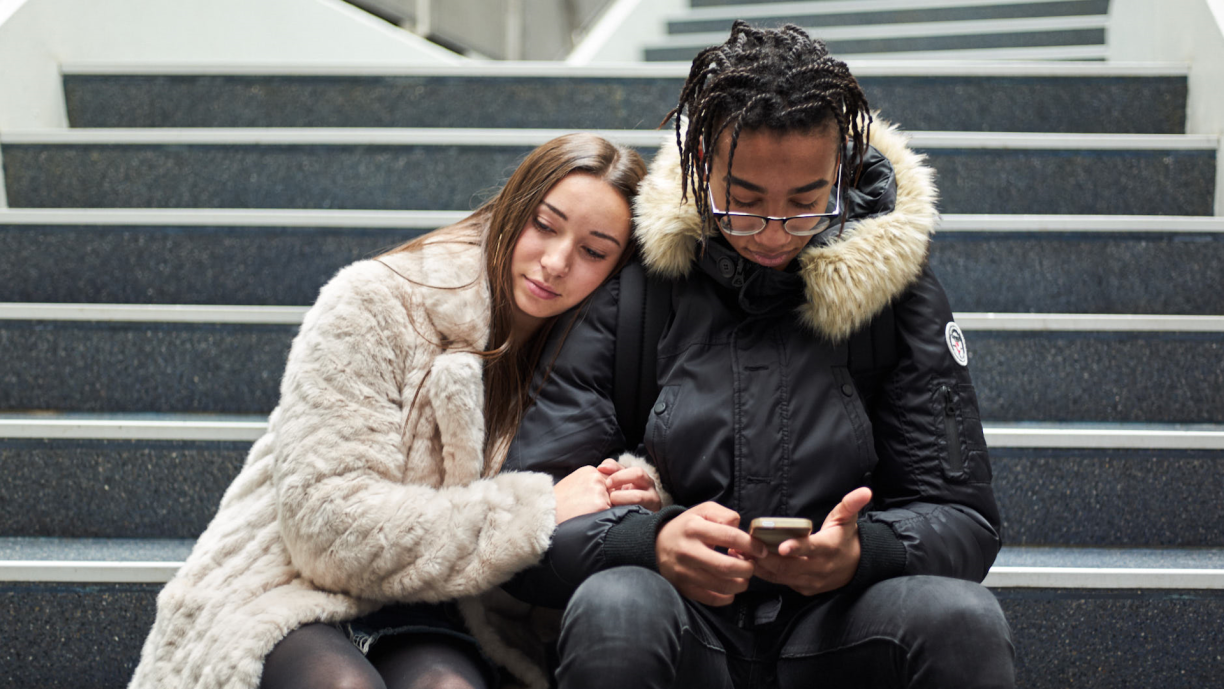
Imagine this: You are in love, maybe for the first time in your life. The feelings you are experiencing are intense and you feel so excited. Every thought revolves around this one special person, and you can't wait to spend every free minute with them. But even when physical proximity isn't always possible, today's social media and messenger platforms offer you the opportunity to stay in constant contact.
In these highly emotional moments, you might exchange intimate messages or even share photos and videos. Whether you want to express your affection and connection to your partner out of deep desire or try something new with a stranger, you might act spontaneously, without thinking about the consequences. Sometimes, you might even share more than you are comfortable with out of fear to disappoint the other person when they ask for this type of content.
BEE SECURE advises to take a breath before sharing and ask yourself: Am I sure I want to share this intimate content? Aline Hartz, an expert at the BEE SECURE Helpline, explains: "The decision to share personal and intimate content should be made consciously as it can have far-reaching consequences."
"Sexting" means exchanging and sending intimate messages as well as self-taken photos and videos. However, it is important to know that there are also risks associated with sexting that are often underestimated:
"At the BEE SECURE Helpline, people increasingly call us to report cases of 'sextortion'," says the BEE SECURE Helpline expert. This form of blackmail involves perpetrators threatening to release or distribute previously shared intimate pictures/videos unless the person meets certain demands such as money payments, sexual favours, or other actions. Perpetrators can be strangers posing as someone else and making contact via social media or messaging platforms. However, perpetrators can also be ex-partners or former "friends" seeking revenge.
"It is important to keep a cool head, secure evidence, ignore the perpetrator's messages, and file a report with the police," advises Hartz. Afterwards, one should delete the pictures from the chat history, then report and block the perpetrator on the platform. Moreover, one should stop responding and block the contact. "Most importantly, do not face this alone! Whether by talking to your family, friends, or an anonymous support service like our BEE SECURE Helpline, help is available if you become a victim of sextortion," the expert emphasises.
BEE SECURE especially cautions against sexting among minors: The production, possession, sending, distribution, or requesting of nude pictures or similar content from juveniles under 18 years old can be classified as child sexual abuse material (CSAM) and is punishable under the criminal code.
Consent is of central importance here. Both parties should agree and feel comfortable sharing intimate content without anyone feeling pressured. Always think twice about the consequences, as shared contents are no longer under your full control.
Avoid showing your face or any identifiable features to maintain your anonymity and minimize your personal risk (e.g., tattoos, birthmarks, background). Use encrypted services, protect your devices with strong passwords and updated security settings.
It is crucial to take a moment to carefully consider whether you really want to send such contents.
Therefore, always ask yourself: Am I sure that I am ready to take responsibility for my personal contents and those of my partner?
For more information, check out the BEE SECURE guide "Naked on the net?" or read this article on sexting on the BEE SECURE website.
If you have become a victim of sextortion, NCII, or you need any other information about safely using the internet, you can contact the BEE SECURE Helpline at the following number: 8002 1234 (Monday-Friday from 9 AM-4 PM).





