
Luxembourg is simplifying access to dental care with the Direct Immediate Payment (PID, Paiement immédiat direct) system, which eliminates the need for upfront fees. Now, health insurance covers costs directly, removing the hassle of being reimbursed later.
Already implemented among general practitioners, PID is now extending to dental offices. This measure greatly facilitates the patient journey by eliminating the administrative procedures associated with reimbursements for dental care. It's an encouraging change that motivates patients to no longer postpone necessary treatments.
Among the first to adopt PID in her orthodontic office, Dr Israa Hariri, a dentist, shares her experience: "Since integrating this system into our practice, we've noticed a real difference in how our patients approach their treatment," explains Dr Hariri. The immediate coverage of expenses by health insurance encourages patients not to delay essential dental care, thus facilitating timely care.
This momentum is crucial, emphasises Dr Hariri, particularly concerning early diagnosis in dentistry, which is essential to guarantee the best possible outcomes, especially in younger patients. "PID removes the financial barrier that could previously discourage some families from seeking care. It's a significant advancement for public health, allowing us, health professionals, to ensure that access to essential care is facilitated for everyone, without distinction," she adds.
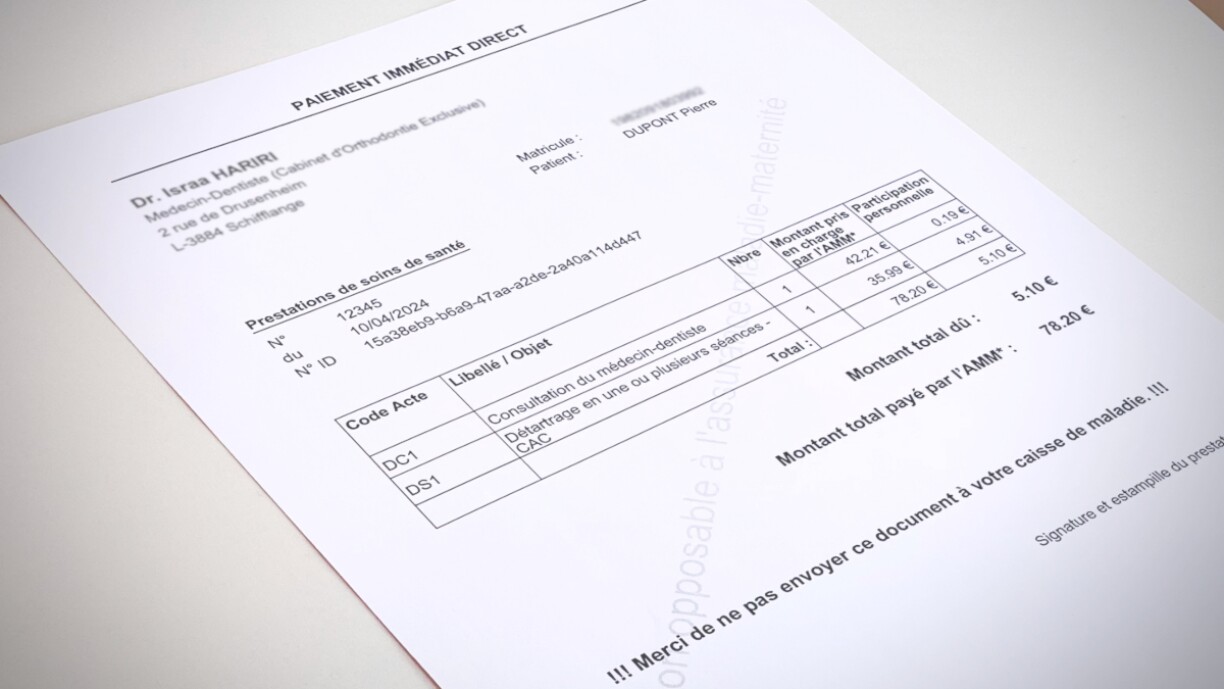
While the system is promoted by the National Health Fund (CNS), its widespread adoption among health professionals remains a technical challenge. Integrating PID indeed requires specific software, compliant with standards and approved by the CNS. In this context, effective collaborations with software providers are essential, such as that of Dr Israa Hariri with the Luxembourg company HealthLink, which enabled a quick and efficient implementation of the system within her practice.
The introduction of PID represents a significant advancement in simplifying care procedures for all patients affiliated with health insurance in Luxembourg. Beyond this practical aspect, this measure also fits into a logic of sustainable development. By substantially reducing the volumes of paper mail and forms related to traditional reimbursements, it helps to limit the environmental footprint of the health sector. Digitalisation of processes and reduction of resource consumption thus go hand in hand in this transition to a more efficient system. The deployment of PID thus demonstrates that technological innovation can align with social and environmental goals for the greater good.





