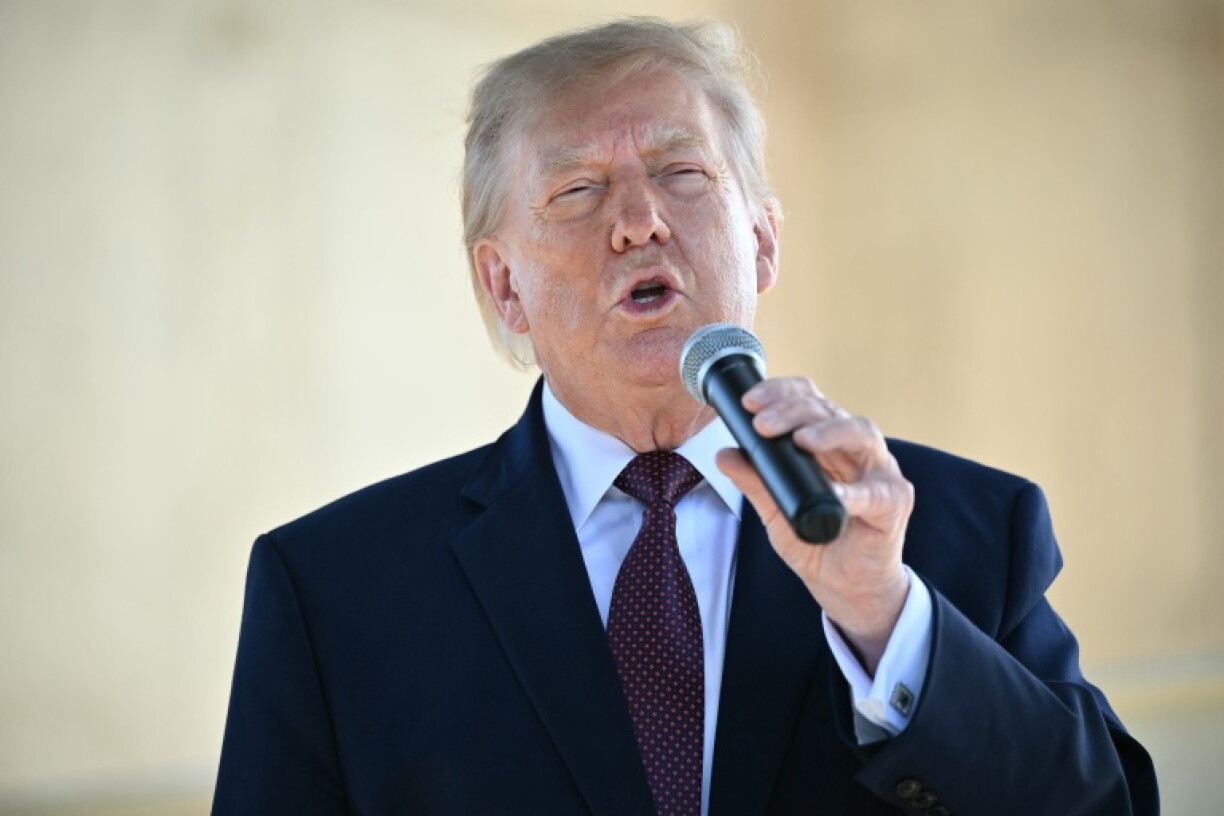
The Democratic sweep in US midterm elections opens doors to new aid for Ukraine as it battles Moscow's invasion, and could bring scrutiny over President Donald Trump's Russia policies, analysts said Thursday.
Ties between Washington and Kyiv could remain tumultuous. Besides, Congress would need a hard-to-reach two-thirds majority to counter any Trump veto on legislation.
But "the new Congress means that there's a floor" to delays or pullback in US support to Ukraine, said Carrie Lee, senior fellow at the German Marshall Fund of the United States.
"The new Congress will be able to effectively say, we're not going to abandon Ukraine entirely," she told AFP.
Trump has previously threatened to withdraw US engagement in the conflict and for now, "deep uncertainty" in Europe and Ukraine over US commitments should be mitigated, Lee said.
Already, Ukraine's President Volodymyr Zelensky expressed hope that the midterms outcome will boost support for Kyiv and help end Europe's bloodiest conflict since World War II.
The war, sparked by Russia's full-scale invasion of Ukraine, is now in its fifth year.
And Ukraine and its European allies have been fretting about Washington growing closer to Moscow.
Since returning to the White House last year, Trump has halted direct military aid to Ukraine, hosted Russian leader Vladimir Putin in the United States for a summit and had run-ins with Zelensky including a public shouting match in the Oval Office.
Even as Trump still plays the dominant role in US foreign policy, the size of Democrats' victory means they control the agenda in Congress, said political science professor Brian Taylor of Syracuse University.
"I would expect that certain members of the Democratic caucus in both houses will try and insert military and economic assistance packages for Ukraine into legislation," he told AFP.
"That would be the biggest change, if they're able to put the US back into the picture" on providing such support, which Trump halted when he came to power in January 2025, Taylor said.
He added: "For the last two years, the Europeans have been carrying all the weight on that topic."
Analysts also expect that lawmakers could probe Trump's deal to waive sanctions on Russia and allow Moscow to sell diesel to global markets as energy costs rocketed following the US war on Iran.
The European Union's top diplomat Kaja Kallas voiced hope Wednesday that the new Congress "will continue supporting Ukraine and also putting more pressure on Russia" in the push to end the war.
In the meantime, however, a senior European official told AFP that they expect "two difficult months ahead" until lawmakers begin their term. Trump could make further concessions to Moscow in the meantime, the official warned.
A new round of talks aimed at ending the war is slated to take place in Abu Dhabi next week, the first between Russia, Ukraine and the United States since February.
US First Lady Melania Trump called Thursday for a "more enduring" ceasefire in Ukraine as she hosted a rare meeting between officials from Russia and Ukraine at the White House.
Still, a Democratic midterms victory does not guarantee the US relationship with European NATO allies and Ukraine will improve swiftly, warned Council on Foreign Relations senior fellow Liana Fix.
"The president may seek to cement his legacy by ending the war in Ukraine -- very possibly on terms unfavorable to Ukraine," she added in a note.
But Lee of the German Marshall Fund expects that Trump has limited room for new maneuvers to force Russia and Ukraine back to the negotiating table.
She believes Putin is "uninterested in negotiating" now, expecting that he will get a better deal after a major offensive.
"Ukraine is (also) uninterested in negotiating at this time because they know that they're going to get a better deal with the new Congress," she added.
"I don't see that Trump actually has a whole lot of leverage."
lb-bys/sms


