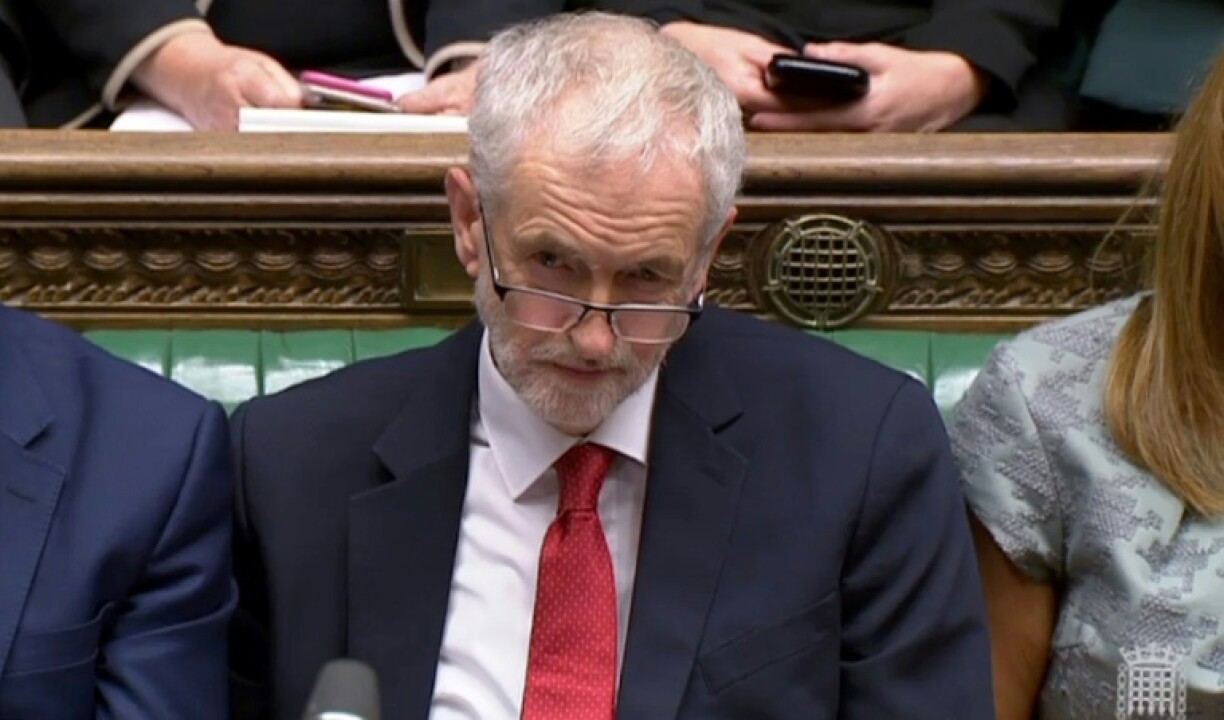
MPs in parliament's lower House of Commons voted by 432 to 202 to reject Prime Minister Theresa May's agreement with the EU, becoming the worst defeat for a modern government in recent history.
Jeremy Corbyn, leader of the main Labour opposition party, tabled a motion of no confidence, saying the government had suffered a "catastrophic" defeat.
British lawmakers voted overwhelmingly Tuesday to reject the EU divorce deal struck between London and Brussels, in a historic vote that leaves Brexit hanging in the balance.
"The house has spoken and the government will listen," May said, immediately after the vote.
"It is clear that the house does not support this deal but tonight's vote tells us nothing about what it does support.
"Nothing about how, or even if, it intends to honour the decision" taken by the British people to leave the European Union, she said.
"Listen to the British people, who want this issue settled," said May.
British vote boosts risk of 'no deal' Brexit says EU commission President Jean-Claude Juncker.
The British parliament's rejection of a negotiated Brexit deal increases the risk that Britain will crash out of the European Union without an agreement, European Commission chief Jean-Claude Juncker warned Tuesday.
"I urge the United Kingdom to clarify its intentions as soon as possible. Time is almost up," Juncker, the head of the EU's executive arm, said in a statement immediately after the vote in London.
The SNP's leader in Westminster, Ian Blackford, has called for Article 50 to be rescinded. On Wednesday, MPs will debate the motion of no confidence. It is likely that the vote will occur at 7pm.
The British pound bounced from session lows on Tuesday after the lower house of parliament, as expected, rejected Prime Minister Theresa May's Brexit plan.
Near 1950 GMT, the pound stood at 89.11 pence to the euro, compared with 89.57 just before the vote tally. The pound traded at $1.2787, compared with $1.2704 before the vote.
According to AFP's James Phelby, these are three scenarios which could occur in Britain's exit from the EU.
Try again
The British government and EU leaders say their agreement is the best compromise available, and despite her historic defeat, May said Tuesday it remained the only option.
Members of her Conservative party say the deal keeps Britain too close to the EU, while opposition parties say fails to protect economic ties with the bloc.
Both sides also hate a plan to keep open the Irish border, the so-called backstop, which could see Britain indefinitely follow European rules on trade.
May has already sought concessions on the backstop from EU leaders but they refused to alter the deal itself, and her critics were not convinced.
On Tuesday, she warned there was no "alternative deal" on offer from the EU but she said she was open to discussing ideas with MPs that were "genuinely negotiable" and could "explore them with the European Union".
Attorney General Geoffrey Cox earlier told MPs that the Brexit deal "will have to return in much the same form and with much the same content".
There is nothing to stop the government bringing back the same deal again and again to the House of Commons until either MPs accept it, or seek to oust May, who faces a no confidence vote on Wednesday called by the opposition Labour Party.
No deal
This is billed as the doomsday scenario that threatens to trigger a recession in Britain and markedly slow the European Union's economic growth.
It is the default option if the British parliament votes against the deal and there are no other solutions before March 29.
May's agreement was meant to keep trade rules between the world's fifth-biggest economy and its largest export market almost unchanged for a transition period running to the end of 2020.
A sudden shift to different standards would impact almost every economic sector -- and possibly see the costs of everyday products in Britain rise as well as create disruption at logistical hubs such as ports.
The government has conducted visible displays of its ramped-up no-deal preparations over the past few weeks.
There is growing speculation in London and Brussels that she could seek to delay Brexit to avoid a no deal scenario.
Second referendum
EU supporters have been calling for another vote ever since the Leave campaign won by 52 to 48 percent in the 2016 referendum, and demands have stepped up in recent months.
There is no law keeping Britain from doing it all over again, but many question whether this would be democratic.
It also threatens to be just as divisive, with opinion polls showing the country is still split over the issue.
May has warned another vote "would do irreparable damage to the integrity of our politics".
The first step would be to extend Britain's departure date, although EU diplomats warn this would only be for a few months.





