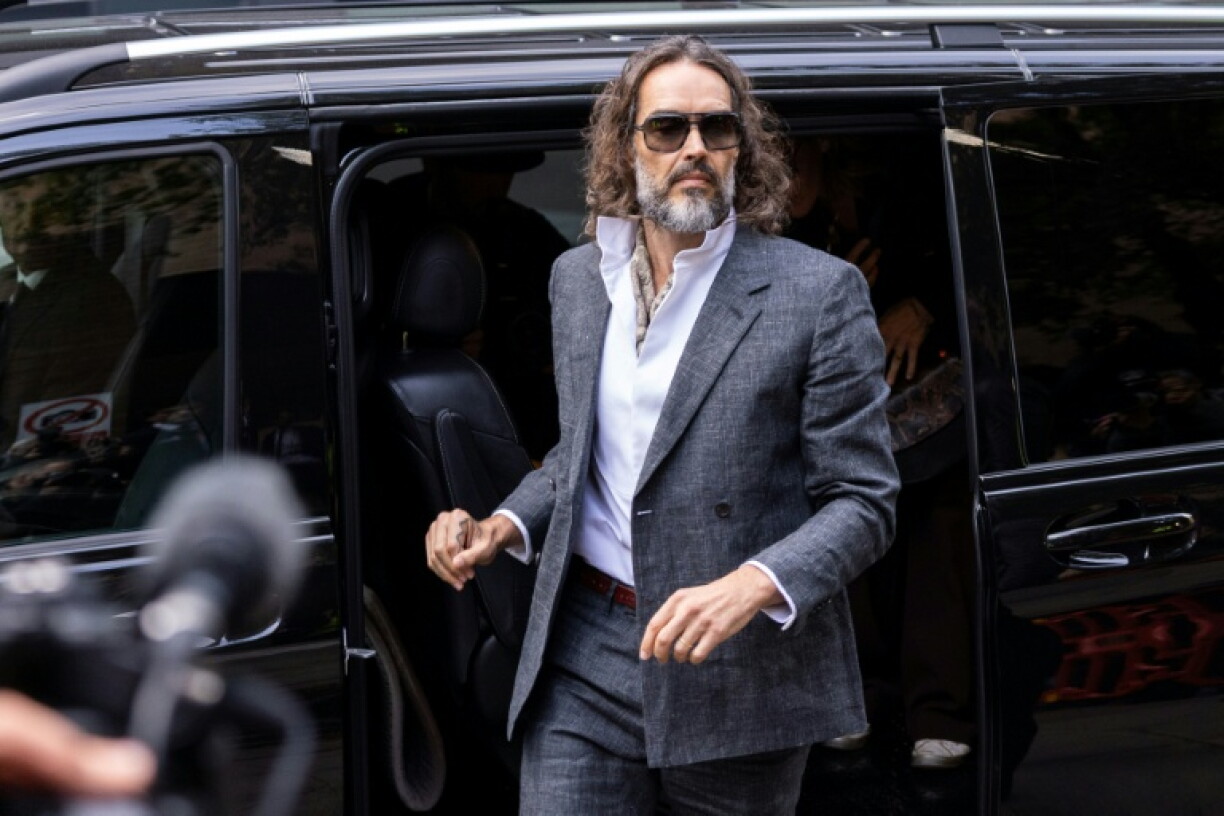
Britain's world-renowned entertainment sector is facing mounting calls to usher in sweeping reforms and greater oversight, amid a fresh slew of rape and sexual abuse allegations against some of its powerful male stars.
"The media industry will need to look at itself and ensure whether it is taking all of the steps needed to protect the safety of women and girls who work within the industry," Prime Minister Andy Burnham warned late Thursday after days of torrid headlines.
Comedian and ex-Hollywood actor Russell Brand was on Monday jailed for over 10 years for rape and sexual assault against four women dating back to the 2000s, when he was at the height of his fame, including raping a fan and abusing female staff from media organisations where he worked.
A day later a Guardian newspaper investigation reported that his friend, fellow comic and bestselling children's author David Walliams, sexually assaulted a 15-year-old budding comedy writer, and harassed young female colleagues. He has denied the accusations.
The cases are just the latest to hit the UK's prestigious film and TV industry, with many arguing the men's predatory behaviour was an open secret for years in entertainment circles.
Comedian Lucy Beaumont, who revealed she had been one of the "whistleblowers" in the Guardian investigation after learning second-hand about the accusations against Walliams, said she felt now "is a window of opportunity to change things".
Frank conversations were being had in an industry which had "no HR department, no proper duty of care," Beaumont told Sky News.
Culture Minister Lisa Nandy, who has said she believes such abuse still exists, will meet with industry bosses on Tuesday, and warned ministers "would not hesitate" to take action if protections put in place are inadequate.
Experts agreed that society-wide solutions were needed alongside tighter government reforms of the legal system and workplace rules.
"What we really need is a cultural reckoning that fundamentally shifts how we respond to credible allegations of sexual harm," University of Leeds media lecturer Kat Higgins argued.
She co-authored the 2023 book "Believability: Sexual Violence, Media, and the Politics of Doubt".
"The more difficult challenge is to dismantle the culture of doubt that confronts survivors when they do speak out," she said.
Higgins also called for a reform of the legal system to stop the "pernicious use" of non-disclosure agreements (NDAs) to "silence survivors".
Walliams was initially able to block the publication of the claims against him, with his legal team arguing he was "highly likely" to die by suicide if they were aired.
"Such men should not be able to use their wealth or the law to coerce women and girls into silence and to shield themselves from justice," Higgins said.
Sex abuse and harassment scandals over decades have rocked Britain's entertainment industry since the 2012 shock discovery that children's TV presenter Jimmy Savile was a prolific offender.
The revelation that Savile, who died in 2011, used his celebrity status to sexually abuse dozens of children rocked the country, and sparked a wider police probe.
Others whose offences have emerged included 1970s glam rocker Gary Glitter and Australian-born artist and musician Rolf Harris, once one of the UK's best-loved entertainers before being convicted in 2014 of underage-sex crimes.
The #MeToo movement that began in 2017 also brought renewed focus on sexual crimes and harassment within the industry.
The culture has improved but "far too slowly," said expert Anna Bull of the University of York, as fresh allegations emerged in the Times on Friday that six more women had been assaulted by Brand.
Bull has been studying sexual harassment in UK organisations for a decade, and was lead author of a 2023 report warning that the film and TV industry was still failing to tackle sexual harassment.
"Attitudes have changed, what becomes appropriate has changed," she said, but "the systems and the regulatory oversight has not shifted sufficiently".
Tougher legislation requiring employers to take all reasonable steps to prevent sexual harassment only came into force a few weeks ago, she pointed out.
Even Beaumont, who is an established UK comedian, admitted she was terrified she might "never work in telly again" after speaking out.
Those working in film and TV, many of them young freelancers, are particularly vulnerable due to their precarious employment status, gender imbalances in power structures and a "massive downturn" in job vacancies in recent years, Bull said.
"So we've got a perfect storm where people don't want to make formal reports or don't want to raise concerns at all," she said.
jj/jkb/st


