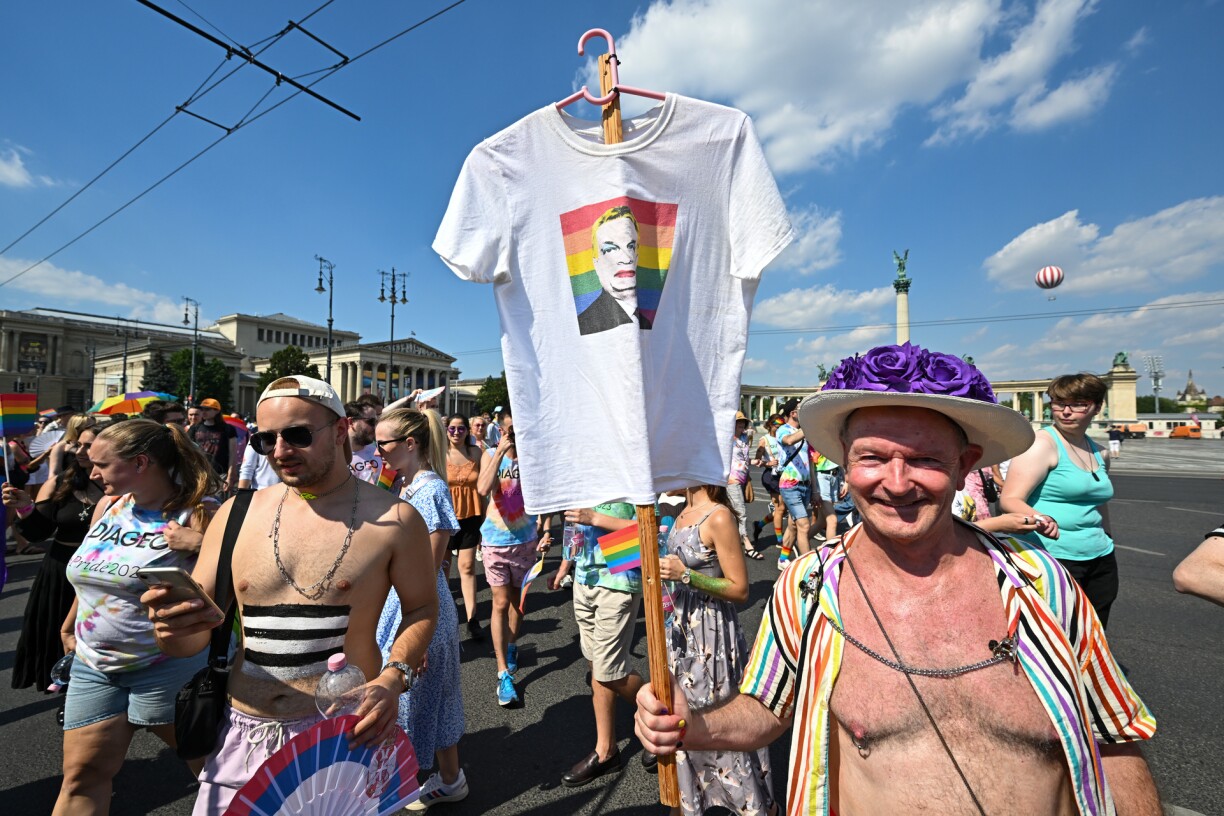
The Pride event was used as a platform to express discontent over the Child Protection Act, a law that critics argue infringes on the rights of sexual minorities.
Participants in the march, waving rainbow flags and cheering, walked through the streets of Budapest.
The law, enacted in 2021, has been increasingly used to penalise those who disseminate LGBTQ content in Hungary, according to Pride organiser Jojo Majercsik.
Majercsik highlighted the growing hostility in public discourse since the law's implementation. "You can now see how the propaganda law passed two years ago is being applied in practice and how the public discourse has become more angry," Majercsik told DW News.
On the eve of the march, 38 embassies, including those of the US and Germany, issued a joint statement calling on Prime Minister Viktor Orban's government to halt discriminatory laws and safeguard the rights of the minority community. Several diplomats, including the US ambassador to Hungary, participated in the march.
Despite the European Commission's legal action against Hungary at the European Court of Justice last year, Orban's government, known for its Christian-conservative agenda and emphasis on family values, has escalated its enforcement of the law.
Earlier this week, a national bookseller was fined approximately €31,000 for displaying a popular LGBTQ graphic novel, "Heartstopper" by Alice Oseman, in its youth section without the closed packaging required by the law.
TV promotions for the Pride march also faced restrictions due to the law. Deemed unsuitable for audiences below 18 years of age, Hungary's media authorities banned their broadcast except between 10 p.m. and 5 a.m. Most channels chose not to broadcast them at all.
"It is now apparent how they are trying to limit the rights of LGBTQ people in the media world, in the world of movies, films and books," Majercsik added.





